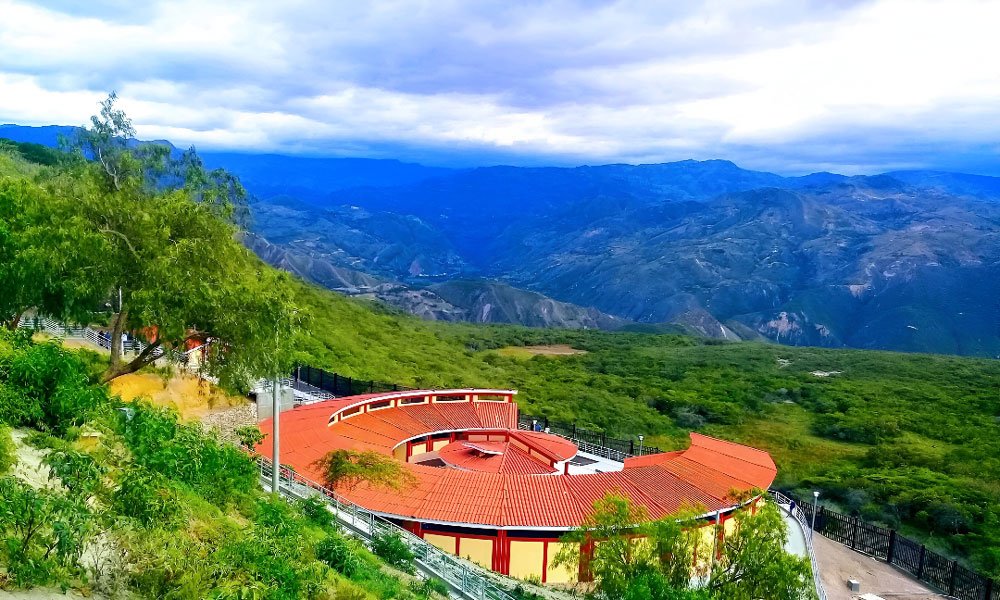
Chancay Hot Springs Baths
Chancay Baños Thermal Springs
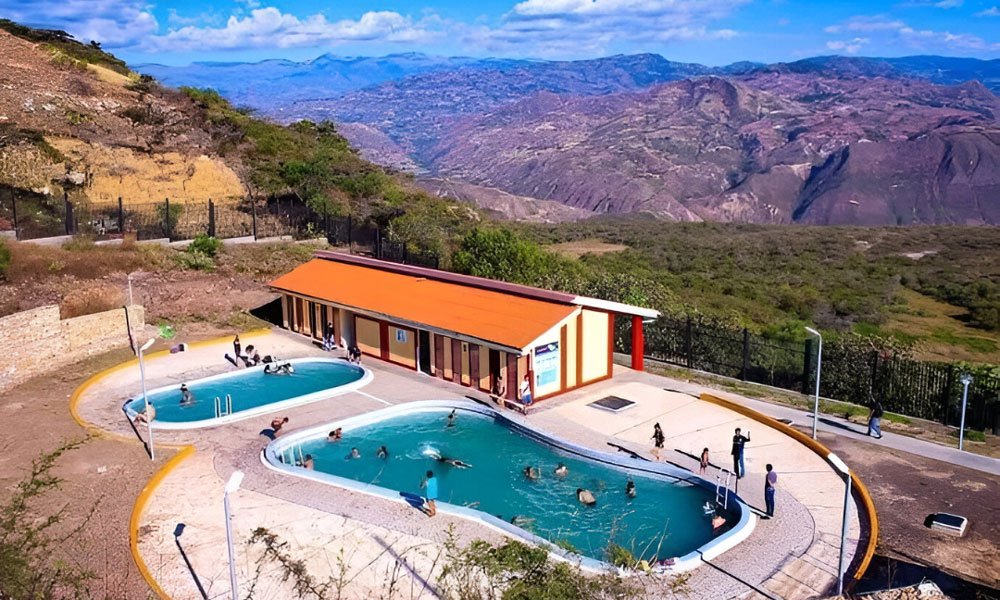
Chancay Baños is a thermal spa located in the district of Chancay Baños, in the Santa Cruz province of the Cajamarca region. The area has a rugged, mountainous terrain, and the thermal waters are naturally pure, with low levels of contamination due to their temperature and the chemical composition of the water. At the spring source, the water temperature reaches 40.3°C; the water is colorless, odorless, and has a slightly salty taste.
Location
The district of Chancaybaños is located in the province of Santa Cruz, in the Cajamarca region. It borders the province of Chota to the north; the district of Sexi to the west; and the districts of Santa Cruz, La Esperanza, and Uticyacu to the south.
Area
The district of Chancaybaños covers an area of 120.04 km², representing 8.46% of the total area of the province of Santa Cruz.
Capital
The capital of the district is the town of Chancaybaños. It was officially established on September 18, 1942.
Flora
Among the important flora of Chancaybaños are medicinal plants of high economic value, such as the molle tree, which is used as an analgesic, anti-inflammatory, and wound-healing agent, as well as for the treatment of ailments such as rheumatism and sciatica. Other plants include the tara tree and the huarango tree, among others.
Fauna
In the area, foxes, various rodents, and gray deer can be observed, along with bird species such as ducks and hawks. Regarding reptiles, the Chancaybaños area is home to the sancarranca, a venomous snake; the colambo, a type of boa constrictor that can reach several meters in length; the macanche, and other species.
Activities of Interest
- You can observe the local avifauna, especially the Andean condor, in the Sotopampa area, on the La Palizada hill, at an altitude of 1,842 meters above sea level. From there, you can admire its majestic flight and much of the Chancaybaños Protected Zone. You can also visit the thermal baths, which have facilities managed by the Municipality of Chancaybaños. The waters emerge from a geological fault with temperatures between 35° and 40°C and have a high sulfur content (60%).
- The Lagunas area, near the baths, has two interconnected natural lagoons where you can observe ducks, rails, and other birds in the typical dry forest vegetation that surrounds them. There are also fissures and bat caves in the area.
- The faique forest, the main type of vegetation in the area, with its characteristic trees, is found throughout the region.
Climate and Weather
The climate is sub-humid and semi-warm. The average annual rainfall is 400 to 600 mm. The average temperature is 20°C in the lower areas (1,400–1,900 m.a.s.l.) and 15°C in the higher areas (1,900–2,400 m.a.s.l.).
Transportation
Transportation is available daily at 9:00 a.m., 11:00 a.m., and 4:00 p.m.
Best Time to Visit
Year-round
Recommendations
- Carry cash in Peruvian Soles.
- Bring both light and warm clothing.
- Wear comfortable walking shoes.
- Bring sunscreen and insect repellent.