


Blue Lagoon
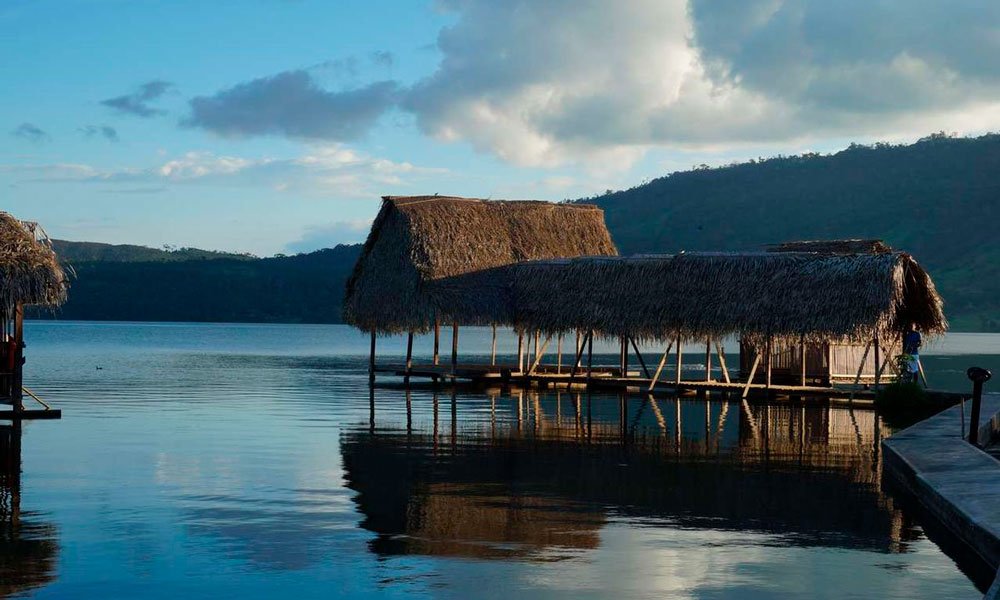
Blue Lagoon
The Blue Lagoon also called Laguna Sauce, formerly called “Tucuna”, is a beautiful water mirror of 350 hectares. Its first name was Laguna de Saucicocha, due to the Sauce trees, the Sauce tree is a medicinal plant that was abundant in the place but nowadays it has become scarce.
This lagoon is located next to an inactive volcano, which allows the water to be kept at an ideal temperature that ranges from 25º C to 28º C.
The Blue Lagoon is managed by the Sauce district municipality, which is in charge of its maintenance and care.
Location
It is located in the district of Sauce (a small town surrounded by pastures, resorts and restaurants), 54 kilometers from the city of Tarapoto, department of San Martin.
Extension
The Azul Lagoon is 5 km long and 2.5 km wide. It also has a depth of 37.5 m and is at an altitude of 700 meters above sea level.
Legend
It is said that mermaids live in the depths of the lagoon and that once a year they seduce older men to have fun with them, according to some accounts of the villagers, the body of a drowned man appears floating on the surface. There is a stone surface in one of the corners of the lagoon called the mermaid’s balcony, where the mermaid rests to take a breath of air but always does so at dusk.
How to get to the Blue Lagoon?
To get to the Blue Lagoon from the city of Tarapoto, we need to travel to the district of Sauce for this we must hire a mototaxi service and ask him to take us to the stop of combis or cabs of Sauce.
In the place we can find car service, the cost of the ticket is 15.00 soles, but if you want to opt for the service of combis the price of the ticket is 10.00 soles. The travel time lasts approximately 1:45 hours to 2 hours to reach the port, in the place we embark a captive raft to move along the Huallaga River.
Once we have crossed the river for 50 minutes, we disembark to travel along a paved road until we reach the district of Sauce and a few meters further on we find the Dos de Mayo hamlet, where the Blue Lagoon is located.
What activities can be done in the Blue Lagoon?
You can do some adventure sports such as kayaking or canopy and there is also the option of navigating on a jet ski.
You can also swim or simply swing in the hammocks overlooking the lagoon.
Another of the most relaxing activities to appreciate nature is horseback riding around the lagoon, fishing and camping outdoors.
During the visit to the lagoon you will have the opportunity to taste the local gastronomy, the most recommended dishes are tilapia ceviche and grilled fish.
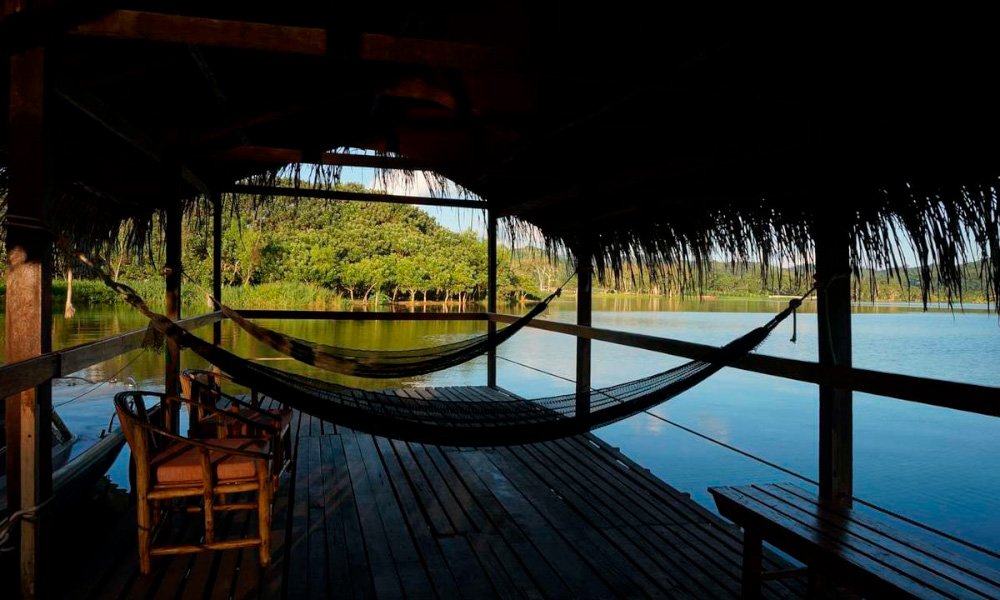
What is the reason for the color of its waters?
The beautiful greenish and bluish tones are formed thanks to the reflection of the sky and the abundant vegetation (phytoplankton) inside the lagoon.
Where to spend the night?
In the place there are picturesque lodges and accommodations that will allow you to enjoy the beautiful sunrise, you can also enjoy the local cuisine, one of its dishes that you can not miss is the Tilapia ceviche.
Flora and fauna
The blue lagoon is home to a diversity of wildlife, among the birds we have: herons, kingfishers, sachapatos, eagles, fisherwomen, amphibians, reptiles, etc. and as for the aquatic fauna we have: fish (bujurcos, carachama, catfish and mojarras), crustaceans (shrimp, crab); mollusks (churos, freshwater snail and clams).
The flora in this lagoon is abundant; there are registered varieties of plants such as uña de gato or garabato bachuja, ajo sacha, ayahuasca, cola de caballo, chuchuhuasha, malva, and paico.
Economic activities
The inhabitants of the towns of Sauce and Caserio Dos de Mayo are engaged in agricultural activities such as corn, beans, bananas, yucca, citrus fruit trees and recently irrigated rice, and livestock production such as raising cattle, sheep, horses, and poultry (chickens, ducks, etc.).
Main use of Laguna Azul
Fish farming is one of the most important uses of this lagoon, where we can find species such as tilapia, catfish, gamitana, paco, paiche, boquichico, acahurazu and tucunare, carachamas, mojarras and bujurqui. All of them are extracted for the consumption of tourists in a responsible manner.
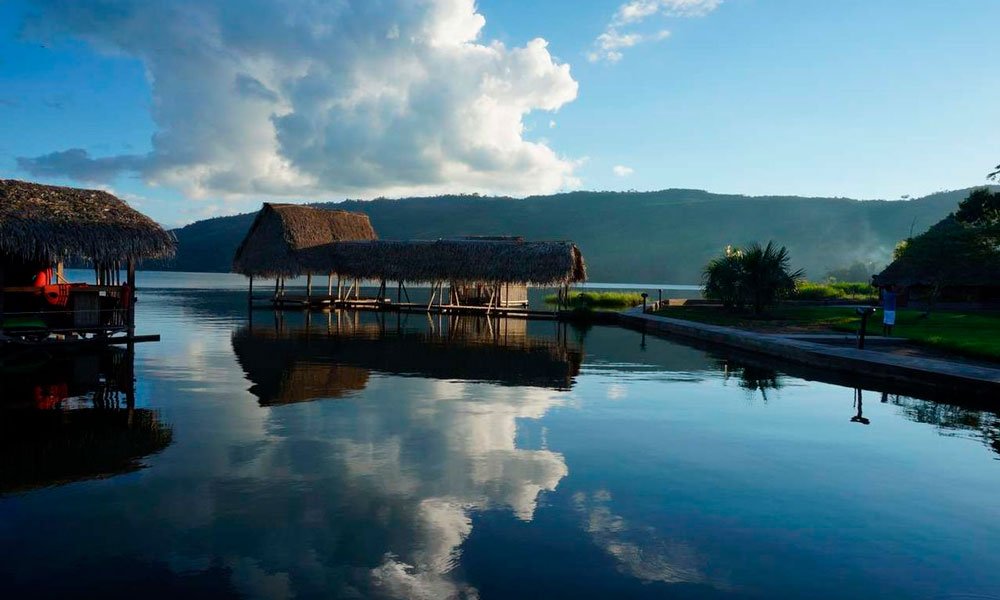
Best time to visit the Blue Lagoon
The best time to visit the Blue Lagoon is throughout the year.
Weather
It has a semi-warm and humid climate, but it varies radically due to the rains and hot days throughout the year.
Recommendations
Sunscreen and bathing suit.
Hat and sunglasses
Mosquito repellent
Respect and care for the environment