Huajsapata Hill
HUAJSAPATA HILL
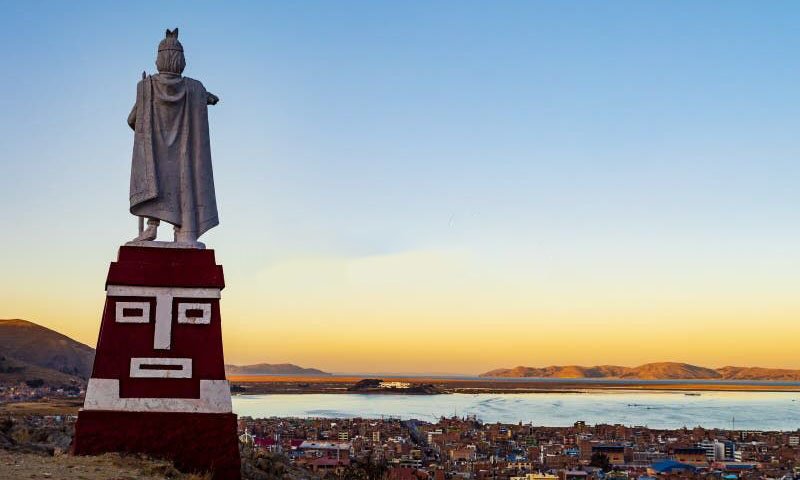
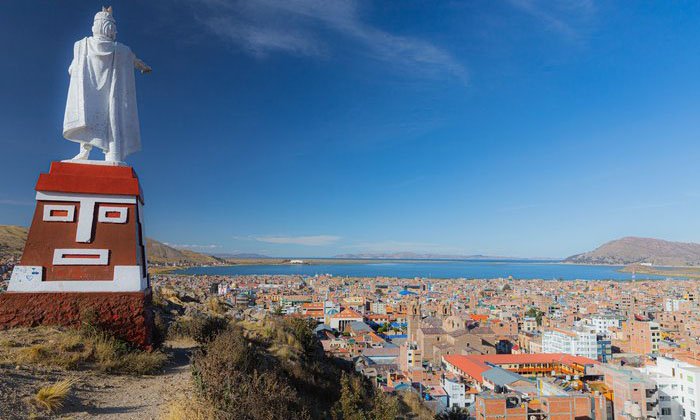
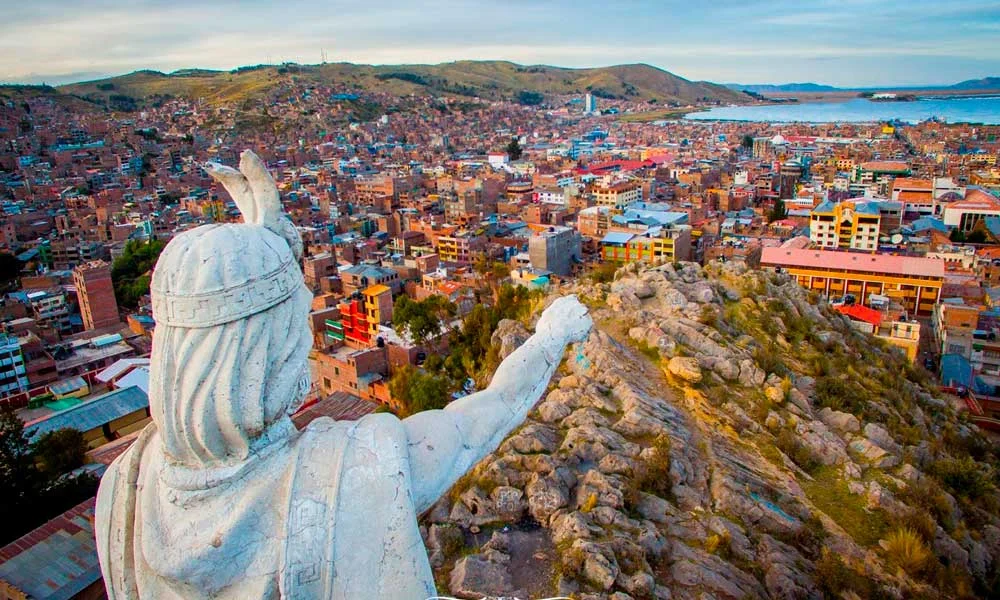
This is a natural viewpoint formed by rock formations. Tourists visiting the city of Puno can enjoy panoramic views of the entire city and Lake Titicaca from the Huajsapata natural viewpoint, which is 60 meters high. Here you will find a monument to Manco Cápac, founder of the Inca Empire. It is said that there are underground caves in this place with paths that connect the city of Puno with the Koricancha, or Temple of the Sun, in the city of Cusco.
This viewpoint is also known as the hill of “witness to my loves” because of its location, as well as its natural beauty and peacefulness, which has influenced and inspired musicians and poets.
In the surrounding area, there are parks with two slides adorned with beautiful gardens and viewpoints, the largest of which is located on the west side. During the Carnival holidays, the inhabitants gather there for a popular festival, and groups also gather to dance the traditional Puno pandilla, then proceed to dance through the streets of the city. It is a natural viewpoint with great traditional and historical significance for the inhabitants of the city of Puno.
Origin of the Name
The name “Huajsapata” comes from the Quechua word meaning “upper part of the rocks.”
Location
Located northwest of the city of Puno, four blocks from the main square, approximately eight minutes by car.
Climate
It has a moderately rainy climate with moderate temperature variations.
Legend of Las Chincanas
The chinkanas start at the base of the Huajsapata hill, on its north side. One day, a group of high school seniors went deep underground. No one knows how many there were, maybe ten. One of them came out through the door of the Santo Domingo temple in the city of Cusco, while the other nine died of hunger in the depths. The student who escaped death came out with a golden corn cob in his hands, somewhat disturbed, talking about a city deep underground.
It was then that the mayor at the time ordered the entrance to the rock to be closed so that no other fool would dare to go in again. There were two or three entrances, one of them quite large. Today, this is impossible, as these chinkanas have been legalized by notaries and have registration records. What once belonged to the imagination has now been filed away in the notaries’ drawers.
Origin of the Huayno
As for the origin of the huayno “Cerrito de Huajsapata,” it was composed between 1920 and 1930. It is an old song and is considered one of the characteristic songs of the Altiplano.
It has been recorded by various melodious groups in Spanish, Quechua, and Aymara. Its creator is unknown, so authorship is attributed differently to the following people: Carlos Eugenio
Salazar Carpio and Augusto Vidangos, Luis Chevarria, Alberto Rivarola Miranda. Over time, some arrangements were made to the lyrics and music, so not all versions are exactly the same.
Travel Recommendations Visit El Cerrito De Huajsapata
- Warm jacket.
- Waterproof clothing.
- Scarf.
- Wool hat.
- Backpack for short trips.
- Comfortable shoes.
- Sunglasses.
- Sunscreen.