


Tambomachay History
Tambomachay History
Tambomachay was built during the peak of Inca development, around the 15th century, as part of a period of conquests and major construction projects in Cusco. This archaeological complex was dedicated to the worship of water. Its main function was to supply water to nearby archaeological sites, and it also served as a place of rest for the Inca ruler.
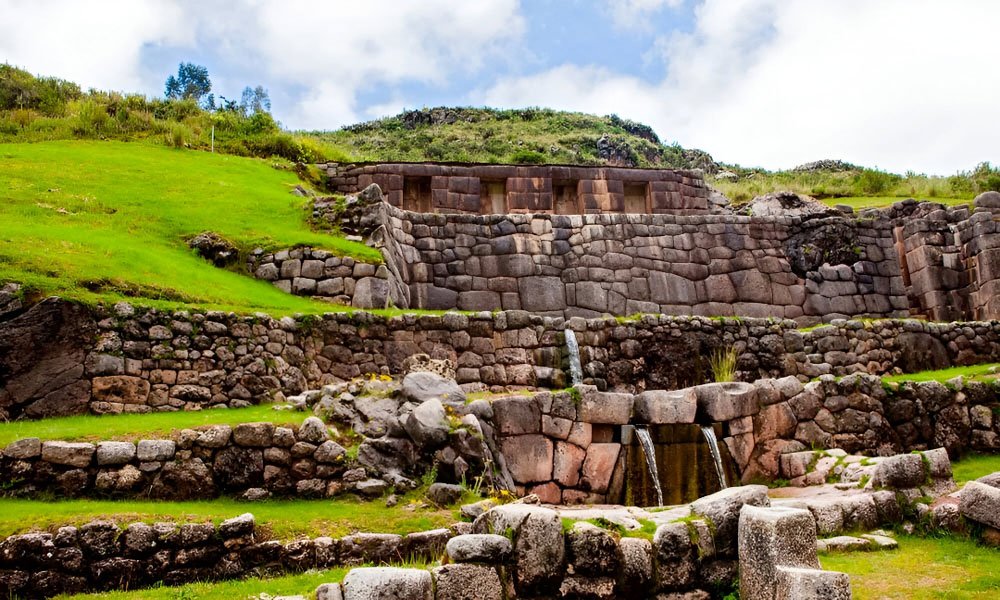
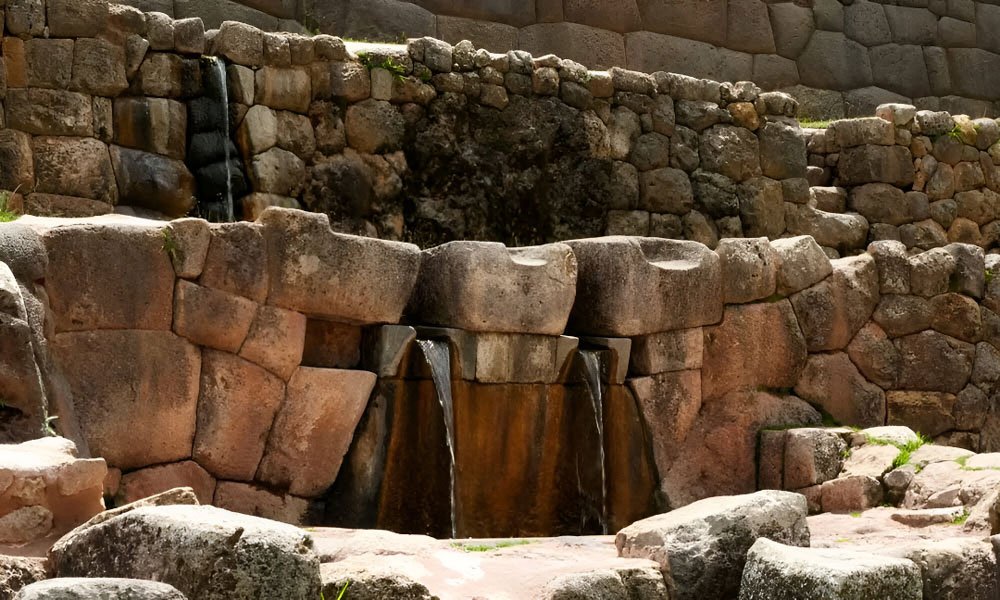
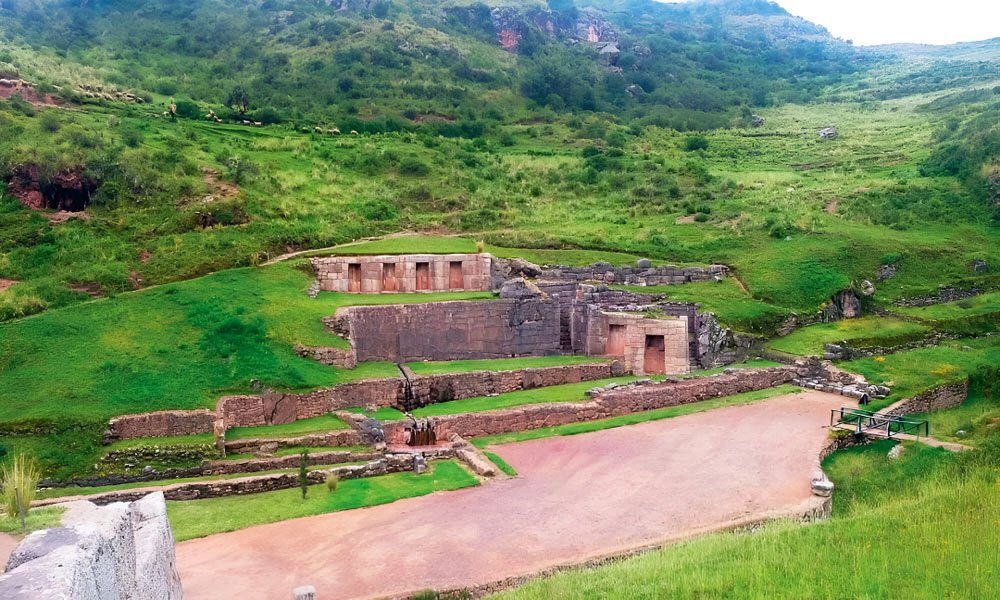
It features a series of aqueducts, canals, and several waterfalls that flow over the rocks; the most prominent being a main waterfall, which divides into two smaller ones, both of which are identical. There was also a kind of royal garden, irrigated by a complex system of canals, specifically built for this purpose. Furthermore, it served as a control point for the people of Antisuyo, as it contained a watchtower.
One of its most emblematic structures is known as the “Inca Baths.”
Historical accounts indicate that Tambomachay, besides being a place of rest for the Inca, was also a sacred site, as it belonged to one of the ‘ceques’ or sacred lines that radiated out from the city of Cusco. Tambomachay is also surrounded by caves, which (according to the Inca worldview) connected to the world of the dead (Uku Pacha).
WHAT DOES TAMBOMACHAY MEAN?
Although there is no definitive information, it is believed that Tambomachay comes from two Quechua words: “Tambo,” which, according to historical accounts and common usage, refers to buildings constructed by the Inca state, where various agricultural products, clothing, or weapons were stored; and “Machay,” which means a place of rest or relaxation. Other research also suggests that “Machay” means “caves,” which is also relevant given the rock formations.
WHERE IS IT LOCATED?
This archaeological complex is located at an altitude of 3700 meters above sea level, 8 kilometers northeast of Cusco, situated on the upper part of a mountain. It is a complex that is part of the Sacsayhuaman archaeological park and occupies an area of 450 square meters.
WHAT WAS ITS FUNCTION?
This archaeological complex, also known as the Inca Bathhouse, consists of a network of aqueducts or underground channels, whose origin is still unknown. These channels fed a main canal located at the top, which in turn supplied the smaller channels, all with an identical flow of water. This demonstrates the high level of hydraulic engineering achieved by the Incas. In addition, there are six niches above the main spring, which confirm the ritual use of the site, suggesting it may have been a temple dedicated to water worship.
The foundations of a tower located in front of the main area suggest that the site also served as a control center for people coming from the Antisuyo region.
It was also called “the Inca’s Baths,” “the Ñusta’s Baths,” or the resting place of the supreme ruler. Both versions could be true, as the Cuzco elite likely used this site as a center for water worship or even fertility rituals.
There is also mention of a garden with its own water system, which unfortunately is no longer functional. However, the site is currently adorned with Queuña, molle, and Kantu trees, which create a beautiful landscape. Some chronicles also mention it as a hunting ground or recreational area belonging to the Inca Tupac Yupanqui. It is certain that at one time these lands were full of the characteristic Andean wildlife.
A HUNTING GROUND
Due to its location at the foot of a mountain and along the Tambomachay River, it is said that, during Inca and pre-Inca times, there was abundant Andean wildlife in the area. This is why some chronicles mention that the site was the hunting ground of the Inca Tupac Yupanqui. Among the undomesticated animals that inhabited the Peruvian Andes were the vicuña and the guanaco.
THE INCA BATHS
Tambomachay is one of the best examples of the Incas’ skill in water management. The site features water channels carved from stone, which terminate in two basins where crystal-clear water flows year-round. A platform located there served as a ritualistic fountain and, possibly, as a bathing area for the Inca emperor.
This site is so named because it is surrounded by mountains, rivers, streams, and water channels, which, when listened to in silence, create a relaxing atmosphere. Some chroniclers suggest that it was the emperor’s place of rest.
WORSHIP OF WATER
According to the Andean worldview, water was the source of life; it was believed to symbolize the masculine principle, while the earth (Pachamama) symbolized the feminine. The union of these two elements was believed to bring fertility.
The network of channels that channeled water to Tambomachay emptied the water into a platform at the lower end, where the Inca would perform rituals in honor of water.
How to get to Tambomachay from Cusco?
To reach this archaeological site, you have several options:
BY PUBLIC TRANSPORT
Go to the main bus stop located in front of the National University of Cusco. Take the bus labeled “Sr. del Huerto,” which will drop you off at the entrance to Tambomachay after approximately 30 minutes.
BY TAXI
Hiring a taxi is a good option, as it will take you there quickly. If you have the time, you can take advantage of the taxi service to do a complete tour, visiting not only Tambomachay but also Q’enqo, Pukapukara, Cristo Blanco, and Sacsayhuaman.
WITH A TRAVEL AGENCY
Undoubtedly one of the best and safest options is to book a city tour. Your visit will be guided, and you can enjoy a pleasant tour. Why not choose Chullos Travel?
OPENING HOURS AND PRICES
The site is open Monday to Sunday from 7:00 am to 6:00 pm.
Admission is only with the Cusco Tourist Ticket, either the general or partial ticket.
RECOMMENDATIONS
Due to the altitude of the archaeological site, you may experience some altitude sickness symptoms, such as fatigue, nausea, and shortness of breath during physical activity. Drinking plenty of water and avoiding fatty foods can help reduce these symptoms.
WHAT TO BRING
- Comfortable walking shoes.
- Rain poncho.
- Sunscreen.
- Hat or cap.
- Comfortable clothing.
- A jacket for the cooler evening temperatures.
- Documents (passport, ID).
- Camera.
- Extra cash (if you want to buy souvenirs).
Tambomachay History