


How to get to the Q’eswachaka Bridge from Cusco?
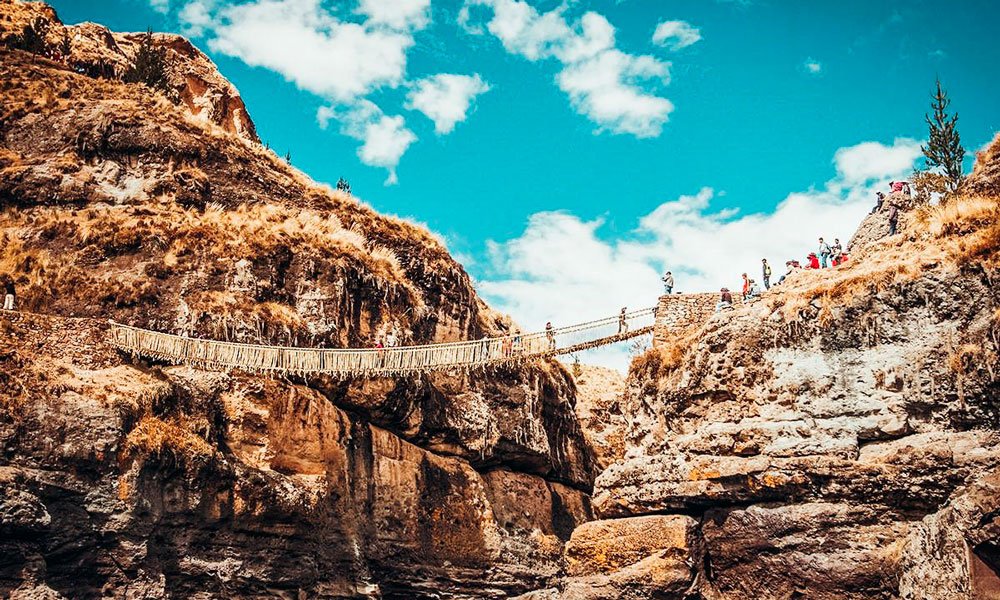
One way to travel is to hire a tour from an agency. In addition to visiting the Qeswachaka Bridge, you will visit other bridges in Checacupe and the four lagoons circuit. The excursion lasts a full day. Another way is to go on your own. From Cusco, take the interprovincial bus. The trip takes four hours (180 km). Tell the driver to drop you off in Combapata, where you can find shared taxis to take you to Yanaoca and Quehue. When you arrive in the district of Quehue, there will be private cars that will take you to the Qeswachaka Bridge. The return trip is the same as the outward journey.
For this route, we recommend you bring: passport and/or ID card, light clothing, gloves, scarf, comfortable shoes, insect repellent, sunscreen, sunglasses, snacks, water, and extra money.
Climate: max. 16°C / -2°C.
Location of the Q’eswachaka Bridge?
Qeswachaka is a suspension bridge that crosses the Apurímac River at 3700 meters above sea level, in the province of Canas, district of Quehue, 160 km from the city of Cusco. It was declared an intangible cultural heritage site by UNESCO in 2013.
How is the Q’eswachaka Bridge renewed?
It is a traditional festival held every June, when four Quechua communities renew the bridge. It lasts four days and usually begins on the first Sunday in June. It involves a very important ritual for the communities involved, and the material they use is ICHU.(straw that grows in the highest areas of the Andes). The four communities come together to renovate the structure of the old bridge, gathering materials for the bridge, which is 28 meters long and 1.20 meters wide.
Here we will see how the day unfolds!
DAY 1:
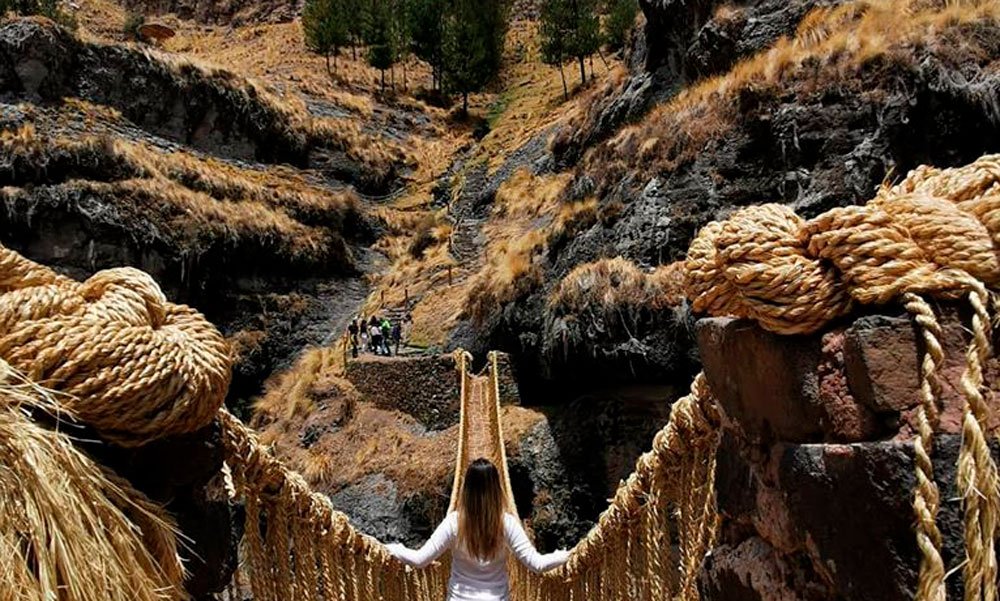
This wonderful day begins with an offering to Apu Quinsallallawi. The Andean woman in charge of weaving the first rope or (Qeswa) participates in the collection of the material (ICHU). This rope will be given to each community member who will assist in this task. Two groups will meet on both sides of the bridge and extend the qeswas from end to end. Chakaruhac (Inca engineer) braids the Qeswaska or main braid.
DAY 2:
We begin by untying the old ropes, then we start tying the new ropes, and once finished, we begin to throw the ropes from one end to the other. Finally, the four ropes serve as the base and the two as railings.
DAY 3:
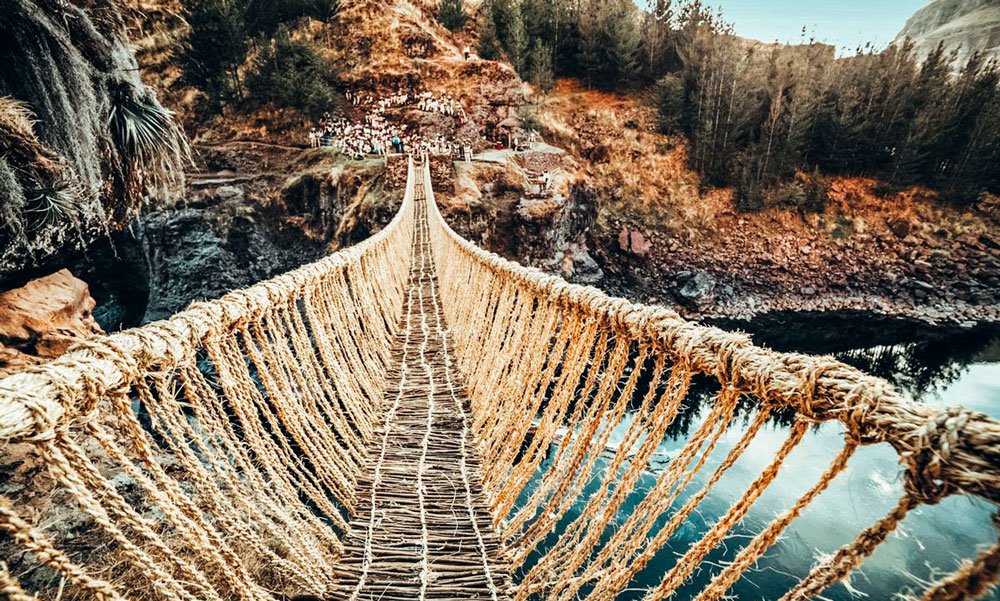
This day ends with the tying of the handrails and the surface of the bridge, which will be used for crossing. Once completed, the bridge is inaugurated, and the community members celebrate with local dance and music.
DAY 4:
This grand day begins with a beautiful festival of indigenous dances performed by the residents of the four communities. And so the four days and the process of building the Inca bridge of Q’eswachaka come to an end.
FACT:
Braiding each rope takes as much time as tying it.
This tradition is undoubtedly one of the most interesting aspects of this Inca engineering feat, which has been preserved to this day thanks to the residents of the four communities who have kept it in good condition and share their ancestral tradition with us, which can still be appreciated today.