


Crocodile Farm – Tumbes
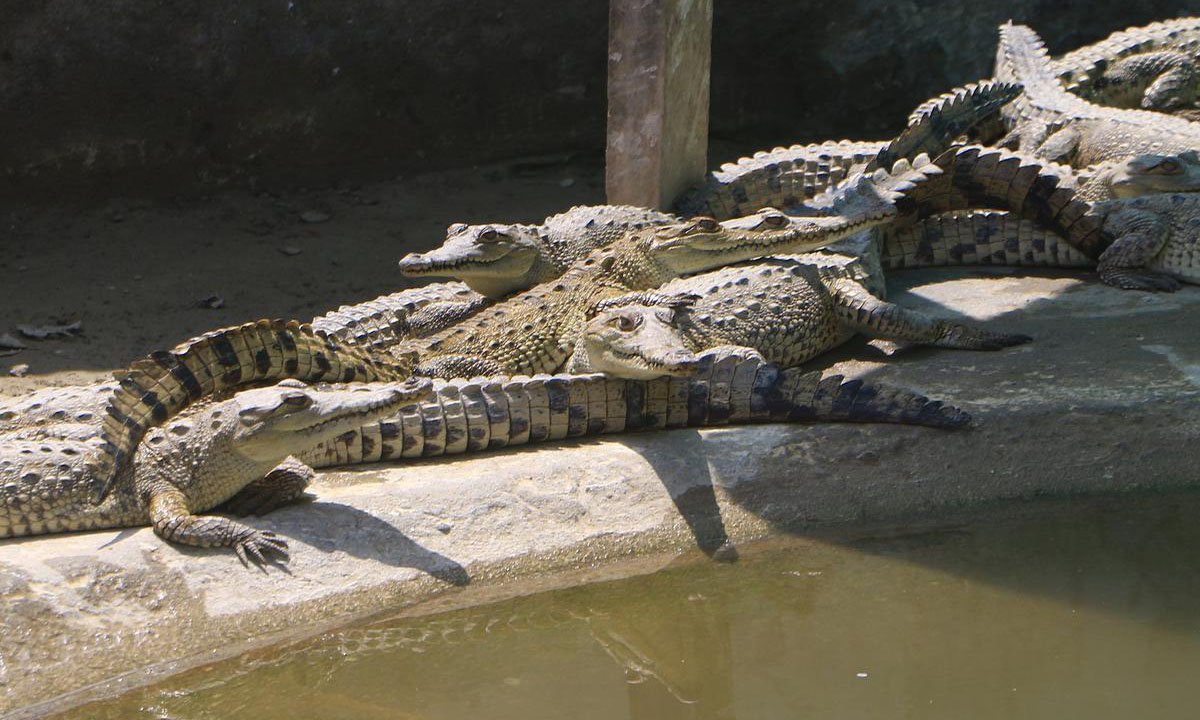
Crocodile Farm – Tumbes
Known as the Tuna Carranza Aquaculture Center, this natural sanctuary is dedicated to the breeding and conservation of the American crocodile, which is in danger of extinction. If you visit Tumbes, a stop at Puerto Pizarro and its surroundings, such as the Tuna Carranza Aquaculture Center, where you can see a large number of crocodiles, is a must.
History
In 1979, the Tumbes crocodile, known as Crocodylus Acutus, was added to Appendix I of CITES due to the deterioration of its natural populations throughout its range. As a result, in 1996, the National Fisheries Development Fund (FONDEPES) established the La Tuna Carranza Aquaculture Center, located in Puerto Pizarro, Department of Tumbes, with the aim of establishing techniques for breeding and managing crocodiles in captivity, starting with 40 specimens. The first specimens brought to this breeding facility were ‘Juancho’ and ‘Chalo’, named after the people who transported them to their new environment.
The first clutch was recorded in 2000 and contained 14 eggs, some of which suffered embryonic death and others were infertile. Since 2002, thanks to the experience gained year after year, it is now possible for most of the eggs laid to hatch without problems.
Location
The Tumbes crocodile farm is located in Puerto Pizarro, in the district and province of Tumbes, Tumbes Region.
Size
The crocodile farm has a total area of 8 hectares.
Altitude
The crocodile farm is located in Tumbes at an altitude of 6 meters above sea level.
Climate
The climate at the crocodile farm is warm and cool. The average annual temperature is 25°C during the day and 21°C at night.
Entrance fee
Tickets to visit the crocodile farm can be purchased at the Artisanal Fishing Landing.
Adults: S/. 3.50
Children: S/ 1.50
Opening hours
The crocodile farm is open every day from Monday to Sunday from 9:00 a.m. to 6:00 p.m.
What is the Tumbes crocodile?
The Tumbes crocodile is also known as the “American crocodile.” Its scientific name is Crocodylus acutus, composed of the Latin words “acuere,” meaning pointed, “acutus,” meaning sharp, “acumen,” meaning tip, and “acus,” meaning needle. This refers to its short, pointed snout.
It is the only type of crocodile that lives in Peru. In the United States, this crocodile is known as the Long-nosed Crocodile because of its long nose.
Distribution
In Peru, the Tumbes crocodile is found from the Zarumilla River in Tumbes to the Chira River in the province of Sullana-Piura, but it is said that they have disappeared from this area and can now only be seen in the mangroves of Tumbes.
Characteristics of the Tumbes crocodile:
- Males measure up to 6 meters in length.
- They have a triangular head and long snout.
- Their average weight is 500 kg, making them the largest in Peru and the second largest in America.
- They have light-colored scales, short legs, and a highly developed tail.
- Their eyelids open and close sideways and they have glands that secrete excess salt through their eyes, allowing them to live in both fresh and salt water.
- Thanks to their ectothermic metabolism, they can go without eating and breathing for up to two hours underwater.
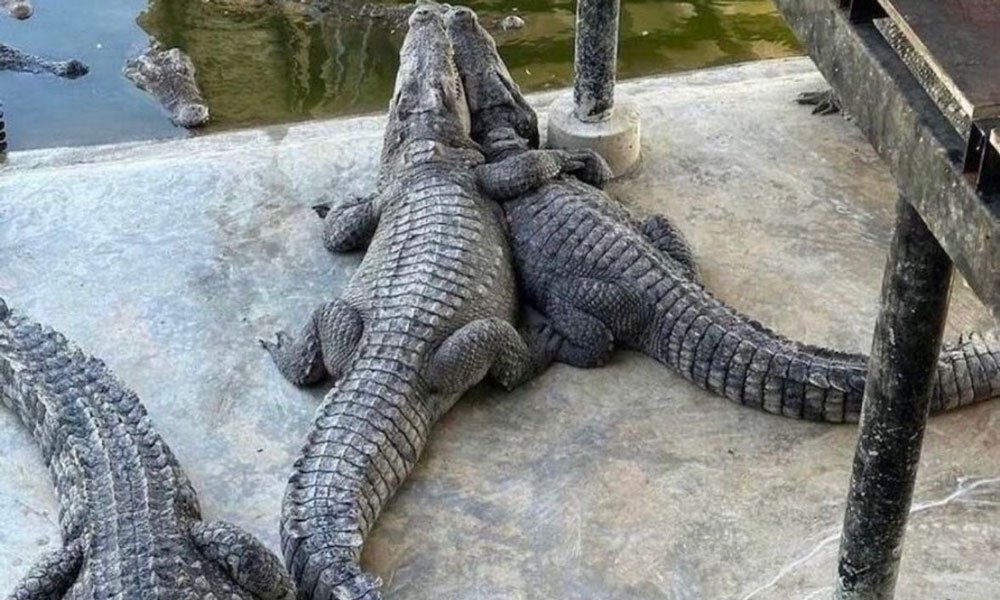
Important facts about the Tumbes Crocodile Breeding Center
- It is a natural shelter run by the National Fisheries Development Fund.
- It is also known as the Tuna Carranza Aquaculture Center.
- It is objective is to breed and care for the endangered American crocodile.
- They carry out technical and scientific work for the breeding of crocodiles in controlled environments.
- The breeding center has more than 300 crocodiles of different ages.
The most notable feature of the Crocodile Breeding Center
- Tuna Carranza seeks to protect, manage, and promote the reproduction of crocodiles through proper feeding, technological packages, and health checks.
- The crocodiles are identified with a microchip installed in their necks, which carries biometric information and the sex of the species.
What can you do at the Crocodile Farm?
You can do the following activities:
Observe crocodiles of different ages.
Take a guided tour.
Take photographs.
Enjoy the flora and fauna along the tour.
Buy crocodile souvenirs.
How to get to the crocodile farm in Tumbes?
From Lima: Lima – Tumbes
By plane: Go to Jorge Chávez Airport in Lima to begin your journey to Pedro Canga Rodríguez Airport in Tumbes. The flight time is approximately 2 hours. The cost ranges from S/. 130 (500 USD).
The airlines that operate this route are: Latam and Sky.
By bus: The trip starts from the district of La Victoria in Lima and ends at the terminal in Tumbes. The trip takes approximately 22 hours and costs between S/. 100 (780 USD) and S/. 120 (450 USD).
The transportation companies that operate this route are: Turismo Tacna Internacional and Turismo Express MyO.
From Tumbes: Tumbes – Crocodile Farm
By car: To start the trip, you have to go to Huáscar Street and take a bus that will take you to Puerto Pizarro. The trip takes approximately 20 minutes and costs S/. 2 (USD 8). You can also hire a taxi for S/.10 (US$38).
By boat: Once you arrive at Puerto Pizarro, you can take boats that will take you to the Crocodile Farm. The cost is approximately S/. 15 (US$60).
Recommendations
You should bring the following:
Comfortable clothing
Water
Insect repellent
Sunscreen
Sunglasses
Hat or cap
Comfortable shoes
Be careful with the crocodiles; do not touch or feed them.