


Sabandía and Sabandía Mill
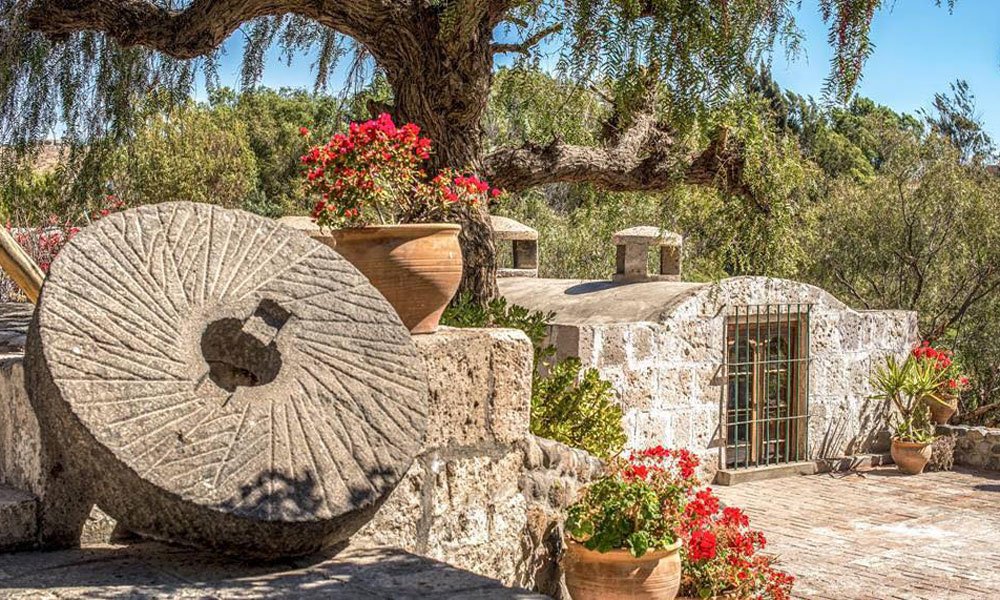
Sabandía and the Sabandía Mill: Living History, Nature, and Architecture in the Arequipa Valley
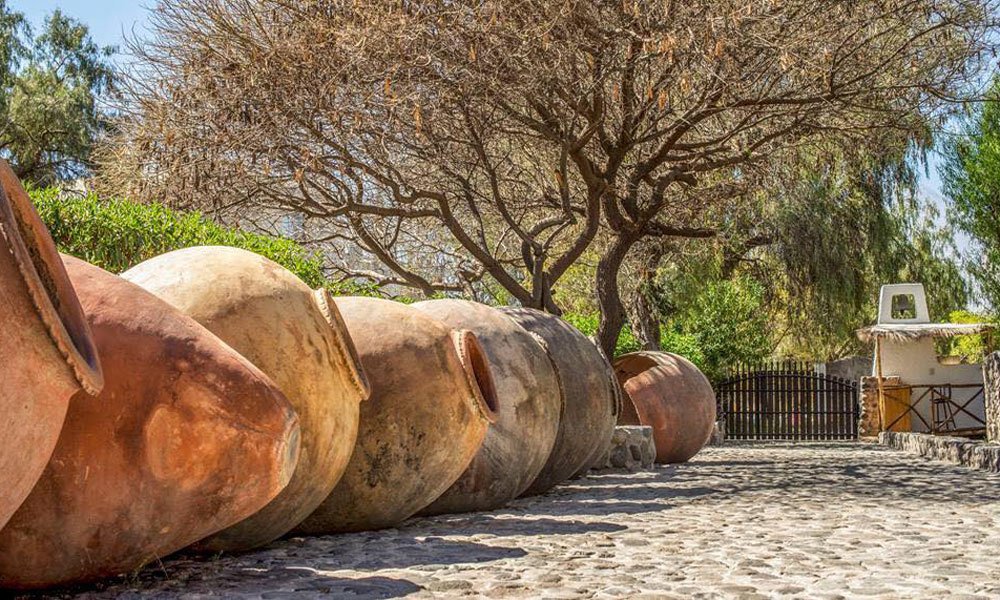
Just 8 kilometers from the Historic Center of Arequipa, the district of Sabandía unfolds like a green oasis amidst water channels, colonial terraces, and old houses. It is a place where life unfolds calmly, surrounded by rural landscapes and under the watchful gaze of the Misti volcano. In the heart of this setting stands one of the valley’s most iconic landmarks: the Sabandía Mill, built in 1621 and considered a masterpiece of viceregal civil architecture in sillar stone.
Visiting Sabandía is not just about seeing an old mill; it’s about discovering an essential part of Arequipa’s agricultural history, understanding the importance of water in the life of the valley, and exploring a place that blends nature, heritage, and identity.
1. Sabandía: The Historic Valley that Fed Arequipa
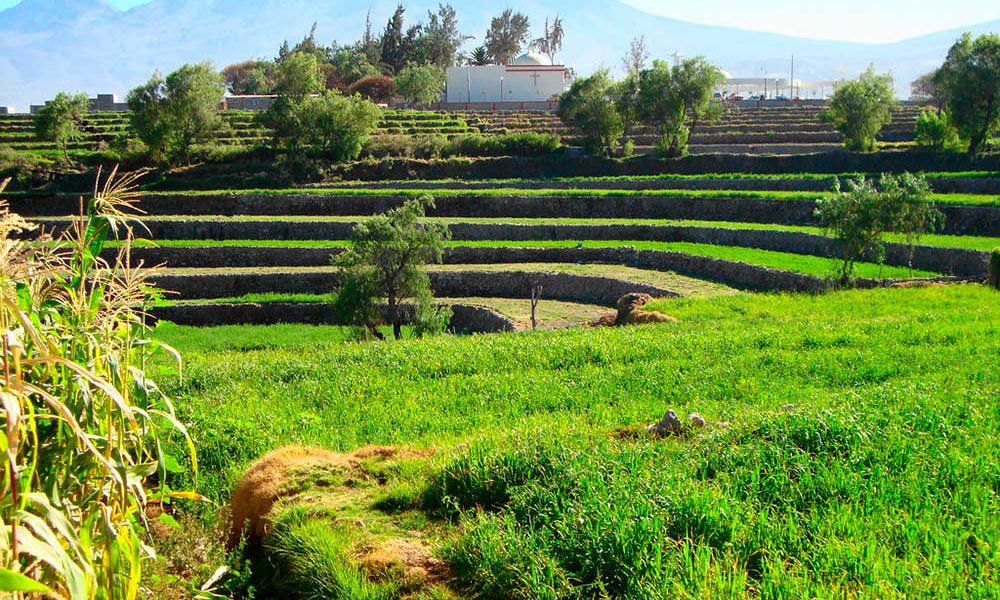
Sabandía is one of the oldest and most productive valleys in the Arequipa region. Long before the arrival of the Spanish, pre-Hispanic cultures took advantage of the fertile lands for intensive agriculture using systems of terraces, canals, and irrigation ditches. This system was maintained and perfected during the Viceroyalty, transforming the valley into a key source of grains, corn, wheat, alfalfa, and other products that supplied the city.
1.1 Geography and Landscape
Sabandía is characterized by:
- Natural streams and springs, fed by volcanic snowmelt.
- Agricultural terraces still in use, some centuries old.
- Abundant vegetation, especially willows, pepper trees, and eucalyptus.
- Privileged views of the Misti, Chachani, and Pichu Pichu volcanoes.
This environment makes the district one of the greenest areas in Arequipa, unlike the more arid landscapes that predominate in other parts of the city.
1.2 Agricultural Traditions
To this day, Sabandía maintains traditional agricultural activities:
- Alfalfa cultivation
- Corn and wheat planting
- Raising horses, cattle, chickens, and alpacas
- Use of colonial irrigation canals
Water has always been a vital resource. In fact, the presence of abundant springs is what allowed for the construction of the mill in the 17th century.
2. The Sabandía Mill: A 17th-Century Heritage Site
Built in 1621, the Sabandía Mill was designed by the master architect Francisco Flores, a specialist in sillar (volcanic stone) construction during the Viceroyalty. Its purpose was to grind wheat, barley, and other grains using a hydraulic system ingeniously integrated into the terrain.
2.1 Mill Architecture
The building is an exceptional example of civil architecture using sillar:
- Thick walls that help keep the structure cool.
- Carved arches that showcase the early Baroque tradition in Arequipa.
- Staircases and platforms built on different levels.
- Small windows that maintain a functional colonial style.
The sillar used comes from nearby quarries, a material that characterizes almost all of Arequipa’s historical architecture.
2.2 The Hydraulic System
The mill’s crown jewel is undoubtedly its water system, considered one of the most advanced of its time:
- Water is channeled from a main irrigation ditch to the mill.
- The current activates a waterwheel located at a lower level.
- The wheel’s energy moves the millstones inside.
- The water continues its course to the agricultural fields.
This simple yet effective system functioned for centuries. Today, part of the original mechanism can still be seen in operation thanks to restoration work.
2.3 The 20th-Century Restoration
After years of neglect, the Sabandía Mill was restored in 1973 by architect Luis Felipe Calle, who successfully recovered its original form and adapted it as a tourist attraction.
Its restoration made it one of the first rural monuments to be restored in southern Peru.
3. What to See Inside the Sabandía Mill
The complex is larger than it appears from the outside. Among its main attractions are:
3.1 The Waterwheels and Canals
The tour allows you to observe the waterwheels, the fountains, and the sluice gates where the water flows. It is one of the best-preserved colonial water systems in the country.
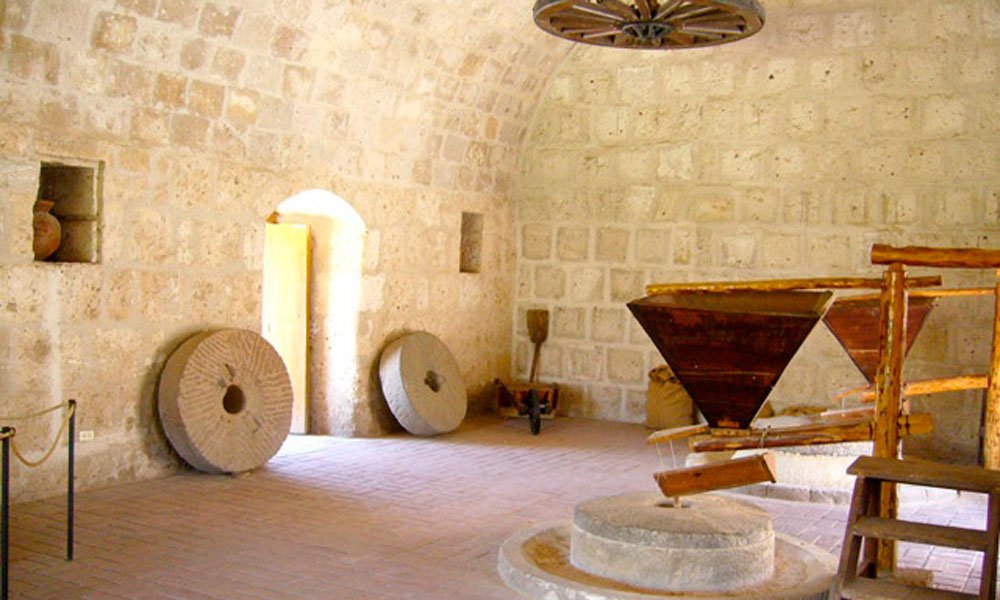
3.2 The Millstones
Two large circular stones show how different grains were ground. This process was essential for supplying flour to colonial Arequipa.
3.3 The Arches and Corridors
Each arch made of sillar (volcanic stone) is precisely carved and aligned with the interior courtyards. They are one of the most photogenic elements of the mill.
3.4 The Gardens and Terraces
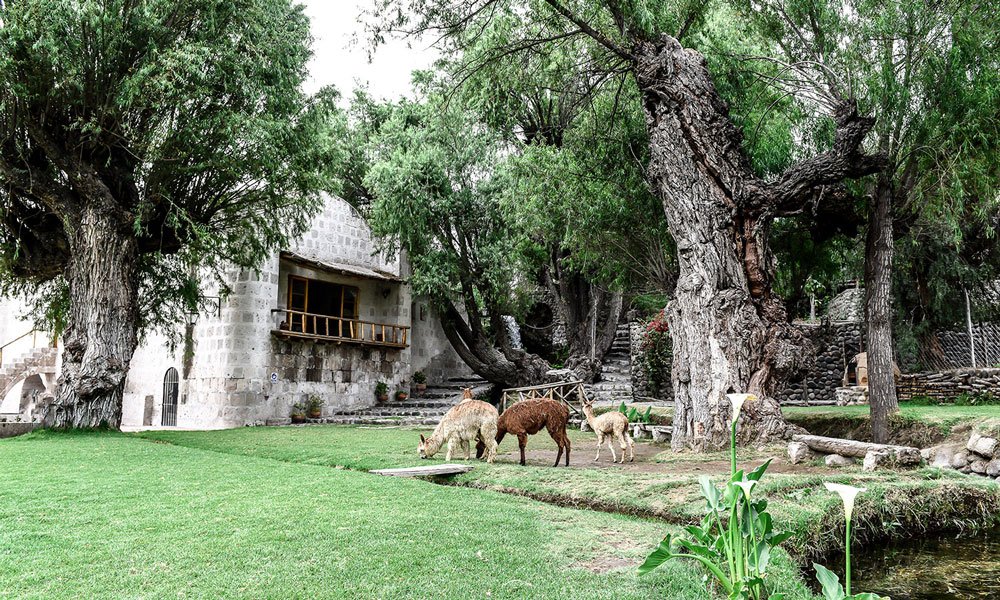
The vegetation of the complex, combined with the sound of the water, creates a very relaxing atmosphere, ideal for strolling and taking photographs.
3.5 Animals of the Valley
In the outdoor area you will usually find:
- llamas
- alpacas
- bulls
- horses
- ducks
These animals represent the rural life that is still maintained in Sabandía.
4. Sabandía Beyond the Mill
Although the mill is the main attraction, the district offers other points of interest that complement the visit:
4.1 Natural Viewpoints
Several strategic viewpoints offer panoramic views of the entire valley, the volcanoes, and the agricultural terraces.
4.2 Colonial Terraces
Many of these terraces are still in use and demonstrate the continuity of pre-Hispanic and colonial agricultural traditions.
4.3 Old Houses
Among them, the Sabandía House stands out, an example of rural architecture built with sillar stone and featuring antique tile roofs.
4.4 Horseback Riding
Some local families rent horses for exploring the surrounding area, ideal for those seeking a more rural experience.
5. How to Get There and Visiting Tips
5.1 How to Get There
- Taxi or app: 15–20 minutes from the city center.
- Guided tour: part of the Countryside Circuit.
- Public transportation: possible, but slow.
5.2 Hours and Admission
- Generally open from 9:00 a.m. to 5:00 p.m.
- Affordable admission fee.
5.3 Recommendations
- Bring sunscreen and a hat (Sabandía is very sunny).
- Visit early to avoid crowds.
- Perfect for wedding, quinceañera, or family photos.
- A guide is not necessary, but one can enrich the experience.
Conclusion
Sabandía and the Sabandía Mill represent the perfect union of history, architecture, and nature. Visiting this corner of the Arequipa valley is like traveling back in time while enjoying a vibrant landscape steeped in tradition. It is an unmissable destination for those who wish to discover the rural, authentic and heritage side of the White City.