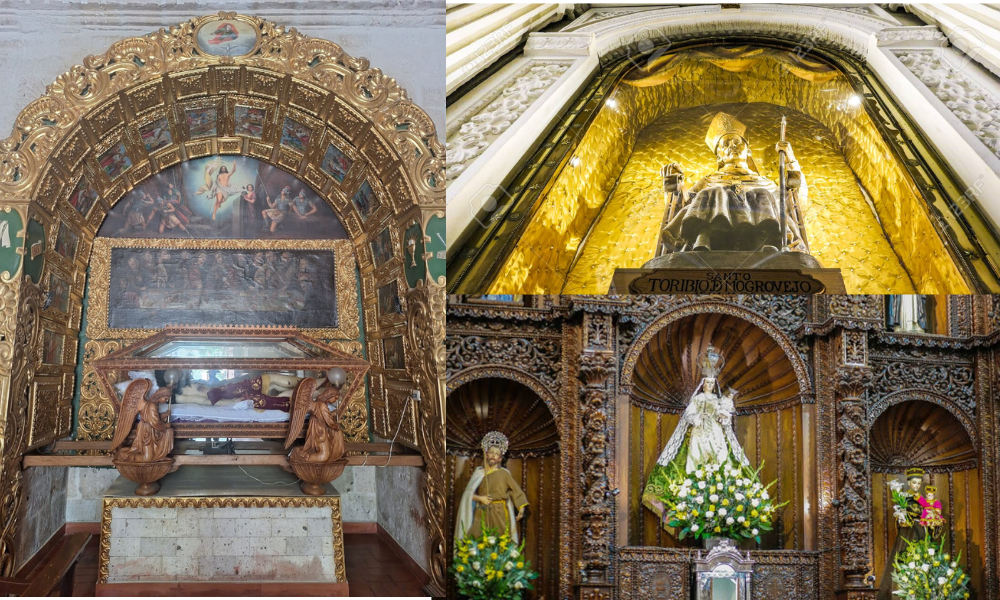
the Church of Yanahuara
The Church of San Juan Bautista is located in the heart of the traditional Yanahuara neighborhood, a district founded in the 16th century and known for its sillar (volcanic stone) architecture. Over time, this area became a residential area for artisans, farmers, and various religious communities. As a result, it still retains narrow streets, white houses, and a Hispanic urban design with indigenous influences that give it a unique character.
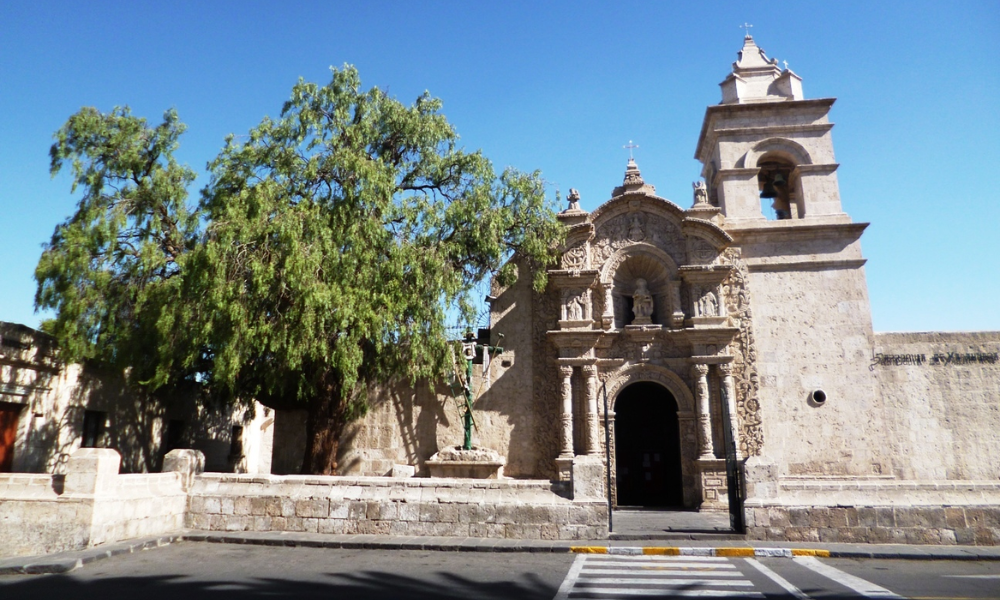
The church is situated in the district’s main square, surrounded by gardens and traditional streets that maintain their colonial charm. It is also very close to the Mirador de los Arcos (Arches Lookout), from where the Misti, Chachani, and Pichu Pichu volcanoes can be seen. Due to this architectural ensemble and its urban value, Yanahuara is part of the Monumental Zone declared a National Cultural Heritage Site.
History
The church was built in 1750, during the height of the mestizo Baroque style in Arequipa. The work was carried out by local stonemasons specializing in sillar stone, a technique perfected in the region that allowed for the construction of a solid and elegant building.
With Spanish colonization, Yanahuara became a key center for the evangelization of the indigenous and mestizo population. For this reason, the church served as a religious and social center for centuries and maintains a vibrant parish life to this day. Although the city has suffered several earthquakes, the church remains standing thanks to the resilience of its materials and the traditional construction methods.
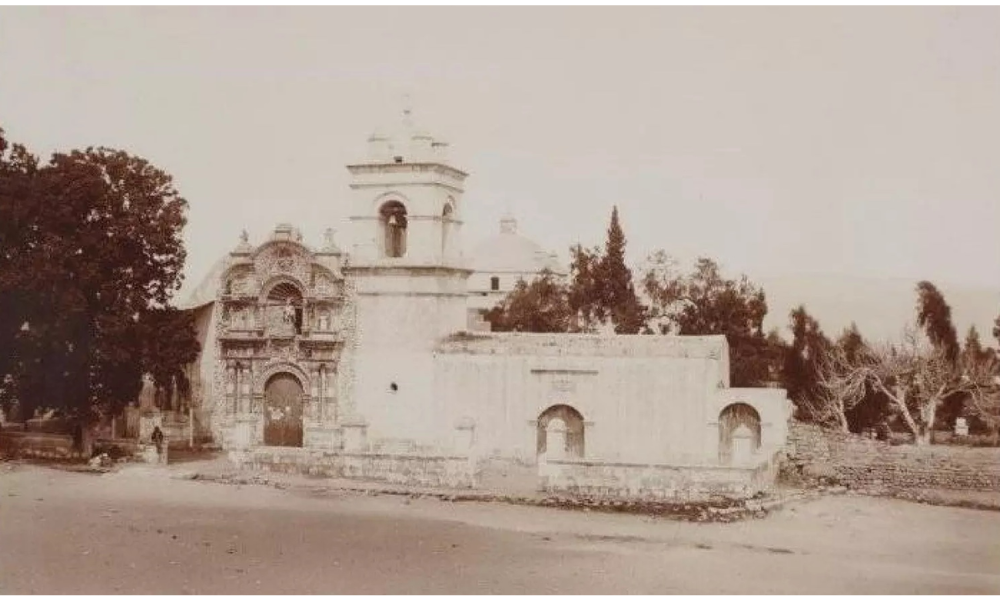
Architecture
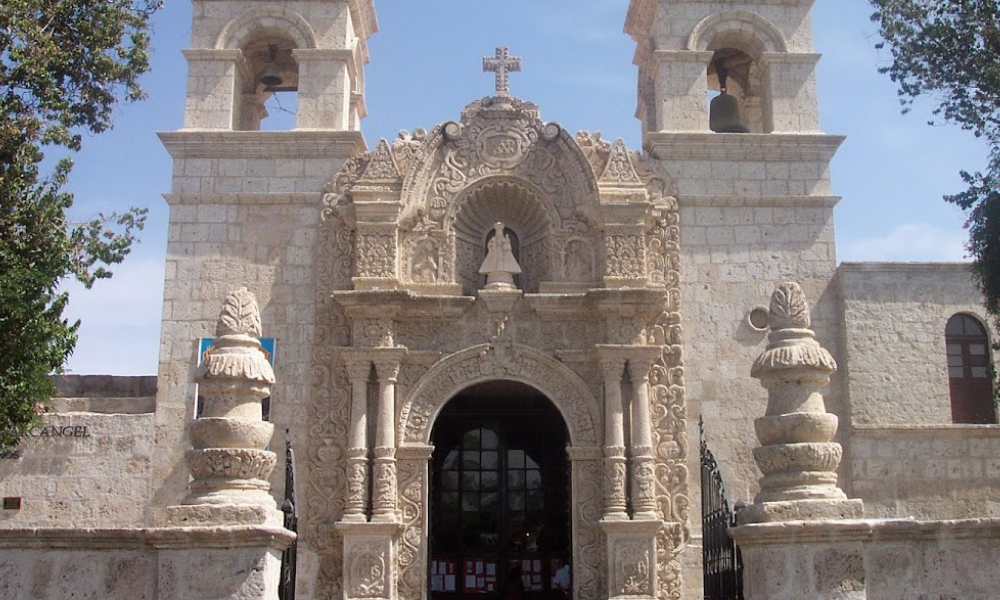
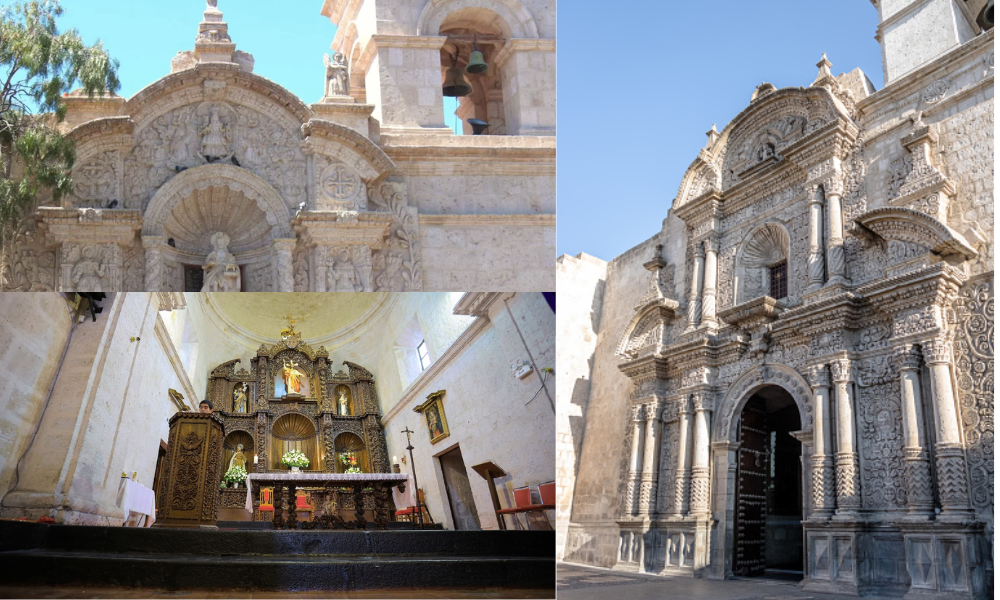
The facade is one of the main attractions and a prime example of mestizo Baroque. This artistic blend merges European elements with symbols from Andean culture, creating a unique style in the region.
🔸 Facade Characteristics
- Material: white volcanic stone.
- Style: mestizo Baroque with religious iconography and indigenous motifs.
- Portico: Solomonic and Corinthian columns carved with great precision.
- Reliefs: biblical figures, angels, Andean flowers, fruits, birds, and pre-Hispanic geometric designs.
- Coats of Arms: symbols linked to religious orders such as the Dominicans and Franciscans.
This ensemble reveals the cultural syncretism of the 18th century, where local flora—such as the cantuta flower—and Andean animals are integrated with Christian motifs.
🔸 Tower and Exterior Structure
The church has a bell tower also constructed of volcanic stone. Its design is understated, yet it harmonizes perfectly with the main entrance and the characteristic Baroque style of the building.
Church Interior and Artistic Elements
The interior is simpler than the facade, but maintains a balanced and harmonious style.
🔸 Layout
- Single nave.
- Barrel vault.
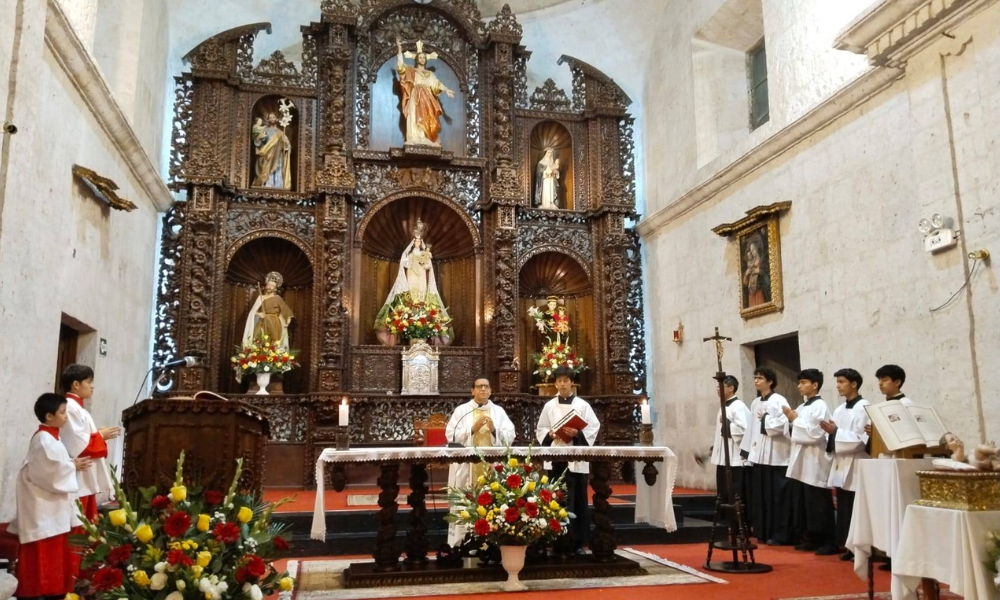
- Carved pulpit and main altar.
- Traditional choir loft.
🔸 Artistic and Religious Elements
The church preserves 18th-century murals depicting biblical passages, including the Baptism of Christ. The main altarpiece, crafted from gilded wood, is dedicated to Our Lady of the Rosary and features images of Saint Rose of Lima and Saint Catherine of Siena.
Processional figures such as Saint John the Baptist, Christ Crucified, and various Marian devotions are also prominent. The atmosphere of the place conveys serenity and sobriety, contrasting with the ornate richness of its facade.
Cultural, Religious, and Tourist Significance
The church is not only a historical monument; it is also an integral part of the district’s daily life.
🔸 Religious Significance
The church continues to function as a parish and holds celebrations such as baptisms, weddings, and Sunday Masses. The Feast of Saint John the Baptist—celebrated every June 24th—remains one of the neighborhood’s most important celebrations.
🔸 Historical Significance
In addition to being one of the finest examples of mestizo Baroque architecture in Arequipa, the church has witnessed various stages of the city’s history. Its resistance to earthquakes demonstrates the effectiveness of local sillar (volcanic stone) construction techniques.
🔸 Tourist Significance
The area is one of the most visited in Arequipa and an ideal spot for photography. The church is also part of tourist routes such as the Sillar Route, the Arequipa Historical Tour, and hikes to the Yanahuara Viewpoint.
What to See and Do During a Visit
If you’d like to explore the church, these recommendations can help:
🔸 Outside
- Examine the facade and look for details such as carved faces, flowers, or birds.
- Photograph the facade in the morning or at sunset to make the most of the light.
- Stroll through the plaza and explore the traditional streets of the neighborhood.
🔸 Inside
- Observe the colonial murals and their state of preservation.
- Pause to admire the main altarpiece and the religious images.
- Walk through the nave and appreciate the barrel vault.