


Imata Stone Forest: A complete guide to visiting it
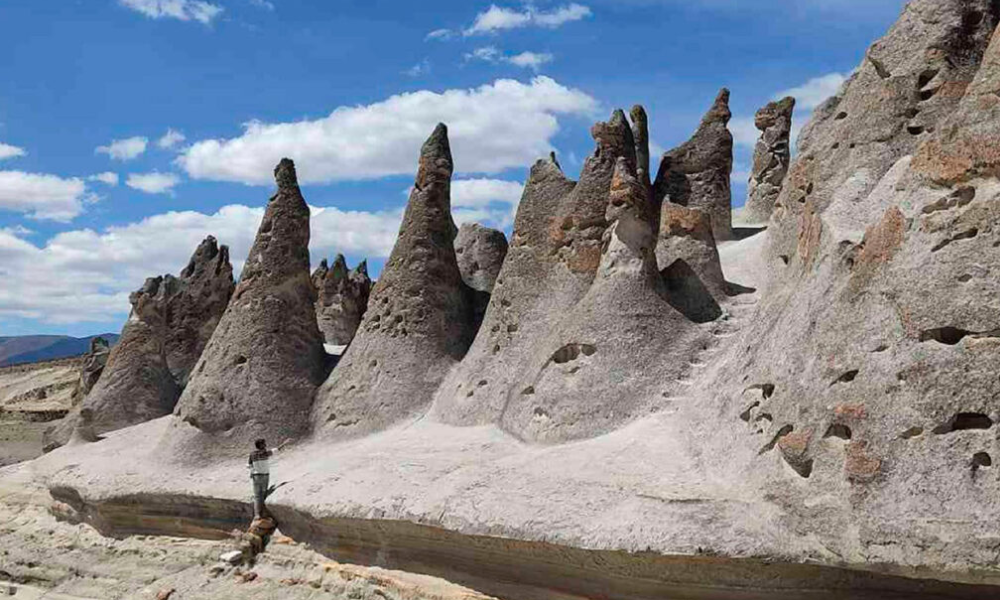
The Imata Stone Forest, located in the province of Arequipa, is one of the most striking geological landscapes in southern Peru. At over 4,000 meters above sea level, this natural wonder is formed by enormous columns, towers, and rock formations sculpted over thousands of years by wind, cold, and water erosion. Its appearance is so unique that, at first glance, it resembles a petrified forest stretching across a high plateau.
Walking through Imata is a truly unique experience: the air is crisp, silence reigns, and the sense of vastness is immense. The landscape blends shades of gray and gold with intense skies that shift throughout the day, making it an ideal spot for photography enthusiasts, those who appreciate wide-open panoramas, and those seeking unusual scenery. Furthermore, its proximity to areas like Salinas y Aguada Blanca makes it perfect for a nature trip.
This place also holds special significance due to its origins. The formations that appear today as towers and columns are remnants of ancient volcanic eruptions, hardened and sculpted over time into a landscape that seems otherworldly. In this guide, you’ll find information on how to get there, what to see, approximate prices, geological history, the best time to visit, weather conditions, and practical tips to make the most of your visit to the Imata Stone Forest.
How to get to the Imata Stone Forest
The Imata Stone Forest is located on the Arequipa–Juliaca route, at a high altitude and surrounded by vast Andean landscapes. Getting there is relatively easy because the main access is right next to the highway, although it’s important to keep in mind the cold climate and the altitude. Most travelers begin their journey from downtown Arequipa or from areas like Cayma and Yanahuara, using taxis, ride-hailing apps, or tourist transport.
How to get there from Arequipa (clear options)
-
- Taxi or private tour service
This is the most comfortable way to get there. The trip takes between 2 and 2.5 hours, depending on traffic and photo stops. This service drops you off directly at the main viewpoint of the forest.
Approximate price: S/ 250 to S/ 400 per vehicle (round trip, depending on the season). - Full-day tour
Many travelers choose organized tours that include transportation, a guide, and additional stops at salt flats or high Andean lagoons.
Approximate price: S/ 120 to S/ 180 per person. - Your own car
The road is paved and safe for almost the entire journey. It is important to drive carefully due to the altitude and the cold. The entrance to the forest is signposted, and there are parking areas along the sides of the road.
Cost: only fuel and tolls (approximately S/ 10–S/ 15). Interprovincial bus - (Arequipa–Juliaca/Puno)
You can take a bus that passes through Imata, but it won’t drop you off at the forest, only on the highway. From there, you’ll need to walk about 20–25 minutes to reach the rock formations.
Price: S/ 20 to S/ 40 per person.
- Taxi or private tour service
Income and costs at the destination
There is no formal entrance or official ticket office to visit the Imata Stone Forest. Access is free, although on some days locals may request a voluntary contribution for maintenance.
Suggested contribution: S/ 2 to S/ 5 per person.
It is also advisable to bring cash, as there are no shops or reliable cell phone service near the forest.
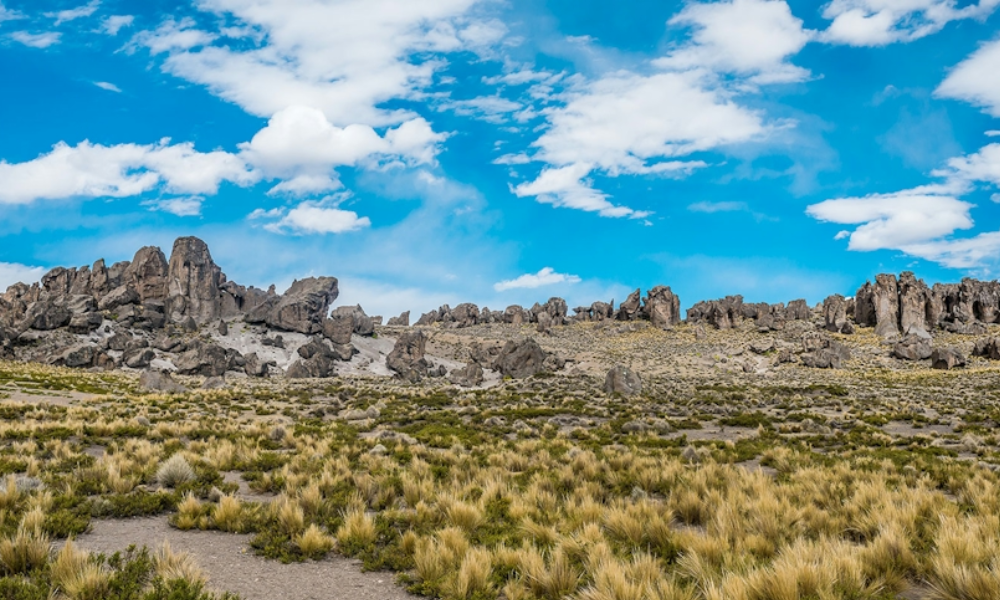
Geological history and what makes the Imata Stone Forest unique
The Imata Stone Forest is one of the most impressive geological landscapes in southern Peru, its origin stemming from a combination of volcanic activity and thousands of years of erosion. The strange towers and columns visible today didn’t appear overnight; they are the result of natural processes that transformed ancient layers of lava into whimsical stone sculptures.
Volcanic landscape formation
Millions of years ago, massive eruptions blanketed the Imata Plateau with volcanic material. Over time, these layers cooled and hardened, forming relatively fragile rocks that were easily shaped by nature.
Wind, rain, extreme cold, and abrupt temperature changes gradually sculpted the surfaces, separating blocks and creating figures that resemble towers, columns, animals, or stone giants.
This differential erosion—where some parts of the rock resist more than others—is what gives the forest its “ghostly” appearance.
Why is this landscape so special?
The Imata Stone Forest is unlike any other destination in Arequipa. Its appeal stems from several unique factors:
- The contrast between the high Andean plateau and the vertical rock formations.
- The total silence of the Altiplano, which creates an almost surreal atmosphere.
- The grayish, golden, and deep blue tones of the sky, ideal for photography.
- The feeling of walking in a remote place, as if it were another planet.
Its accessibility: it’s located right next to the highway, eliminating the need for long walks.
For these reasons, Imata is a perfect destination for travelers seeking unique natural landscapes, open scenery, and unusual landscapes in southern Peru.