


Pomata — colonial church of Santiago Apóstol, Aymara architecture and culture
Pomata, a locality situated in the province of Chucuito, in the Puno region, on the shores of Lake Titicaca, constitutes one of the most representative spaces of the encounter between Andean heritage and colonial tradition in the Peruvian highlands. With a predominantly Aymara population, Pomata preserves cultural, linguistic, and festive practices that are closely articulated with its religious architecture, which serves as a tangible reflection of its history and worldview.
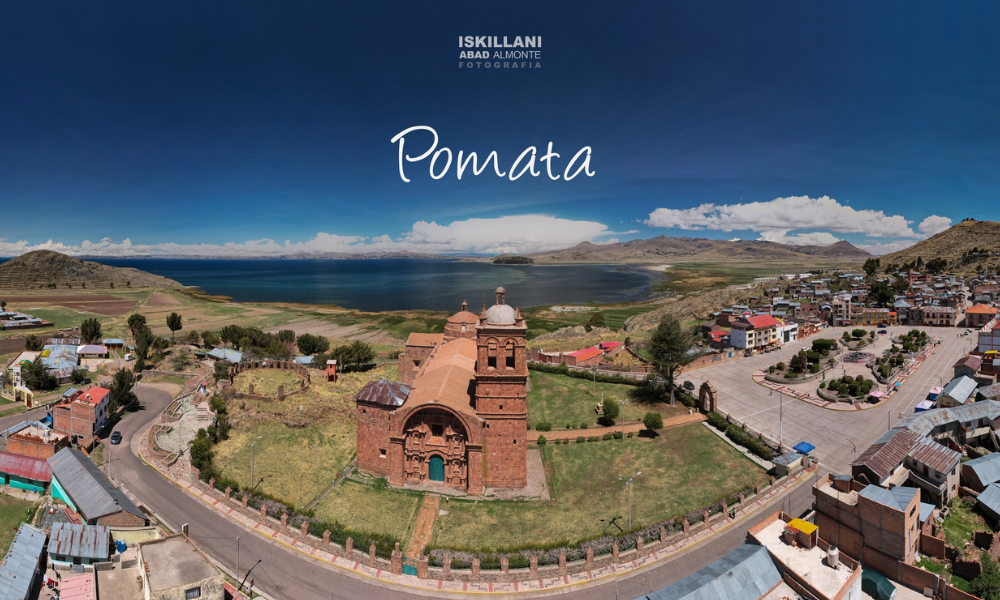
Colonial Church of Santiago the Apostle – Architecture
The main monument of the district is the Church of Santiago the Apostle, also associated with devotion to the Virgin of the Rosary. This temple represents a Cultural Heritage site of great importance for the Puno region, as it blends Catholic religion with indigenous Aymara traditions. Likewise, it stands out as one of the most notable expressions of Andean mestizo baroque, a style that combines the structure and symbolism of European Christianity with decorative elements, techniques, and sensibilities rooted in the indigenous world. Its construction in reddish stone, the ornamental richness of its façades, and especially its finely crafted stone dome make it a singular work within the architectural heritage of the southern Andes.
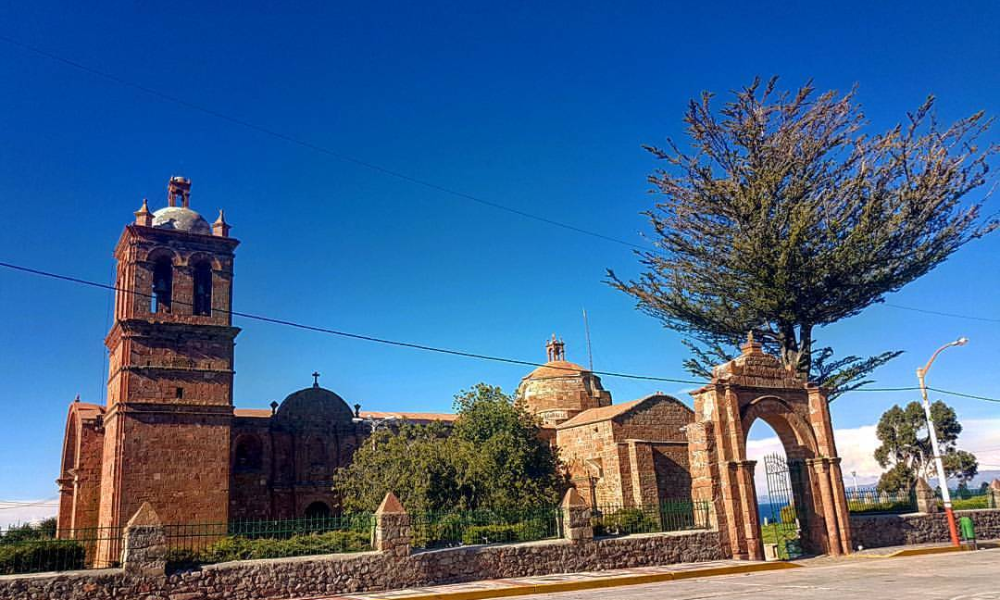
The colonial Church of Santiago the Apostle comprises several aspects:
a) Material and Color
It is built of reddish or pink stone, a feature that makes it unmistakable in the highlands (for this reason, many descriptions highlight it as “pink/reddish stone”).
This material is not merely aesthetic; stone carving allows for very fine decoration on façades and structural elements.
b) Plan and Spatial Organization
The church follows a Latin cross plan, consisting of a longitudinal nave, a transept (the transverse “arm”), and a presbytery or altar at the far end.
The nave is usually covered with a barrel vault, often described as a stone “tunnel.”
At the crossing stands the main feature of the building: the stone dome, visible from a distance.
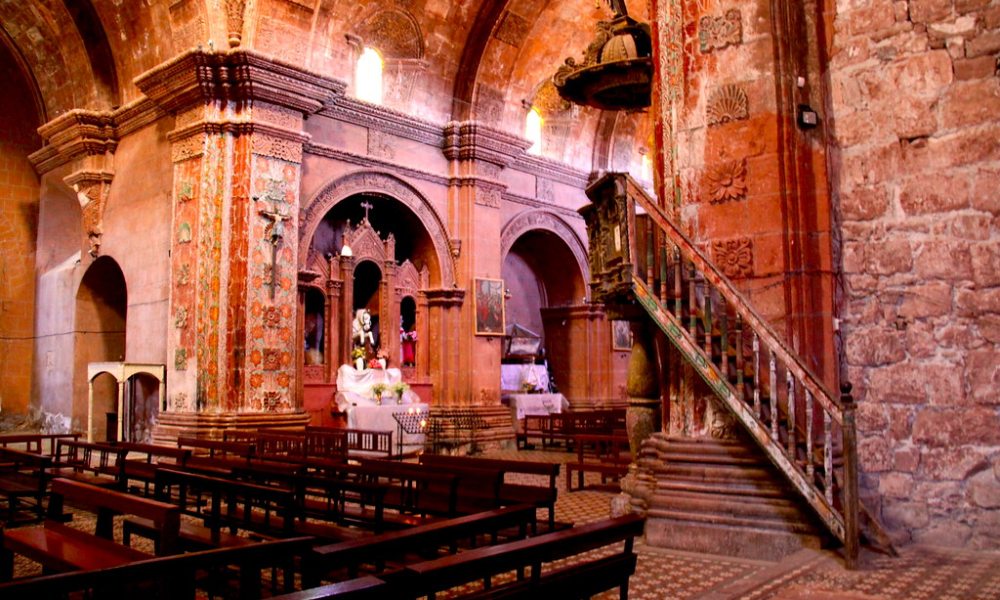
- The Stone Dome: Artistic and Technical Achievement
The dome of the Church of Santiago the Apostle is widely recognized as both a technical and artistic feat. In fact, many accounts describe its filigree-like appearance, often compared to lace carved in stone. Moreover, it harmoniously combines baroque volumetry with local craftsmanship. Art historian Harold Wethey is frequently cited for describing the dome as a high point of the mestizo style in both design and execution. Thus, the dome stands as a synthesis of European baroque principles and indigenous artistic mastery.
- Façades and Reliefs: Mestizo Baroque as Visual Language
In Andean churches, façades are not merely entrances; rather, they function as carved messages. Accordingly, the façades of the Pomata church present a strong example of mestizo baroque, also known as Andean baroque. This style blends European Christian composition with local ornamentation, including floral motifs, geometric patterns, and elements reminiscent of textile design. As a result, the building’s surface becomes a visual narrative that reflects cultural hybridity.
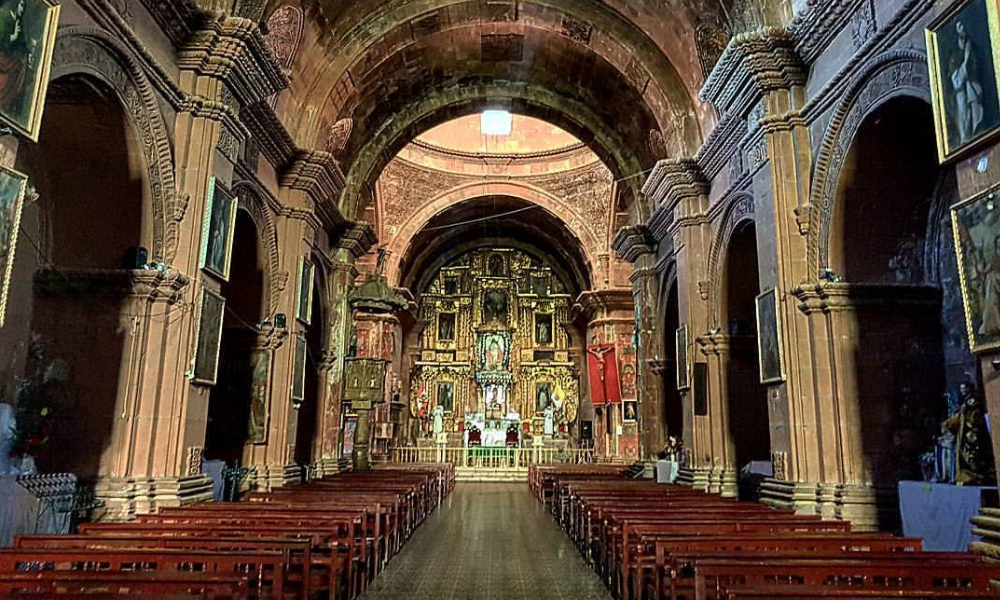
- Interior Space: Altars, Retables, and Marian Devotion
Inside the church, carved and decorated retables stand out prominently. In particular, visitor accounts emphasize the main altar, which houses the venerated effigy of the Virgin of the Rosary. Additionally, the interior holds significant historical value due to photographic documentation by Martín Chambi, who captured images of one of the temple’s retables between approximately 1925 and 1931. Therefore, these photographs are essential for understanding the church’s historical appearance and devotional importance.
Pomata and the Aymara Community
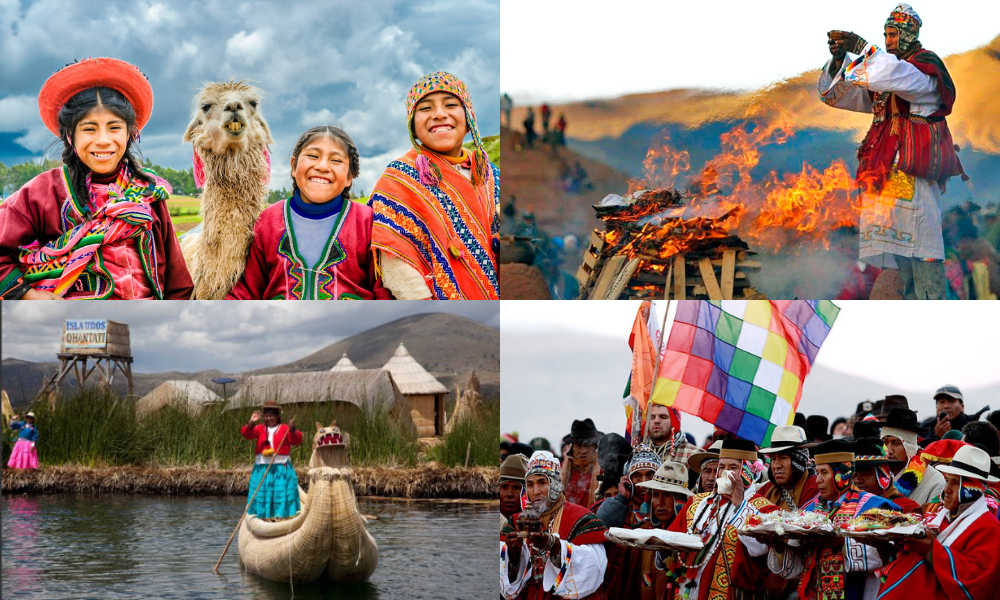
When describing Pomata as an “Aymara” locality, this refers to lived cultural practices rather than solely ethnic classification. Specifically, it involves the use of the Aymara language (often alongside Spanish), communal organization based on mutual aid and reciprocity, and a worldview connected to mountains, Lake Titicaca, agricultural cycles, and regional historical memory. Consequently, the church exists within a broader cultural system shaped by ancestral traditions.
- Religious Syncretism: Catholic and Andean Coexistence
In the Andean highlands, Catholicism did not entirely replace indigenous belief systems. Instead, many practices were reinterpreted. Saints and churches are integrated into local calendars tied to harvests, rains, and annual cycles. Furthermore, festivals extend beyond religious services to include music, dance, food, ritual kinship, and social roles. Thus, the church serves simultaneously as a religious structure and a social stage where community identity is displayed.
Festivities in Pomata
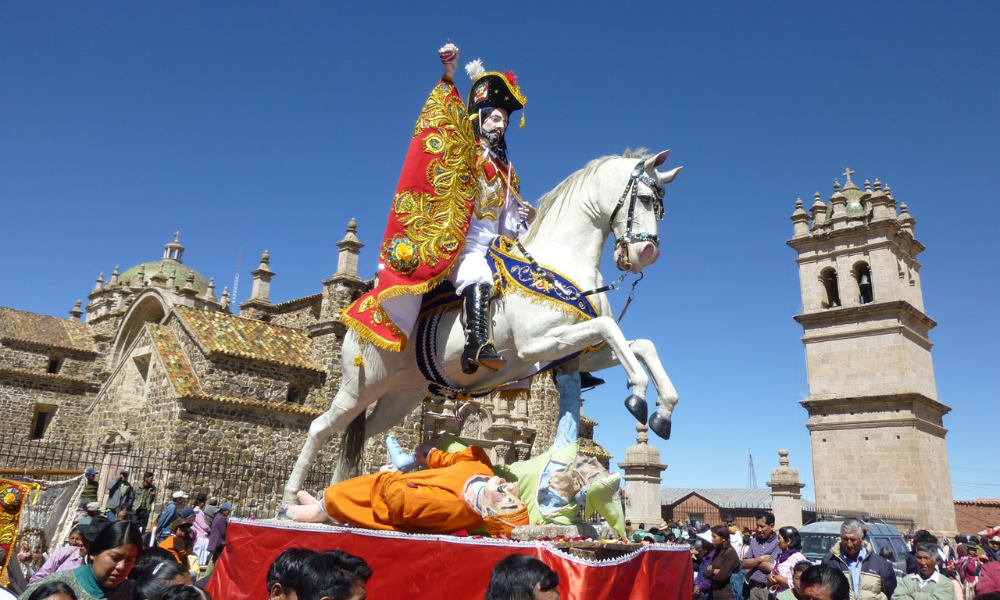
Feast of Santiago the Apostle (July 25)
Municipal communications and local programs record a solemn Mass and procession on July 25. In Andean practice, this celebration usually includes bands, comparsas, dance performances, and festive offices assumed by families or mayordomos who gain prestige through service and expenditure.
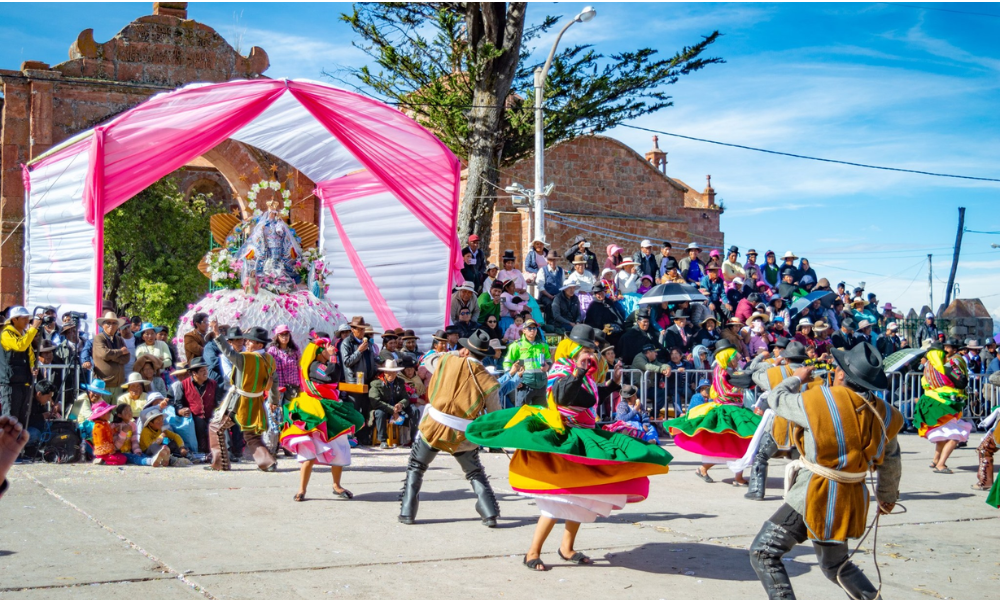
Feast of the Virgin of the Rosary (October)
The Virgin of the Rosary, considered Pomata’s patroness, is celebrated on the first Sunday of October. Likewise, these festivities involve rotating communal responsibilities. Food, chicha, flowers, and candles function as offerings expressing reciprocity and gratitude. At the same time, music from bands or sikuris connects the religious ritual with communal life.
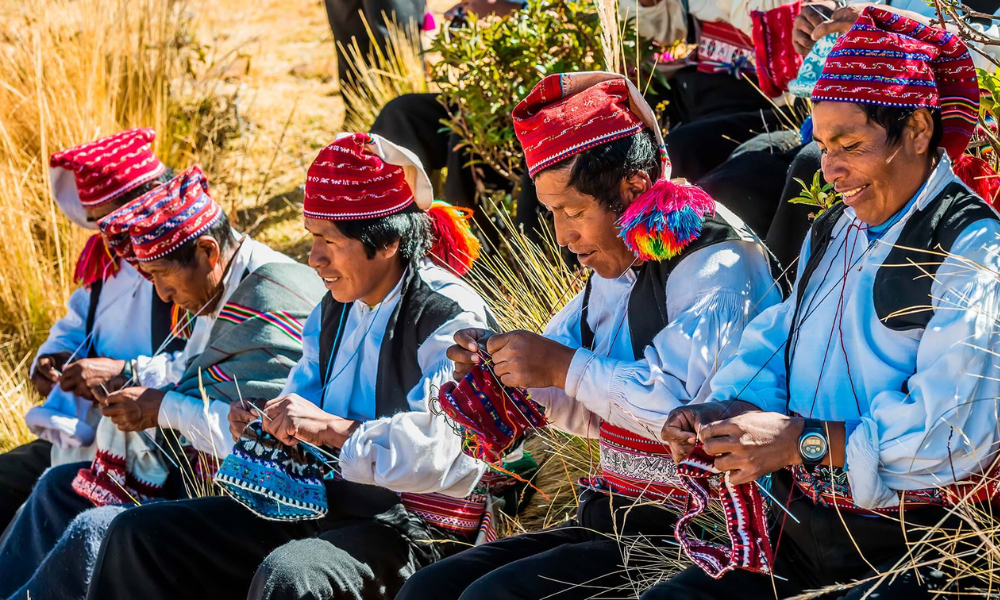
Textiles and Visual Reading in Andean Aesthetics
In the Andean world, textiles are not merely clothing but visual codes indicating origin, belonging, and festive status. Interestingly, similar principles appear in mestizo church decoration. Rhythmic repetition, symmetry, and geometric organization in stone carvings resonate with textile design traditions. Therefore, understanding the church visually also requires awareness of Andean textile logic.
Practical Visit: Understanding the Church in a Short Time
Several guides highlight the prominent location within the Lake Titicaca landscape. For visitors with limited time, a suggested route of 15–25 minutes includes a slow exterior walk to observe material and volume, entry along the nave axis to experience the vault, standing beneath the crossing to observe the dome and light, and finally examining the altar and retables to identify the main Marian devotion.