


Is the Salar de Uyuni the largest salt flat in the world?

The Salar de Uyuni is famous for its vastness and unique landscapes, but many travelers wonder if it really is the largest salt flat in the world. Spanning over 10,000 square kilometers, this salt desert has earned a special place in global geography. Comparing it with other salt flats helps explain why Uyuni holds the top spot and what sets it apart from other similar destinations .
Official size of the Salar de Uyuni

The Salar de Uyuni is officially recognized as the world’s largest salt flat. Its surface area reaches approximately 10,582 square kilometers, an expanse that places it far above any other salt flat on the planet.
This size is not only measured in numbers, but also in the continuity of its surface. Unlike other fragmented salt flats, Uyuni forms a vast, solid, and almost perfectly uniform plain, which reinforces its leading position in terms of size.
Continuous and measurable surface area
The salt flat has a compact surface that allows for precise measurements comparable worldwide. This continuity is one of the reasons why it is officially considered the largest.
Location and extent in the highlands
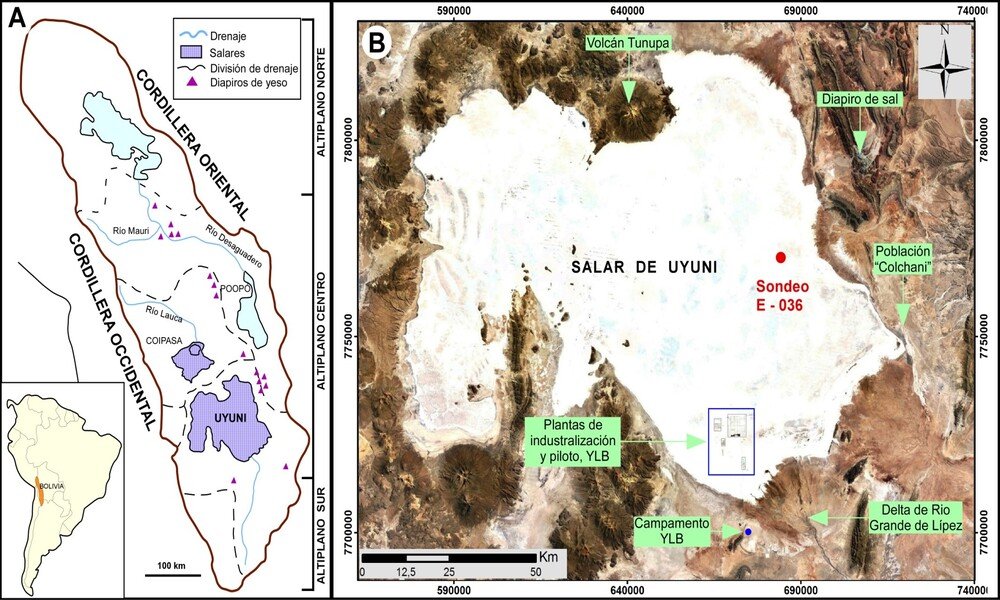
Located in the highlands of southwestern Bolivia, the salt flat extends across several municipalities and dominates the landscape of the region, occupying a significant portion of the local territory.
Comparison with other salt flats in the world

To confirm whether the Salar de Uyuni is the largest salt flat in the world, it is necessary to compare it with other well-known salt deserts. In this comparison, Uyuni clearly stands out for its size and uniformity.
Other important salt flats, such as the Salar de Atacama in Chile or the Salar del Hombre Muerto in Argentina, have large areas, but none approach the total magnitude of the Salar de Uyuni.
Differences with South American salt flats
Although South America is home to several notable salt flats, most are smaller or divided into multiple basins. Uyuni, on the other hand, forms a single, continuous mass of salt.
Comparison with salt flats of other continents
In other parts of the world, such as Africa or Asia, there are salt lakes and salt flats, but their size is considerably smaller. None reach the extent or the uniform flatness that characterizes the Salar de Uyuni.
Why does the Salar de Uyuni rank first in the world?

The Salar de Uyuni’s leading position is not solely due to its overall size, but to a combination of geographical and natural factors that clearly differentiate it from other salt flats. Its continuous expanse, extreme flatness, and surface stability make it stand out globally.
Unlike other salt flats that are fragmented into basins or interrupted by elevations, Uyuni forms a uniform mass that extends without visible breaks. This reinforces its recognition as the world’s largest salt flat, both from a scientific and tourist perspective.
Continuous and unfragmented extension
One of the key elements is that the salt flat is not divided into isolated sectors. Its surface remains connected across thousands of square kilometers, allowing for clear measurement and a visual perception of immensity that is difficult to match.
Near-perfect flatness on a large scale
Besides its size, Uyuni boasts an exceptional flatness. Variations in altitude are minimal even over great distances, unlike in other salt flats. This characteristic is essential for unique phenomena such as the mirror effect and for its use in scientific measurements.
Is it really the largest salt flat in the world?
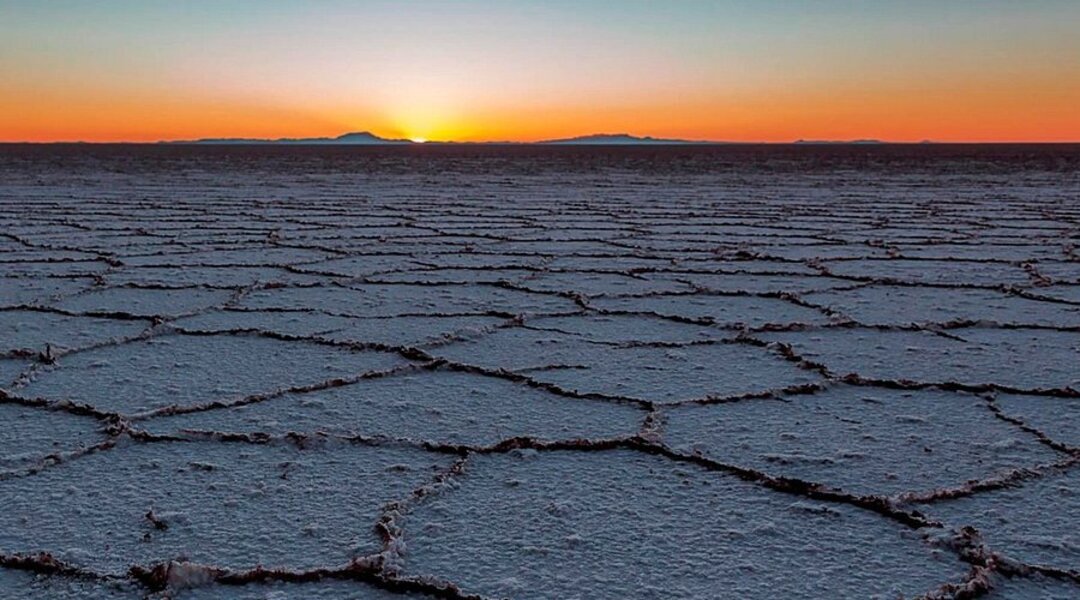
Yes. Considering its total area, its geographical continuity, and its uniformity, the Salar de Uyuni is recognized as the largest salt flat in the world. It not only surpasses other salt flats in size, but also in physical characteristics that make it unique.
This recognition goes beyond a mere number. The size of the Salar de Uyuni directly influences the visitor experience, the landscapes it offers, and the natural phenomena that can be observed. Therefore, when it is stated that Uyuni is the largest in the world, it is not just a geographical fact, but a visible and verifiable reality on the ground.
Interesting facts that reinforce its title as the greatest
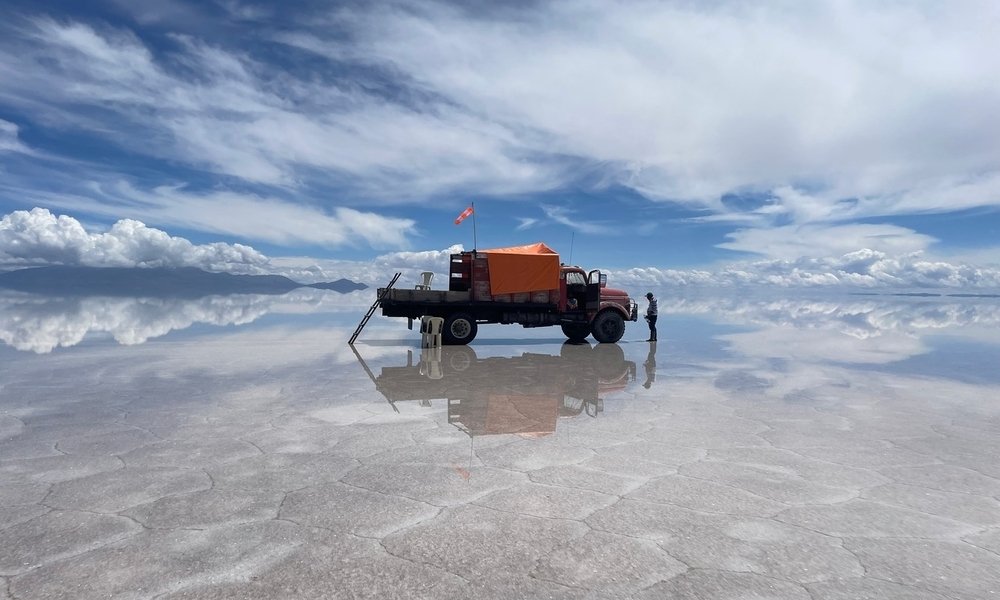
The Salar de Uyuni stands out not only for being the largest salt flat in the world, but also for a series of unique features that reinforce its global importance. These characteristics make it a benchmark for both science and tourism.
Used for satellite calibration
Thanks to its enormous size and extremely flat surface, the salt flat has been used to calibrate satellite instruments. Few places on the planet offer such precise conditions for this type of measurement.
Seasonal transformation of the landscape
Its vast size allows the mirror effect to occur on a massive scale during the rainy season. In smaller salt flats, this phenomenon occurs in a limited or partial way.
Impact of its size on tourism and visitor experience
The size of the Salar de Uyuni directly influences how travelers experience and perceive it. It’s not a one-off attraction, but an extended experience that can last several days.
Long and varied journeys
Due to their scale, the tours cover vast distances and combine multiple landscapes in a single trip. This allows you to explore not only the salt flats, but also islands, lagoons, and volcanoes on the same circuit.
Feeling of incomparable immensity
For visitors, the sheer size of the salt flats translates into a feeling of total vastness. The endless horizon and the absence of visible limits make the experience unlike any other destination in the world.
