


Plaza de Armas of Cusco
Why is Cusco’s Plaza de Armas so important?
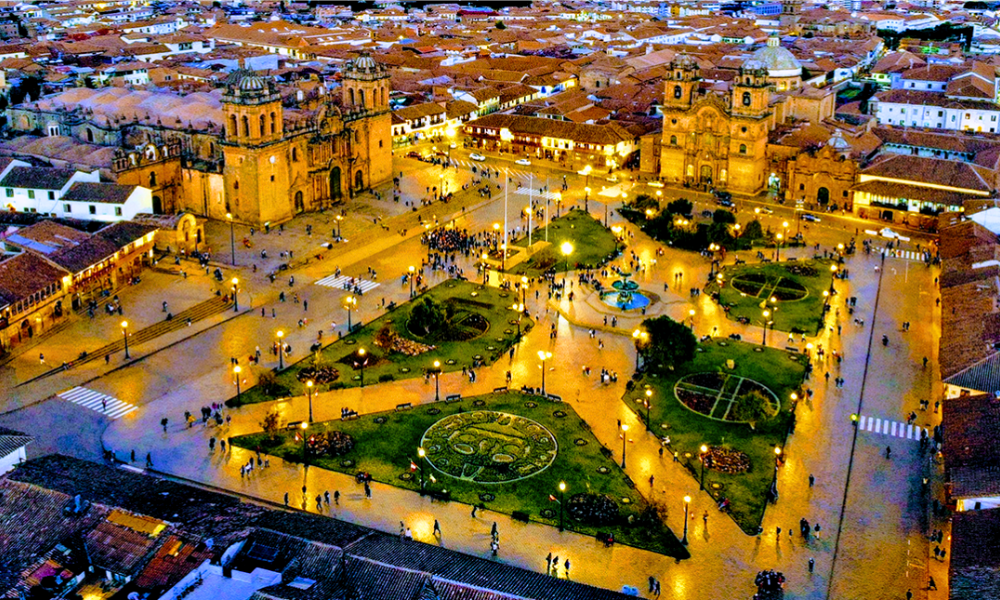
The Plaza de Armas in Cusco is much more than just a central square: it is the historical, cultural, and social epicenter of the city. From Inca times to the present day, this space has been Cusco’s most important meeting place, bringing together ceremonies, celebrations, daily life, and tourism.
Today, the plaza is where almost all travelers begin their tour of the city. Here, locals and tourists mingle, colonial architecture blends with the remains of the ancient capital of the Inca Empire, and a vibrant atmosphere changes depending on the time of day.
In addition, Cusco’s Plaza de Armas serves as a key orientation point for those visiting the city for the first time. Many guided tours, walks to the historic center, and access to traditional neighborhoods depart from here. Surrounded by cafes, restaurants, travel agencies, and iconic buildings, the plaza allows visitors to feel the pulse of Cusco from the moment they arrive, whether observing local life during the day or enjoying its lighting and atmosphere at night.
History of the Plaza de Armas: from the Inca Empire to the colonial era
During the Inca Empire, the Plaza de Armas was known as Huacaypata, a huge ceremonial space where rituals, celebrations, and important meetings were held. Events such as Inti Raymi, the great festival of the sun, were organized here.
With the arrival of the Spanish, the plaza was transformed according to the colonial urban model. Churches, administrative buildings, and Spanish-style balconies were built, many of them on top of ancient Inca walls. This contrast between Inca heritage and colonial architecture is one of the most fascinating features of the plaza.
What to see around Cusco’s Plaza de Armas?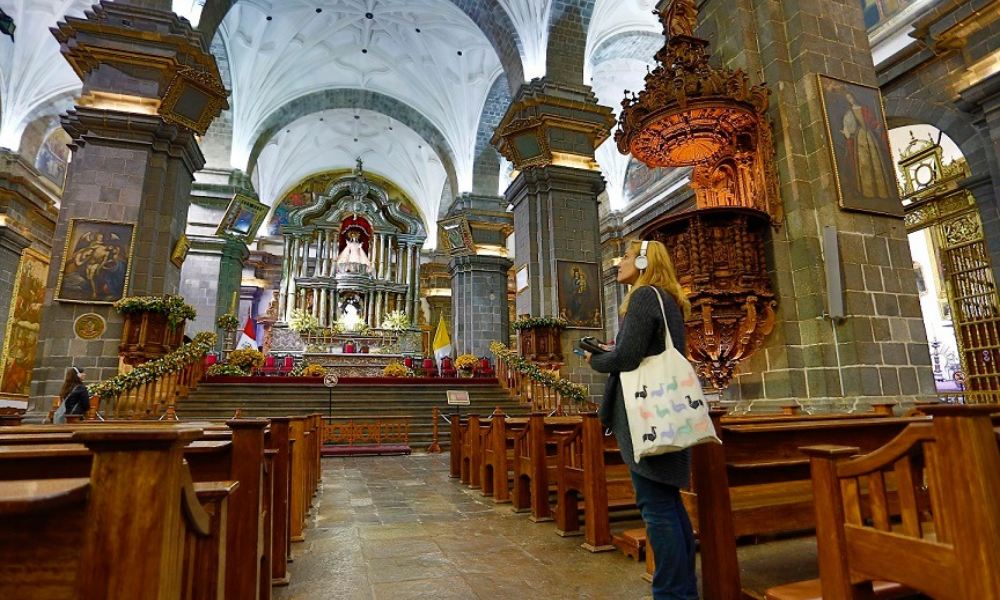
Cusco Cathedral
It dominates one side of the square. Built between the 16th and 17th centuries, it houses an impressive collection of colonial religious art and is a must-see for anyone who wants to understand the history of colonial Cusco.
Church of the Society of Jesus
Located opposite the cathedral, this church is considered one of the finest examples of Andean Baroque architecture. Its façade and interior surprise even seasoned travelers.
Colonial balconies and historic streets
Surrounding the plaza are buildings with wooden balconies, restaurants, cafes, and access to iconic streets such as Calle del Medio and Portal de Panes, perfect for walking and exploring.
What is the atmosphere like in the Plaza de Armas during the day and at night?
During the day, the square is lively and sunny. It is ideal for:
Taking a leisurely stroll
Taking photographs
Sitting down to observe local life
Starting tours and walks
At night, the Plaza de Armas takes on a completely different atmosphere. The lighting highlights the churches and historic buildings, creating a very attractive setting. It is a popular spot for:
Going out to dinner
Enjoying bars and terraces
Taking a leisurely stroll
Practical tips for visiting Cusco’s Plaza de Armas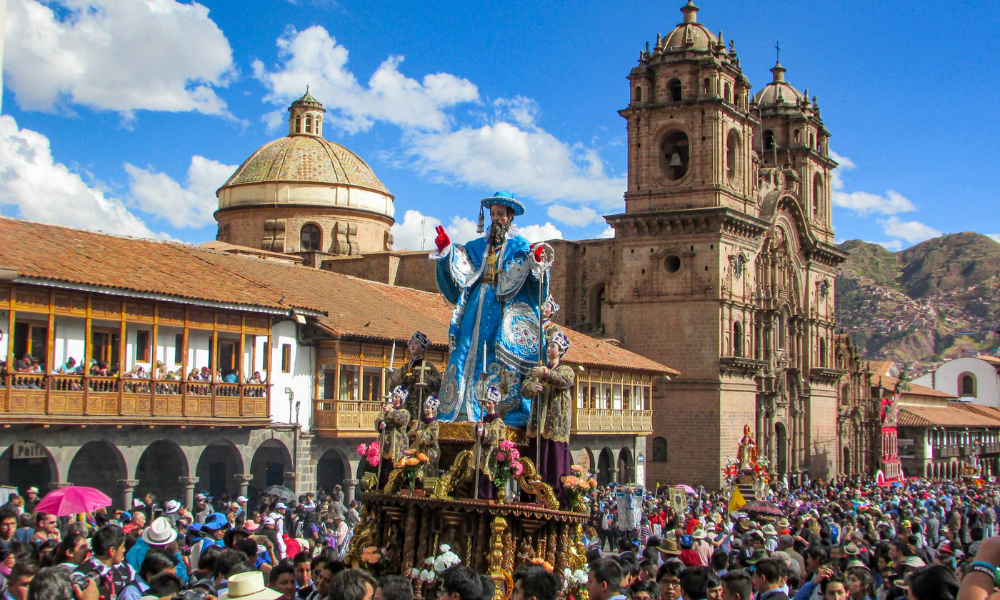
Visit it several times: morning, afternoon, and evening
Use sunscreen during the day (radiation is high)
Keep an eye on your belongings in crowded areas
Enjoy the cafes overlooking the plaza
It’s a great place to acclimatize on your first day
The square is safe, but as with any tourist spot, it’s a good idea to take basic precautions.
Events and celebrations in the Plaza de Armas
Throughout the year, the Plaza de Armas is the setting for:
Religious festivals
Civic parades
Cultural celebrations
Traditional events in Cusco
If you visit Cusco during a festival, the plaza is likely to be the center of the celebrations.
Why is Cusco’s Plaza de Armas a must-see?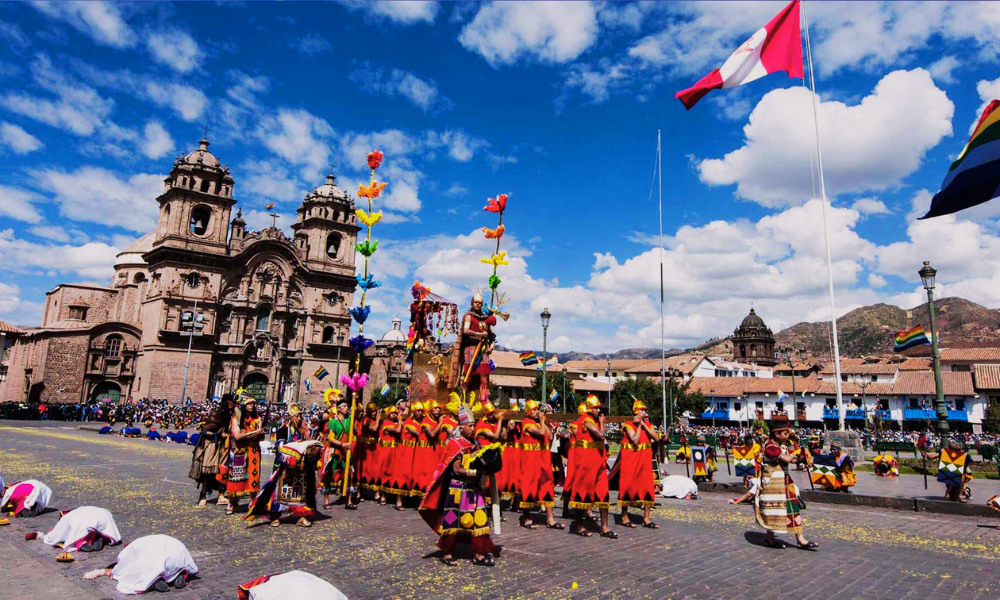
Because it sums up the essence of the city. Cusco’s Plaza de Armas allows you to understand its Inca past, its colonial heritage, and its current life in one place. It is a space where history is still alive and where each visit offers a different experience.
No trip to Cusco is complete without spending time in the Plaza de Armas. Whether as a starting point, a place to rest, or a nighttime setting, this space is the heart that keeps the city alive.