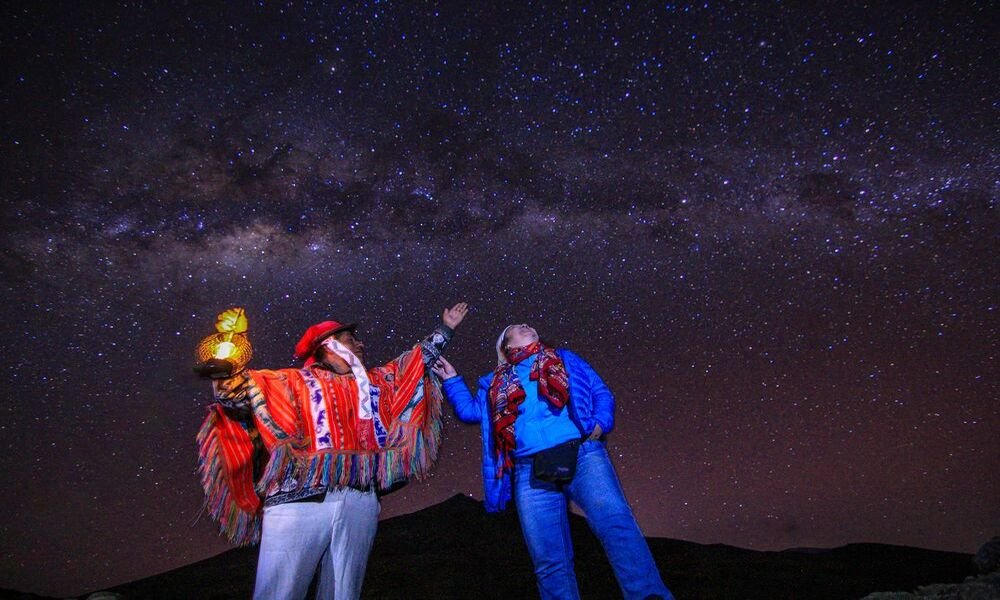
“Star Gazing (Andean Astrotourism)”
Stargazing in the Andes is a unique experience where heaven and earth meet. Far from light pollution, the Andean skies reveal a natural spectacle of constellations, planets, and galaxies that have guided ancestral cultures since time immemorial.
Andean astrotourism invites you to connect with the universe through science, contemplation, and ancestral worldview, transforming each starry night into a journey of wonder, learning, and deep connection with nature.
What is Andean Astrotourism?
Andean astrotourism is a specialized form of tourism that takes advantage of the natural and cultural conditions of the Andes Mountains for observing the night sky. Thanks to its altitude, dry climate, and minimal light pollution, the Andes offer some of the clearest and most star-filled skies on the planet, comparable to those of major astronomical observatories.
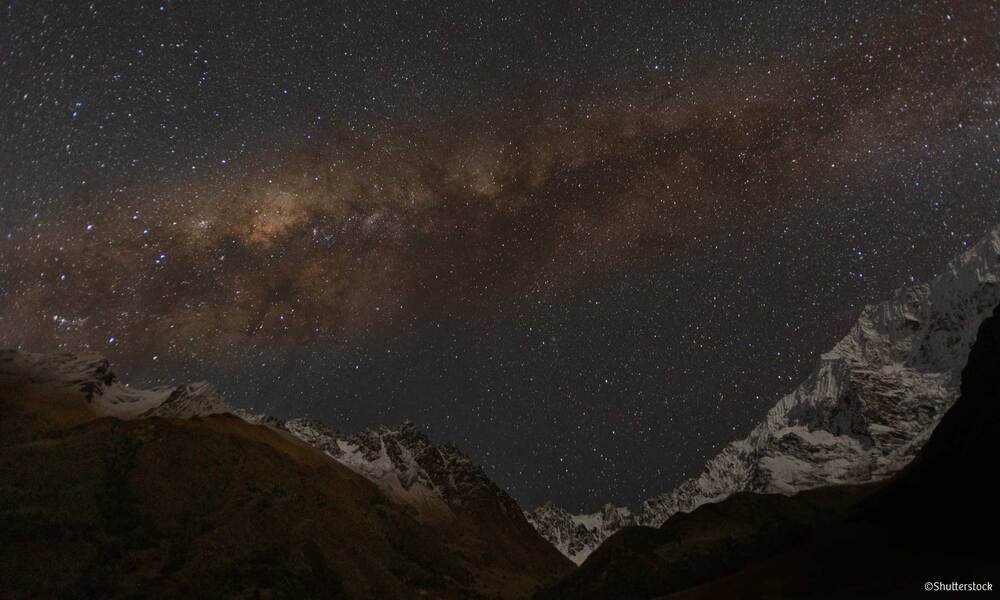
This activity combines scientific astronomy, ancestral knowledge, sustainable tourism and wellness experiences, becoming an innovative and environmentally friendly tourism alternative.
Features of Andean Astrotourism
Exceptional Astronomical Conditions:
Altitudes above 3,000 m above sea level, which reduce atmospheric interference.
Arid or semi-arid climates with a large number of clear nights per year.
Low humidity and minimal light pollution.
These conditions allow for observing:
The Milky Way with great clarity
Constellations of the Southern Hemisphere
Planets like Jupiter, Saturn, Mars, and Venus
Meteor Showers and Eclipses
Astrotourism in the Sacred Valley of the Incas
Located near Cusco, the Sacred Valley is one of the most privileged destinations for astrotourism in Peru. Its geography, altitude, and low light pollution offer clear, starry skies, ideal for astronomical observation for much of the year.
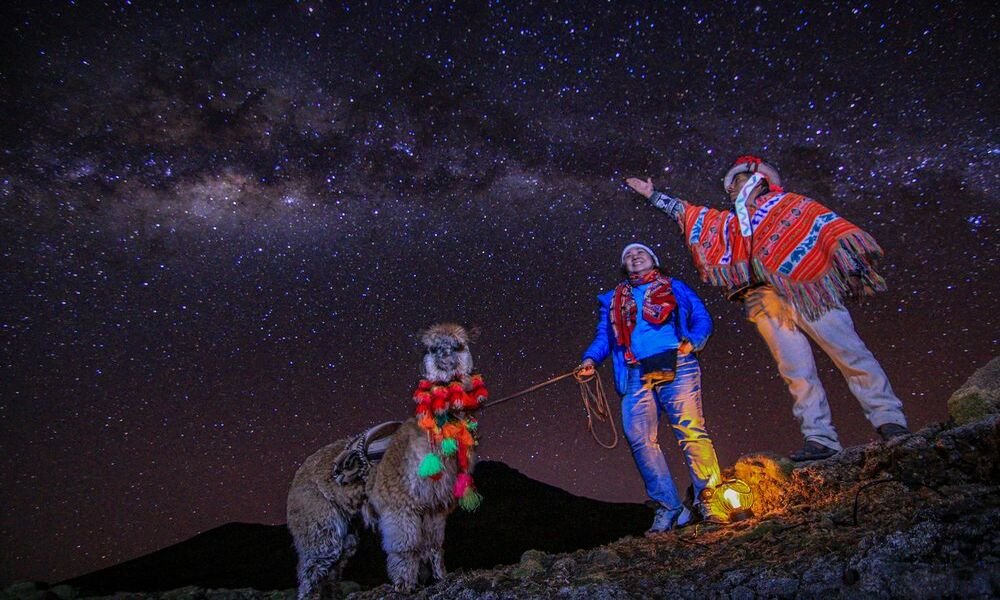
This territory stands out not only for its natural beauty, but also for its profound cultural and spiritual value. For the Incas, the sky was a fundamental guide for agriculture, social organization, and ceremonial life.
Advantages of the Sacred Valley for Astrotourism:
Dark skies and little artificial lighting, especially in rural communities.
Altitudes between 2,800 and 3,000 m above sea level, which favor a clearer atmosphere.
Dry climate with clear nights ideal for observing the Milky Way, constellations and planets.
Ancient Andean Astronomy
The Andean peoples developed a sacred and practical relationship with the sky, considering it a direct reflection of life on Earth. For pre-Hispanic civilizations, the heavens were not only a space for observation, but a system of knowledge that guided social, agricultural, and spiritual organization.
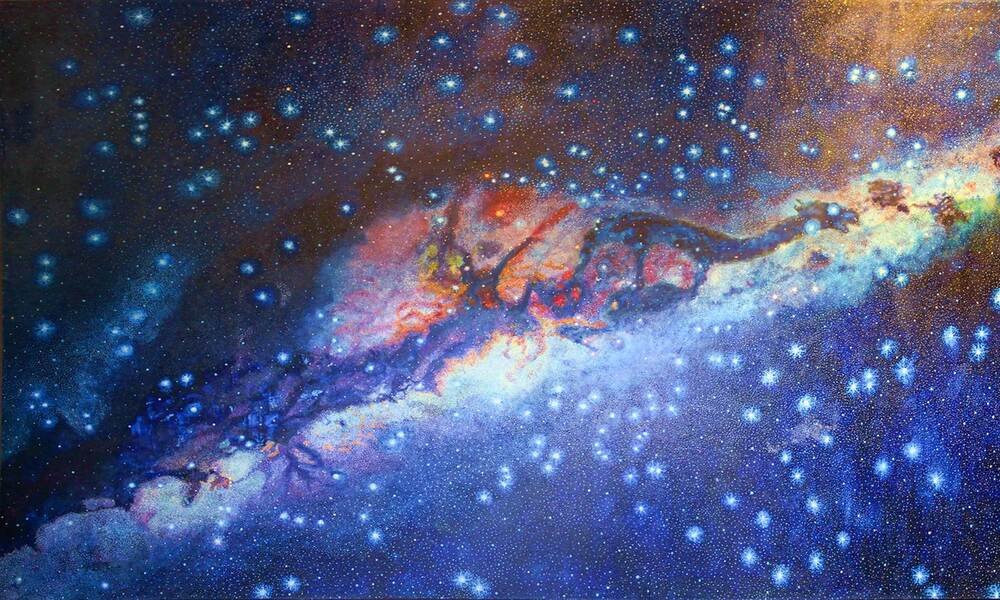
Unlike Western astronomy, the Andean people identified dark constellations, formed by shadows on the Milky Way, such as the Llama, the Fox, the Toad, the Snake, and the Condor. These figures represented sacred animals linked to the rain cycle, the fertility of the land, and the protection of the community.
Observing the stars allowed:
Predict agricultural cycles and determine the appropriate times for planting and harvesting.
Establish ceremonial calendars based on solstices, equinoxes, and lunar phases.
Interpreting the balance between nature, community and cosmos, based on the principle of ayni(reciprocity).
Inti ( the Sun) was the principal deity, the source of life and energy, while Quilla (the Moon) regulated time, the symbolic tides, and feminine cycles. The stars were celestial protectors, messengers of the apus (mountain spirits), and signs of the universal order.
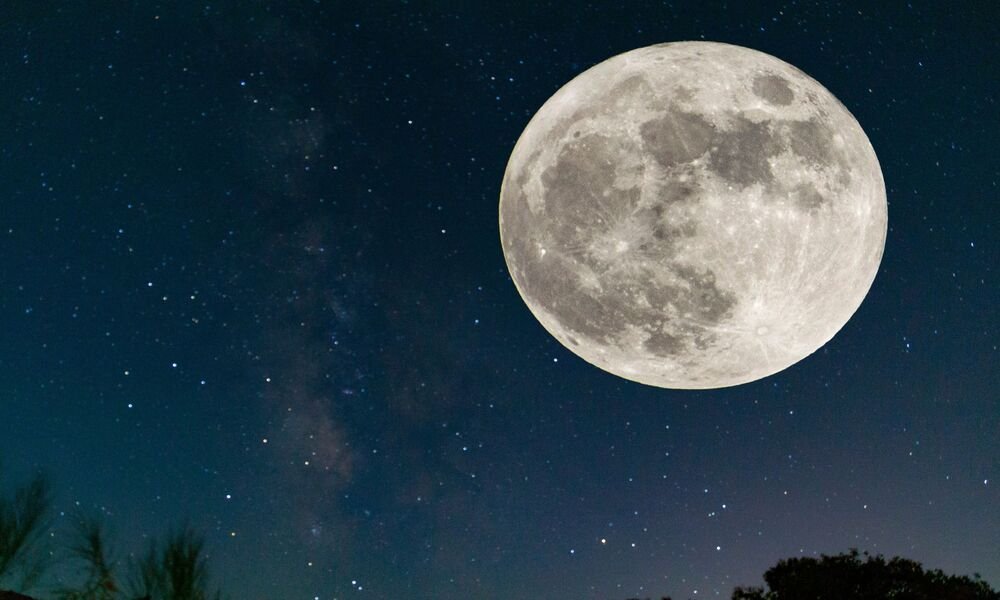
During astrotourism experiences, myths, oral narratives, and symbols passed down through generations are explored, combining astronomical observation with ancestral worldview. This allows visitors to understand the sky from a profound cultural perspective, reconnecting with ancestral wisdom and respect for Pachamama ( Mother Earth ).
Specialized Guided Experiences
Andean astrotourism is experienced through guided tours that integrate science, ancestral knowledge, and contact with nature. Designed for beginners and enthusiasts, these activities offer a comprehensive understanding of the night sky.
They include:
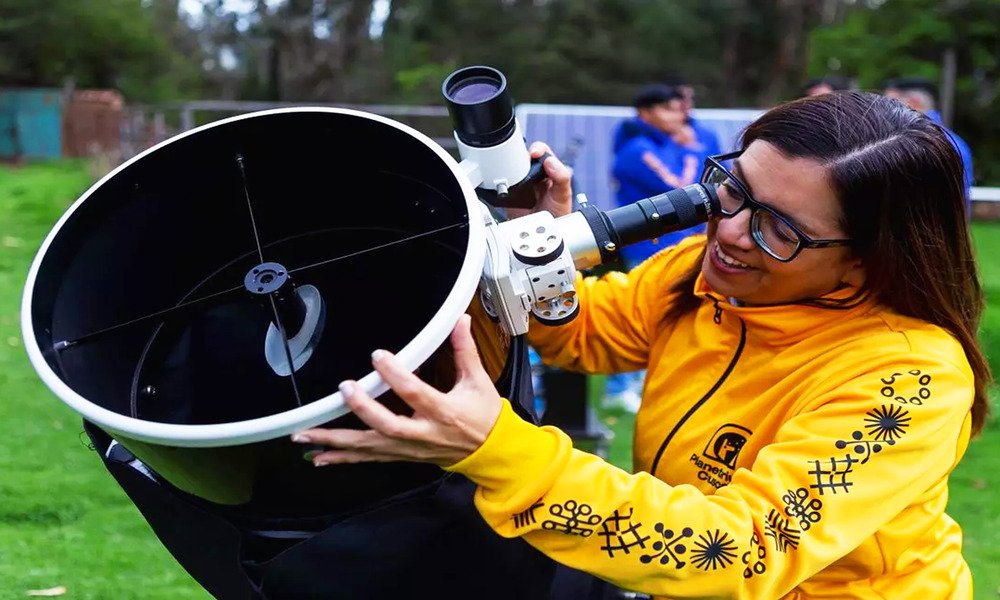
Naked-eye and telescope observation to recognize stars, planets, clusters and nebulae.
Astronomical and cultural talks about celestial phenomena and Andean historical stories.
Identification of western and Andean constellations, highlighting the dark constellations.
Introduction to astrophotography, teaching techniques for capturing the Milky Way and night landscapes.
Interpretive night walks, which integrate landscape, silence and observation of the firmament.
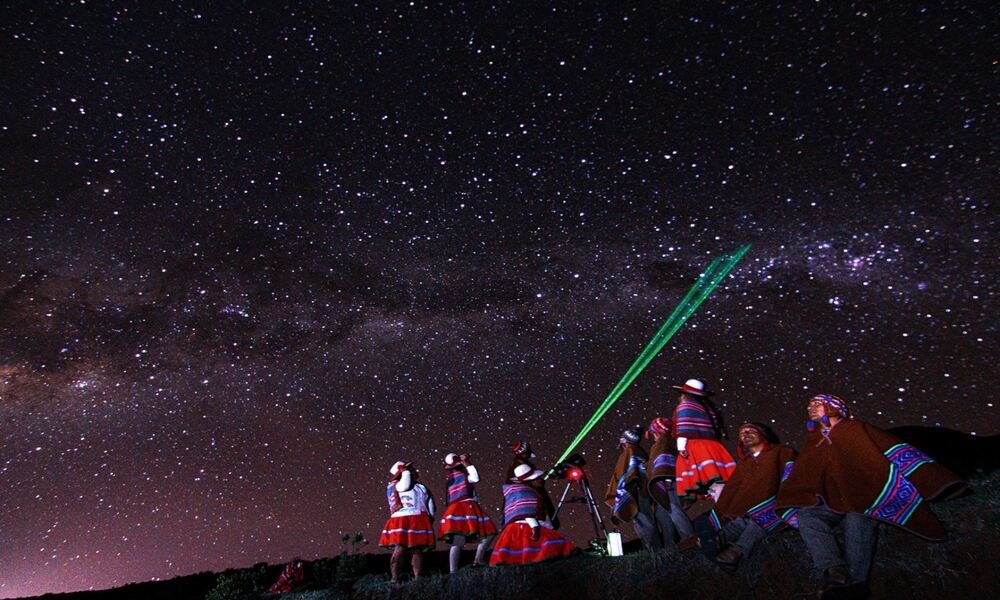
Guided by astronomers and cultural mediators, visitors interpret the sky from the perspective of science, history, and the spiritual connection with the cosmos.
Wellbeing, Spirituality and Connection
Observing the night sky generates:
Asombro y calma
Stress Reduction
Spaces for reflection and contemplation
In some destinations, ancestral rituals, Andean music, and traditional narratives are integrated, creating profound spiritual and emotional experiences.
Ideal Spots for Astrotourism in Cusco
Cusco Planetarium
A space specializing in astronomical outreach, offering nighttime experiences that combine modern science and Andean worldview. Ideal for those new to astrotourism.
Mullakas Misminay (Sacred Valley)
Community recognized as a Starlight Site, where astronomical observation is combined with ancestral stories, traditional rituals and local hospitality.
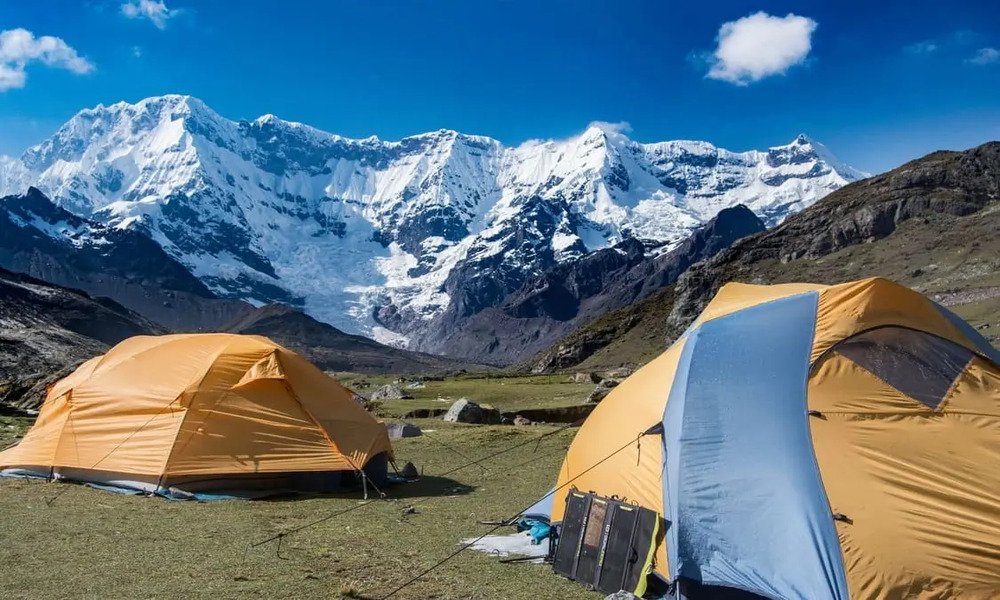
Ausangate and surroundings
High altitude and isolation create dark, clear skies, ideal for astrophotography and stargazing.
Salkantay (high zone)
Allows you to observe the Milky Way, constellations and planets in a context of night walks and cultural camps.
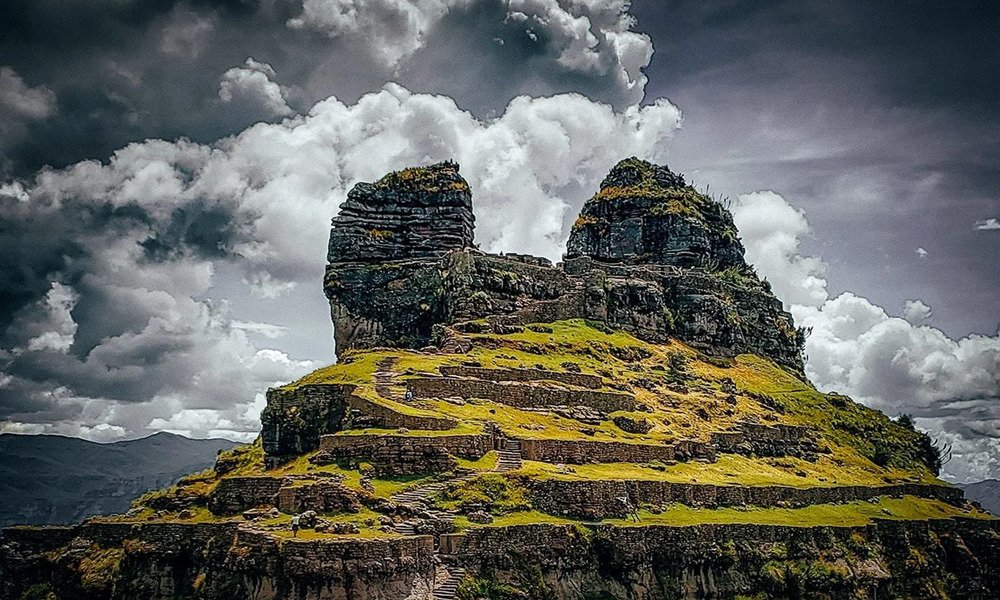
Waqrapukara
Remote archaeological site where the night sky combines with cultural heritage, creating a mystical and contemplative experience.
Areas for Astrotourism in the Sacred Valley
Misminay (Maras): Starlight site with clear skies and community experiences.
Moray and surroundings: Night observation amidst circular terraces and historical landscapes.
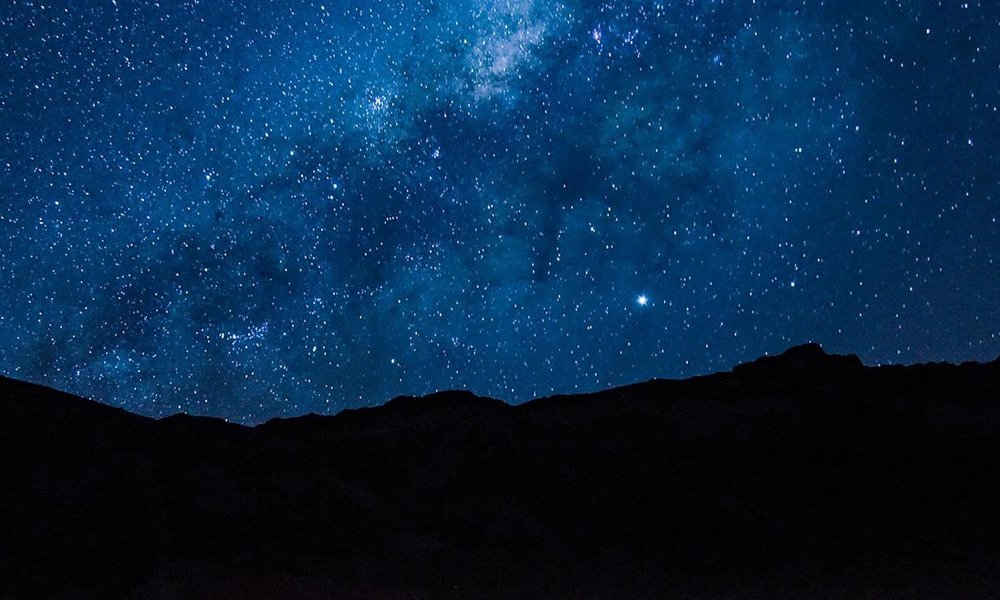
Ollantaytambo (highlands): Natural viewpoints for astronomical photography and constellations of the southern hemisphere.
Rural Urubamba: Open and peaceful spaces to enjoy the Milky Way and astronomical phenomena.
Tips for Astrotourism in Cusco
Altitude and climate: Best outside the urban center, in high areas with low humidity.
Dry season (April–October): Clear skies ideal for stargazing.
Recommended equipment: Warm clothing, flashlight, earplugs, camera with tripod and, if possible, binoculars or telescope.
A Unique Experience
Experiencing astrotourism in the Sacred Valley is to view the universe from an ancestral perspective, where sky, earth, and culture connect. It’s an experience that combines knowledge, contemplation, and respect for nature, ideal for those seeking more than just a destination: a profound connection with the cosmos.