What other mountains are there near Cusco?
Cusco , the ancient capital of the Inca Empire, is famous for its rich history, cobblestone streets, and vibrant Andean culture. However, those seeking more than history will find a world of breathtaking mountains, snow-capped peaks, hidden valleys, and stunning landscapes in its surroundings. Beyond the famous Machu Picchu and the colorful Rainbow Mountain (Vinicunca), the Cusco region boasts a variety of mountains that offer unique experiences for hiking, photography, and connecting with nature.
Below, we present some of the most fascinating mountains near Cusco and everything you need to know to explore them.
Ausangate: The Sacred Giant of the Andes
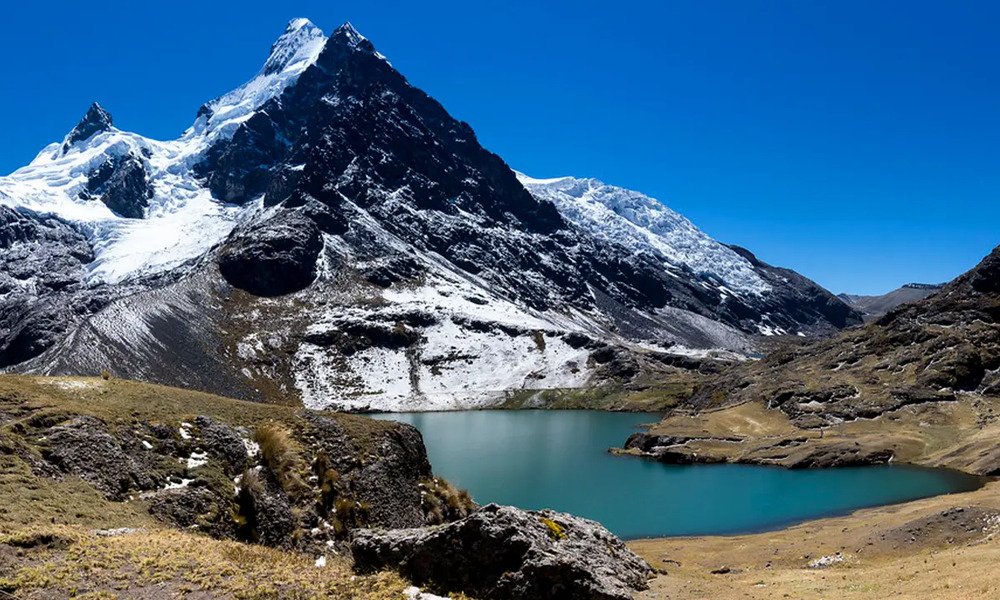
Ausangate , with its imposing 6,384 meters above sea level , is considered the sacred giant of the southern Peruvian Andes. In the Andean worldview, it is an Apu , or protective spirit, that watches over the communities and the land. Its majestic presence dominates the horizon, surrounded by turquoise lagoons, shimmering glaciers, and grasslands where alpacas and llamas once roamed freely. The trek around Ausangate, known as the Ausangate Circuit , is one of Peru’s most spectacular trekking routes, allowing visitors to immerse themselves in nature in its most pristine state. Every step reveals different landscapes, from lagoons dotted with intense reflections to rock formations that resemble natural sculptures.
In addition, this route allows you to get closer to the local communities, which preserve ancestral traditions such as alpaca wool weaving, offering ceremonies to Pachamama and harvest festivals that are celebrated amidst the snow-capped mountains.
What does it offer to visitors:
Multi-day trekking: The Ausangate Circuit is one of the most spectacular routes in Peru, combining physical difficulty with dreamlike landscapes.
Dreamlike landscapes: Sparkling glaciers, turquoise lagoons and grasslands where llamas, alpacas and vicuñas graze.
Living culture: Local communities that maintain ancestral traditions, such as festivals, offerings to Pachamama and alpaca wool weaving.
Tips to visitors:
Acclimate in Cusco for at least 2–3 days before starting the trek.
Bring thermal clothing, sunscreen, a hat, and plenty of water, as temperatures can be extreme and variable.
Consider hiring certified local guides for a safer and more enriching experience.
Salkantay: The epic alternative Machu Picchu
For adventurers looking to combine a challenging trek with a visit to Machu Picchu, Salkantay is the perfect choice. At 6,271 meters, this mountain offers a multi-day trek known as the Salkantay Trek, which traverses ever-changing landscapes: snow-capped peaks, verdant valleys, and high-altitude rainforests teeming with unique flora and fauna. During the trek, travelers cross mountain passes exceeding 4,600 meters in altitude , enjoying breathtaking panoramic views and unique opportunities to observe condors, viscachas, and a wide variety of wild orchids.
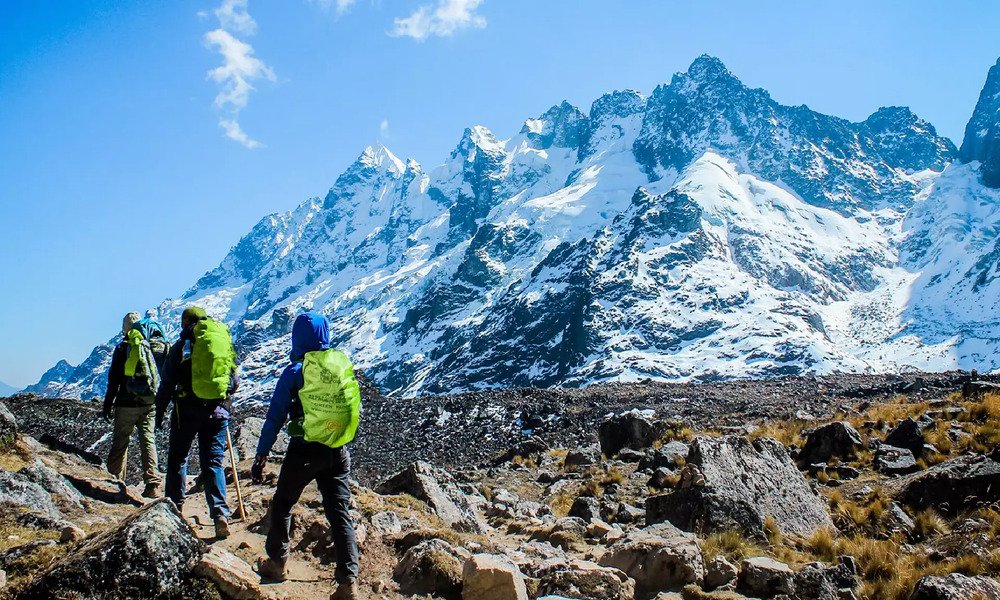
The Salkantay Trek is also an example of how nature and Andean history exist in perfect harmony. Along the route, you can see ancient Inca trails and archaeological remains that recall the deep connection these mountains have with pre-Hispanic civilizations. Those undertaking this journey are advised to do so with specialized guides and book in advance, as well as bring sturdy hiking boots, trekking poles, and clothing suitable for sudden changes in weather.
What to expect:
Spectacular views of snow-capped peaks and green valleys.
Crossing of mountain passes that exceed 4,600 meters in altitude .
Unique flora and fauna, including condors, viscachas, and wild orchids.
Tips to visitors:
Do the trek with specialized guides and book in advance.
Wear sturdy hiking boots, carry walking sticks, and wear clothing suitable for changing weather conditions.
The Mountain of Seven Colors (Vinicunca)
🌈
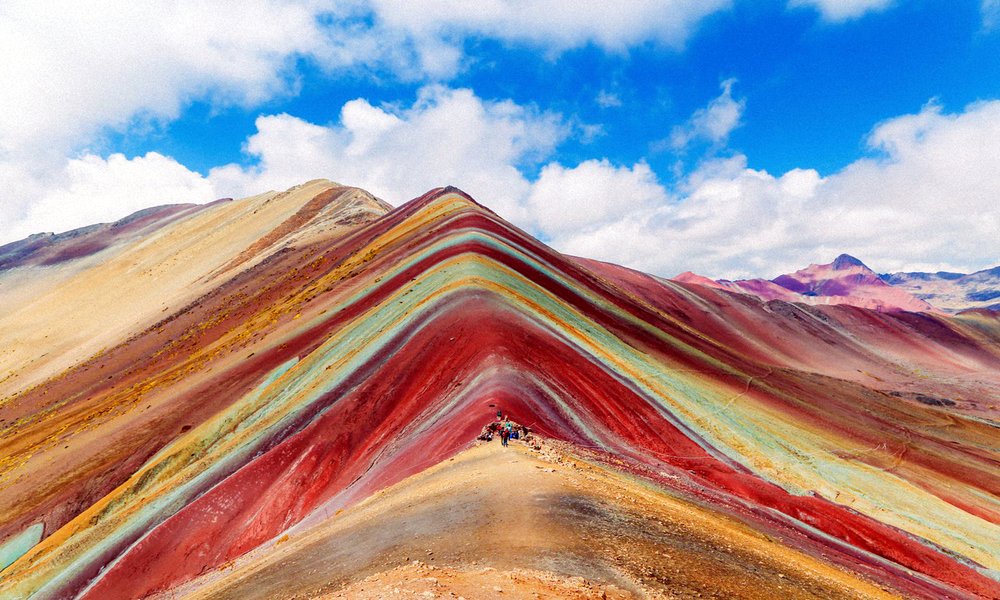
Vinicunca , or Rainbow Mountain , has become one of Cusco’s iconic tourist attractions. Its bands of red, yellow, green, and blue are not the work of paint, but rather the result of millions of years of mineral accumulation, including iron, copper, and sulfur. The mountain rises to 5,200 meters above sea level and dazzles visitors with a spectacle of colors that seems almost surreal. The route to Vinicunca generally begins from the town of Cusipata or from the Red Valley and can take between 3 and 5 hours, depending on the route and the pace of the group.
Tips to visitors:
The altitude can be challenging; it is recommended to acclimatize in Cusco and drink coca tea or coca candies.
Wear warm clothing, sunscreen and sunglasses, even on sunny days.
Palccoyo: The peaceful alternative to Vinicunca
🌈
If you’re looking for a more tranquil and scenic experience, Palccoyo is the ideal choice. Located approximately 3 hours from Cusco , this mountain reaches 4,900 meters and is characterized by its three colorful peaks instead of just one. This allows for broader views, fewer tourist crowds, and better photography opportunities. Palccoyo is perfect for families or those with less experience in high-altitude trekking, as its routes are shorter and of moderate difficulty, yet equally breathtaking.
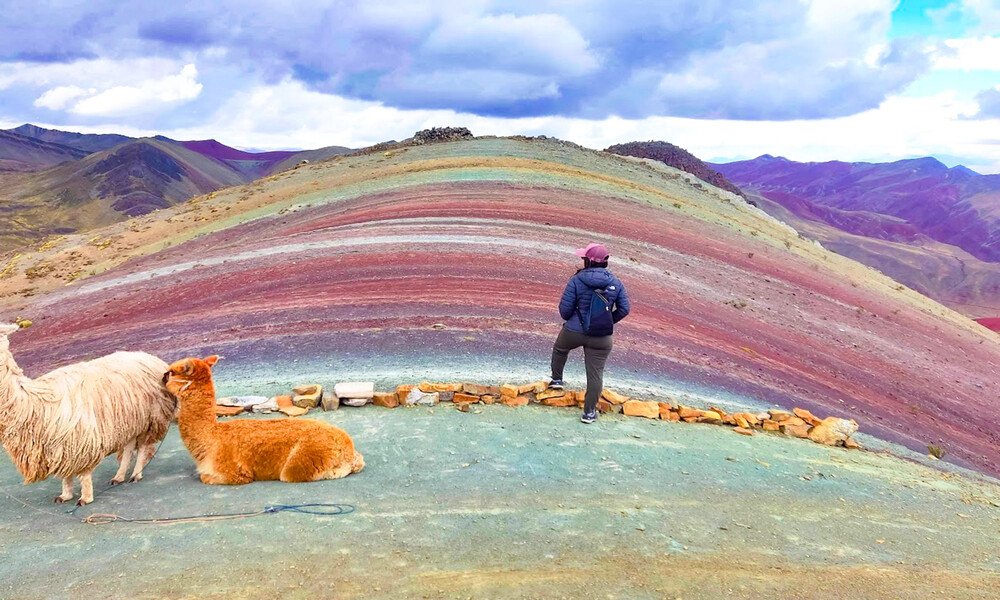
Unlike Vinicunca, Palccoyo offers the feeling of being in an almost untouched place, where nature manifests itself in all its power. The vibrant colors of the landscape, combined with the presence of alpacas and llamas, create an environment that seems frozen in time, ideal for those seeking to connect with the magic of the Andes without the pressure of mass tourism.
What makes it special:
Three colored peaks instead of one, offering more panoramic views.
Less tourist saturation, perfect for photography.
Shorter and easier routes, accessible for families and people with less experience in high-altitude trekking.
Red Valley (Valle Rojo)
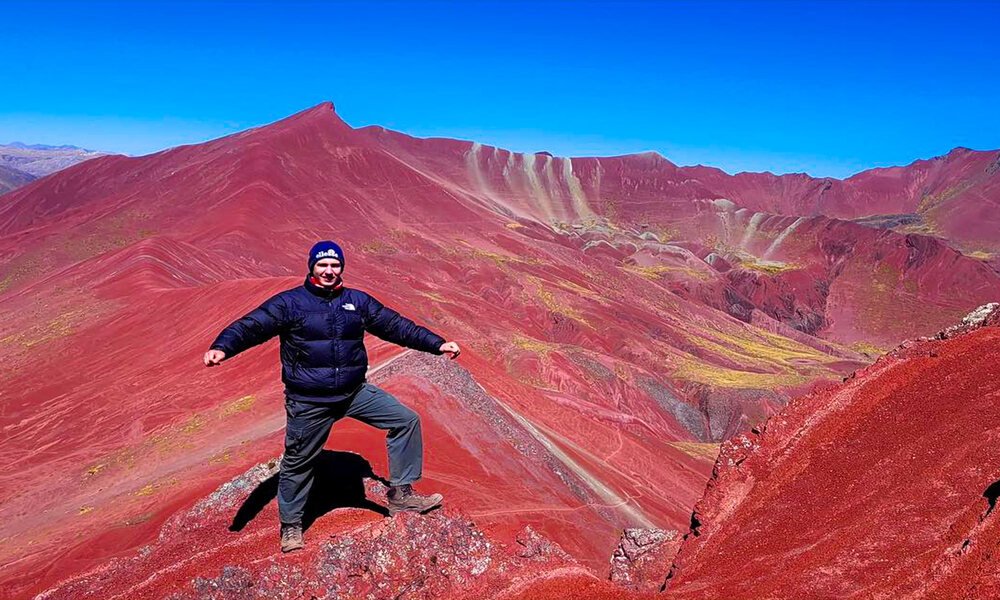
Very close to Vinicunca is Red Valley, known for its intense shades of red, pink, and green, caused by the oxidation of minerals and the presence of volcanic sediments. At approximately 5,000 meters high , this mountain is less crowded than Vinicunca, allowing visitors to calmly enjoy its colors and contemplate panoramic views of the Ausangate mountain and the surrounding valley. Red Valley is an excellent option for those who wish to combine trekking and photography, offering quieter routes and opportunities to explore less crowded landscapes.
What makes it special:
Less crowded than Vinicunca, allowing you to enjoy the colors calmly.
Panoramic views of the snow-capped Ausangate mountain and the surrounding valley.
Possibility of combining the route with Vinicunca or Palccoyo in a single adventure tour.
Pallay Punchu: The mountain “woven poncho”
🌈
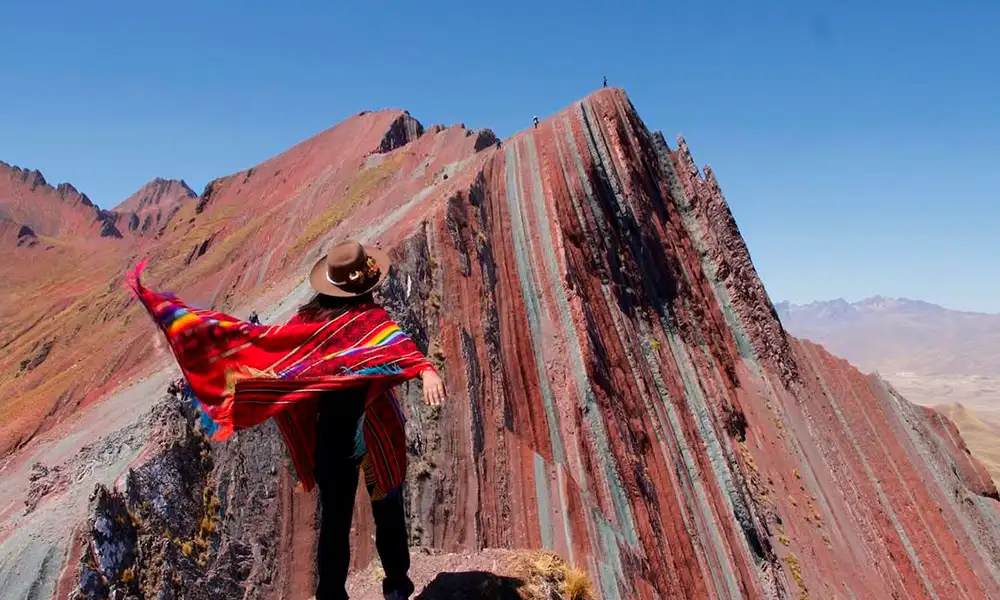
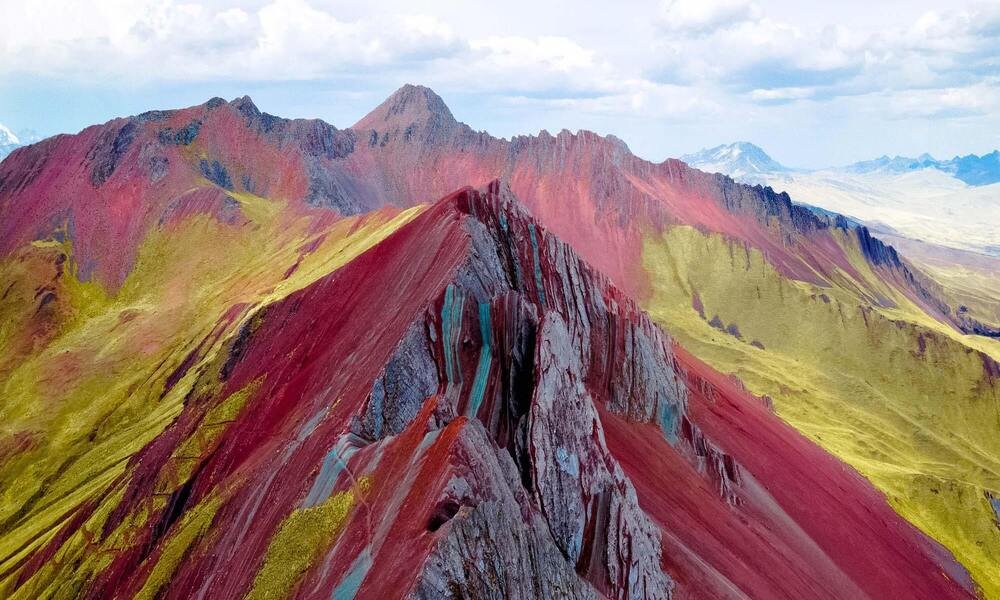
Among the emerging rainbow mountains, Pallay Punchu stands out for its unique beauty and authenticity. Located in the district of Layo, province of Canas, its Quechua name means “woven poncho,” referring to the multicolored stripes that resemble an Andean poncho embroidered by nature. With its sharp peaks and vibrant colors, Pallay Punchu is an ideal destination for those seeking uncrowded landscapes and moderately challenging treks. Visitors can enjoy the feeling of discovering a nearly secret place, where colors shine brightly and the tranquility of the surroundings allows for a profound connection with nature.
What does it offer?:
Intense colors and dramatic profile, with sharp peaks.
Fewer tourists, ideal for those seeking authentic experiences and unique photographs.
Chicon and Verónica: Hidden Gems of the Andes
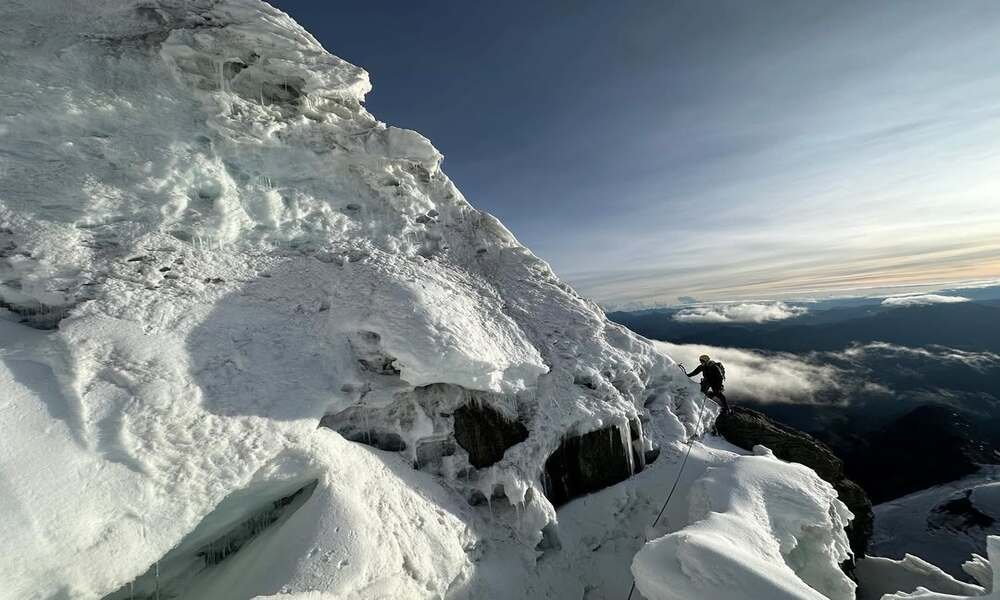
For those seeking lesser-known but equally imposing mountains, Chicon and Verónica offer intermediate and advanced trekking routes in a virtually untouched environment. Located near the Urubamba Valley, these mountains are known for their alpine lakes, glaciers, and landscapes that combine high plateaus with snow-capped peaks. They are ideal for those who wish to escape mass tourism, practice nature photography, and experience the thrill of exploring sparsely populated areas. Each hike in these mountains becomes an experience of discovery, where the solitude of the landscape invites contemplation and respect for the power of nature.
Generale Tips
Acclimatization: Cusco is 3,400 m above sea level; resting on the first day is crucial.
Local guides: Hiring certified guides guarantees safety and cultural knowledge.
Suitable equipment: Trekking shoes, thermal clothing, waterproof clothing, sunscreen, sunglasses and walking sticks are essential.
Respect the environment: Do not leave litter and respect marked trails. Local communities and nature depend on responsible tourism.
Conclusion
Exploring the mountains near Cusco is much more than an adventure: it’s an immersion into the history, culture, and majesty of the Andes. From the snow-capped giants of Ausangate and Salkantay to the explosion of colors of Vinicunca , Palccoyo , and Pallay Punchu , each mountain has its own unique charm. For travelers seeking to combine nature, culture, and physical challenge , the mountains of Cusco offer experiences that leave unforgettable memories and views that seem straight out of a dream.