Why does the Salar de Uyuni look like a mirror?
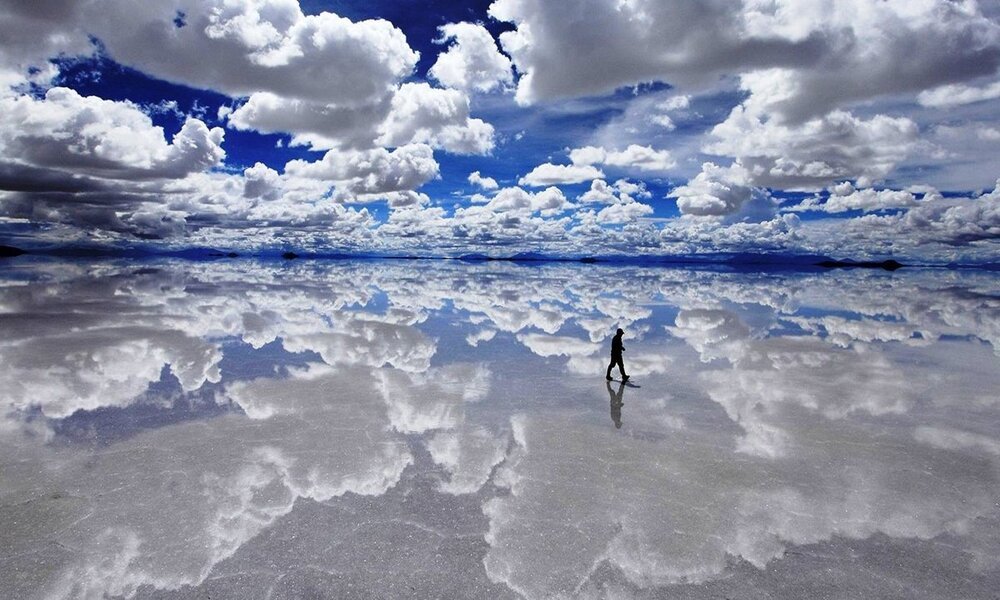
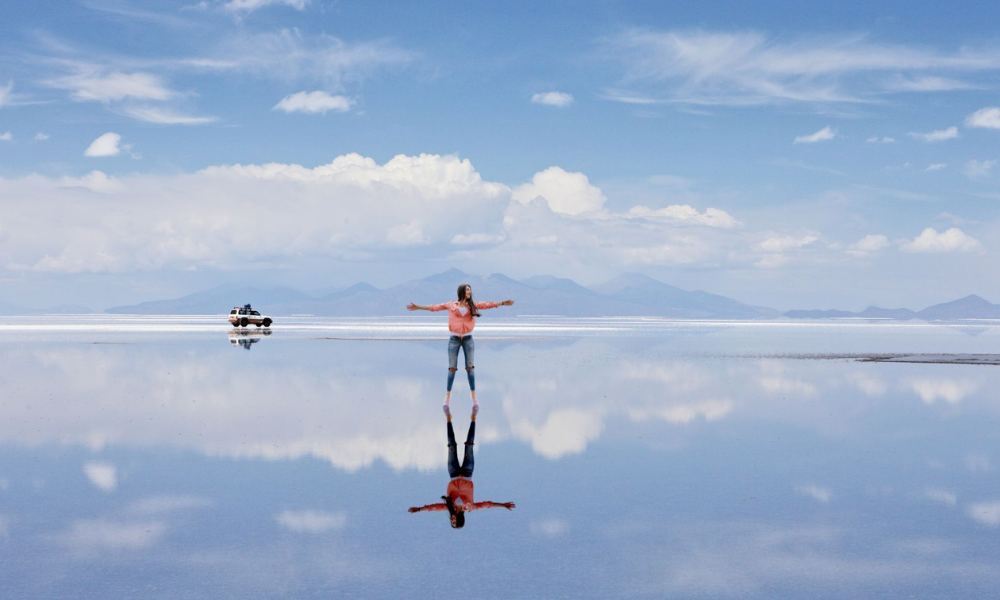
The Salar de Uyuni is world-renowned for a striking visual phenomenon: its appearance as a giant mirror. During certain months of the year, its surface reflects the sky so clearly that the horizon seems to disappear. This effect is not accidental, but rather the result of a unique combination of water, salt, and an almost perfectly flat landscape. Understanding why the Salar de Uyuni resembles a mirror allows for a deeper appreciation of one of the world’s most breathtaking natural landscapes.
What is the mirror effect of the Salar de Uyuni?
The mirror effect is a natural phenomenon that occurs when a thin layer of water covers the surface of the Salar de Uyuni. This film of water is so thin and uniform that it acts as a natural mirror, reflecting the sky, clouds, and light with great precision.
The result is a stunning visual landscape where the ground and sky seem to merge. At that moment, the horizon almost disappears, creating the sensation of walking on air—one of the most iconic images of the salt flats.
A unique visual phenomenon
Unlike other places, the reflection on the Salar de Uyuni remains continuous and uninterrupted. This is due to the vastness of the salt flat and the uniformity of its surface, which allows the mirror effect to be visible across large areas simultaneously.
Why does the surface of the salt flat allow this phenomenon?
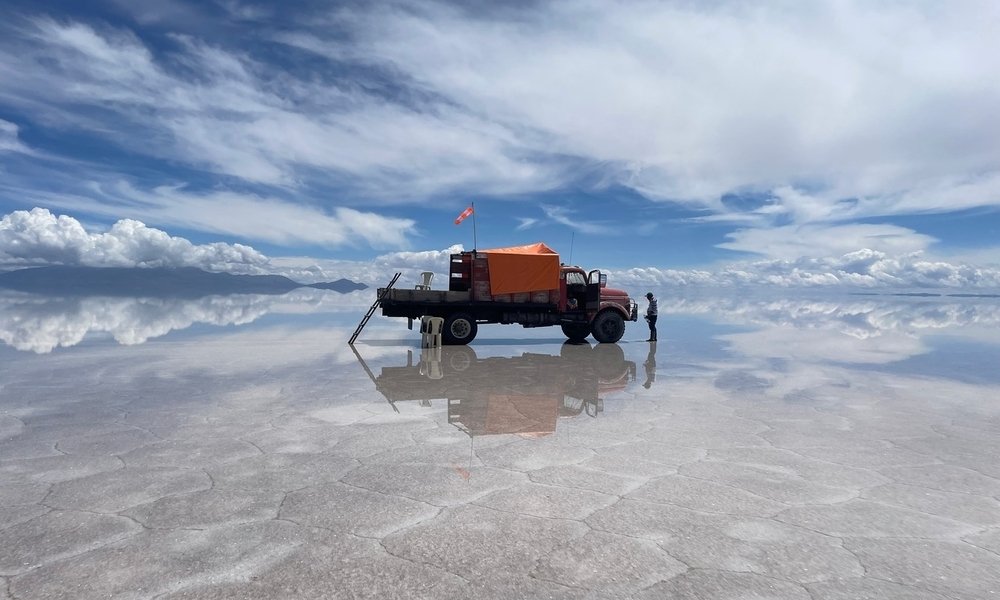
The surface of the Salar de Uyuni is one of the flattest on the planet. This characteristic is key to the mirror effect occurring so perfectly and strikingly.
The salt flat was formed from ancient prehistoric lakes that evaporated uniformly. As they dried, they left behind an extremely even, solid layer of salt, without significant changes in elevation or slope Guinness World Records 2024.
An almost perfect plain
Thanks to this flat area, the water is distributed evenly across the surface. Because it doesn’t accumulate in deep pools, the reflection remains stable and continuous, creating the appearance of a giant natural mirror.
The role of rain in the mirror effect
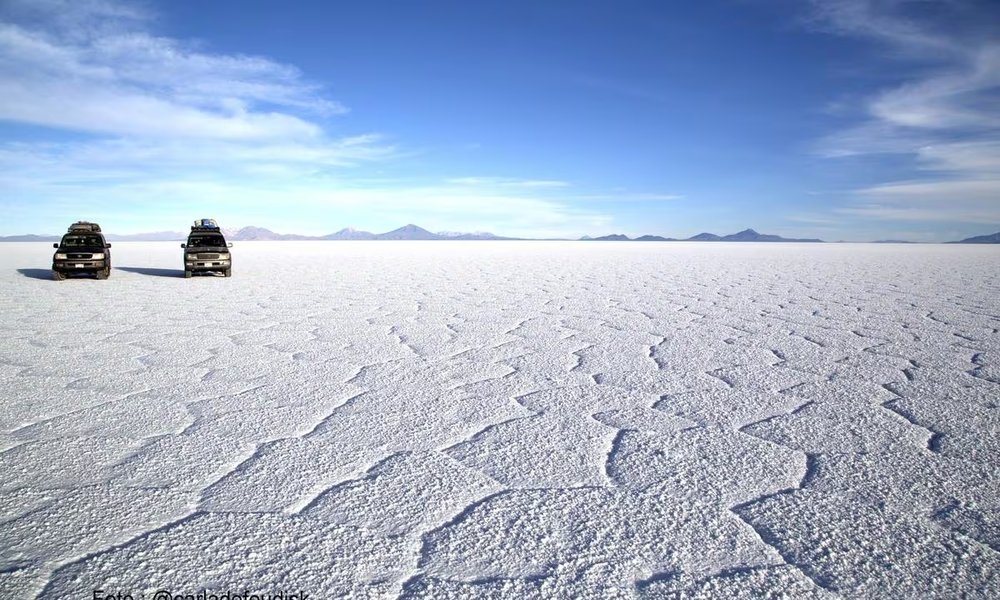
Rain is a key element for the Salar de Uyuni to transform into a natural mirror. Intense downpours are not necessary; rather, gentle and constant rainfall is sufficient to cover the surface with a minimal layer of water.
When the amount of water is just right, it is distributed evenly over the salt. This prevents the ground from becoming completely flooded, instead creating the perfect film to reflect the sky without distortion.
Exact amount of water
If the rain is heavy, the reflection is lost because deep puddles form. However, when the layer of water is thin, the reflection becomes sharp and continuous, creating the famous mirror effect.
When can the Salar de Uyuni be seen like a mirror?

The Salar de Uyuni typically displays its mirror-like appearance during the rainy season, which runs mainly from January to March. During these months, weather conditions favor the formation of the necessary water layer.
Ideal months for the mirror effect
The phenomenon is usually most visible between January and February. However, the effect can vary depending on the intensity of rainfall each year. Some days the effect is complete, while on others it only appears in certain areas of the salt flat.
Tips for seeing the mirror effect at its best
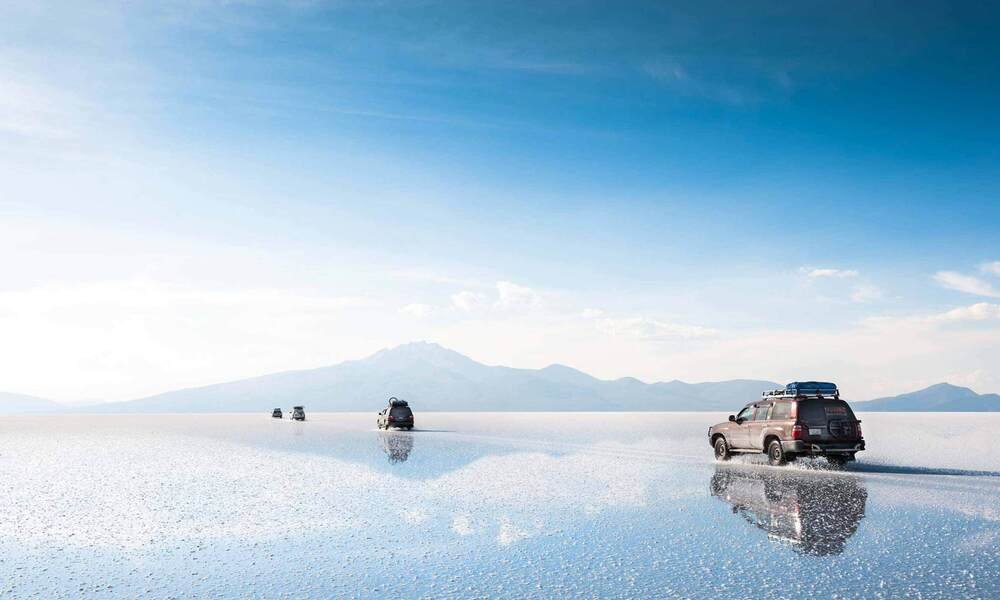
To fully appreciate the mirror effect of the Salar de Uyuni, it’s important to consider a few practical aspects before your visit. Not every day during the rainy season offers the same visual experience.
Ideal time for reflection
Early morning and late afternoon are usually the best times. At those times, the light is softer and the reflection of the sky on the surface of the salt flats is clearer and more defined.
Careful movement on the salt flat
Walking carefully helps avoid disturbing the thin layer of water. Avoiding sudden steps allows you to keep the reflection intact and enjoy the scenery for longer.
Why doesn’t this phenomenon occur in other salt flats around the world?

Although other salt flats exist in different parts of the world, the mirror effect of the Salar de Uyuni is practically unique. This is due to a combination of factors that are not replicated with the same precision elsewhere.
Exceptional expanse and flatness
The Salar de Uyuni stands out for its enormous size and extremely flat surface. Other salt flats have irregularities, slopes, or fragmented surfaces that prevent the formation of a continuous reflection.
Specific weather conditions
The combination of moderate rainfall, high-altitude climate, and controlled evaporation creates ideal conditions for the mirror effect. In most salt flats around the world, these conditions do not coincide in the same way.