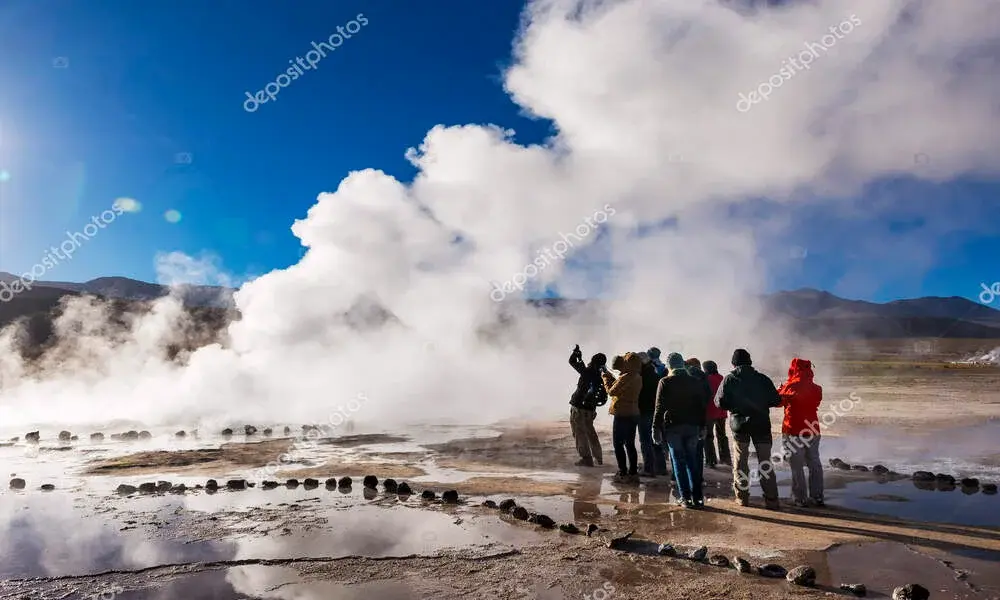
“Sol de Mañana Geysers and Active Fumaroles – Bolivia”
If you’re planning to explore the Bolivian highlands , the Sol de Mañana Geysers are a must-see. This impressive geothermal field features active fumaroles, boiling waters, and plumes of steam erupting from the ground, creating an almost surreal landscape. Surrounded by mountains and intensely colored deserts, it’s an ideal spot for adventure lovers, photographers, and those who appreciate extreme nature.
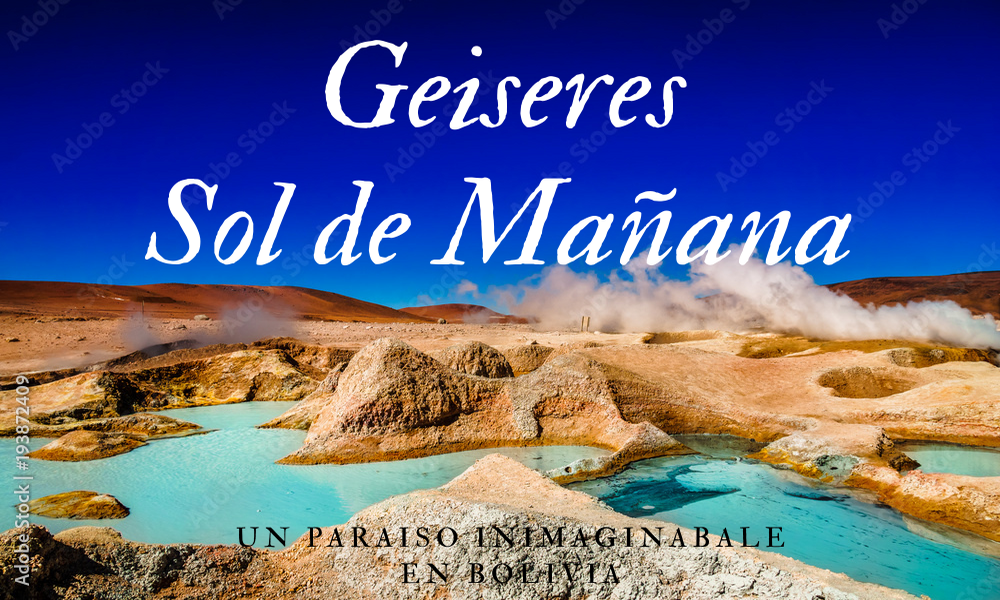
The Morning Sun Geysers
This is a prominent geothermal field located in southwestern Bolivia, within the Eduardo Avaroa Andean Fauna National Reserve , in the Sud Lípez province, Potosí department. It lies south of Laguna Colorada and forms part of one of the most active geothermal regions of the Bolivian Altiplano.
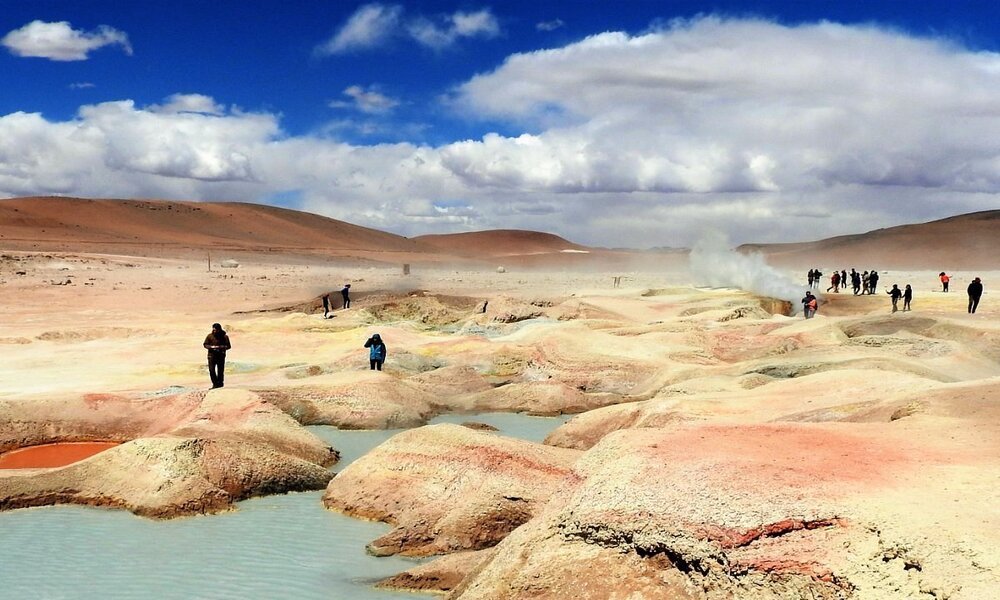
The field extends over approximately 10 km² and is located at an altitude of between 4,800 and 5,000 meters above sea level , making it one of the highest geothermal fields in the world.
Active fumaroles
Unlike classic water geysers, Sol de Mañana is characterized by active fumaroles, steam vents, and boiling mud pools that spew steam and sulfurous gases to the surface, sometimes reaching heights of up to 50 meters . The resulting landscape—with steam, bubbling mud, and sulfurous emissions—has an almost prehistoric or lunar appearance, offering a dramatic glimpse into the Earth’s internal activity.
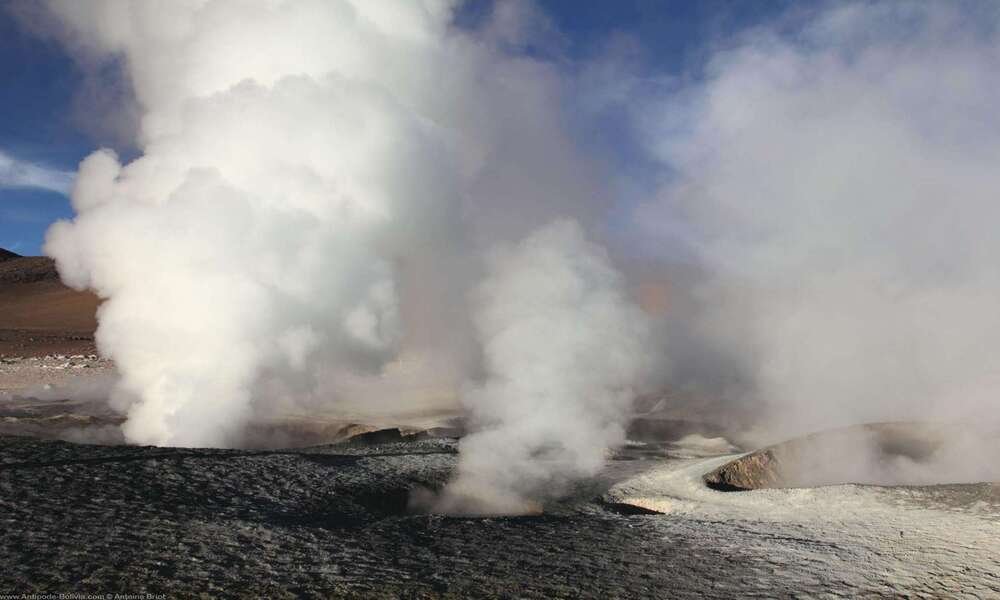
The area is seismically active and forms part of the Altiplano-Puna volcanic complex, connected to other geothermal fields, such as the famous El Tatio in Chile. In addition to its spectacular visual appeal, Sol de Mañana has been the subject of studies to evaluate its potential as a source of geothermal energy .
For visitors, the geothermal phenomena are most impressive early in the morning, when the contrast between the hot steam and the cool air makes the steam plumes appear denser—hence its name, “Morning Sun.” It is accessible via unpaved roads from Uyuni or as part of adventure tours across the Altiplano.
Ecosystem and Biodiversity
Located at an altitude of over 4,800 meters, the Sol de Mañana Geysers are part of the Eduardo Avaroa Andean Fauna National Reserve . Their ecosystem combines active geothermal soils, bubbling mud, fumaroles, and sulfurous vapors, surrounded by deserts, lagoons, and multicolored mountains.
Biodiversity:
Andean birds: Flamingos, wild ducks and other migratory birds, especially in nearby lagoons such as Laguna Colorada and Laguna Verde.
Mammals: Vicuñas, guanacos, chinchillas and more that inhabit the nearby deserts and grasslands.
Thermophilic microorganisms: Extremophilic bacteria and algae that survive in high temperatures and acidic environments.
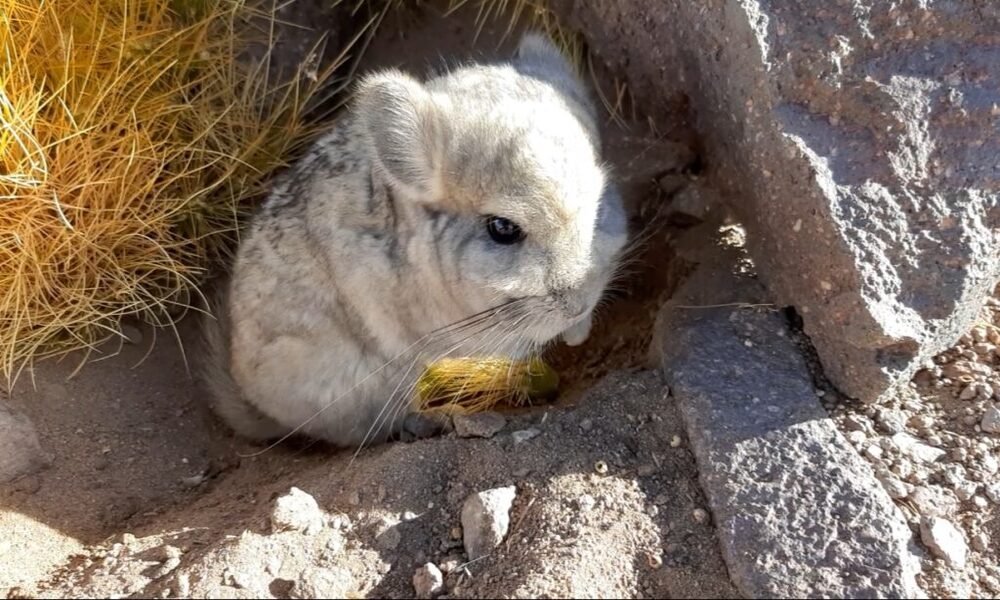
This ecosystem combines active geological elements with life adapted to extreme conditions, making it a unique place for both scientific studies and travelers interested in geothermal energy, biodiversity, and extreme landscapes.
Importance
The Sol de Mañana Geysers are a symbol of the Earth’s geothermal power and represent one of the most extreme and unique ecosystems of the Bolivian highlands. Their significance is evident in several aspects:
Scientific: They allow the study of geothermal phenomena and extremophile microorganisms that survive in extreme conditions.
Ecological: They contribute to the conservation of species adapted to the altitude and arid climate within a protected ecosystem.
Tourist: Its surreal landscape, with active fumaroles and bubbling mud pools, makes it an exceptional destination for travelers, photographers and lovers of extreme nature.
Energy potential: Geothermal activity has been evaluated as a possible source of sustainable energy.
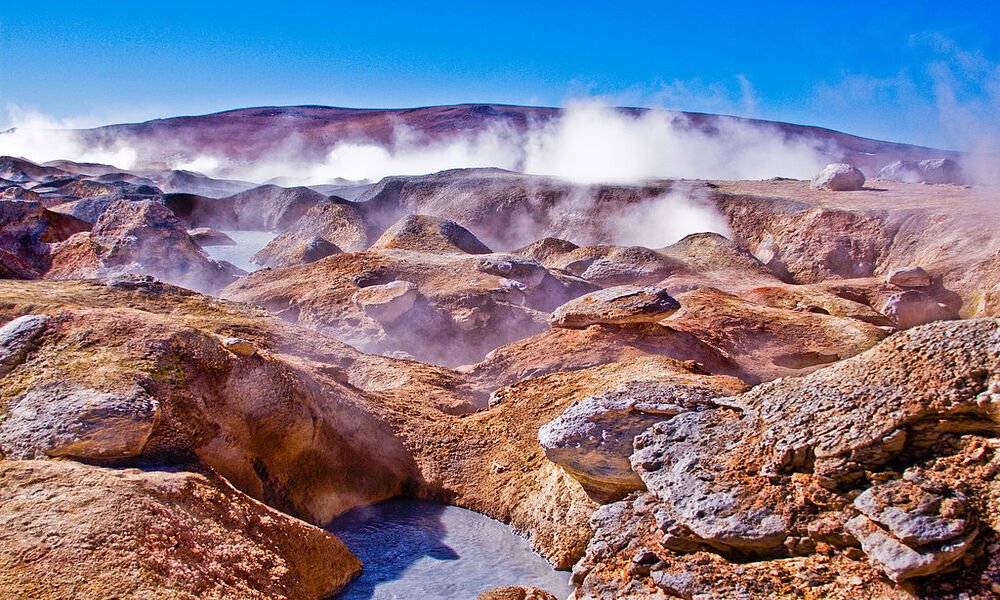
Together, the Sol de Mañana Geysers combine active geology, adapted biodiversity and exceptional landscape value, consolidating themselves as a natural and scientific reference point in Bolivia.
How to get there
The Sol de Mañana Geysers are located in southwestern Bolivia, near Laguna Colorada and the Dalí Desert , within the Eduardo Avaroa Andean Fauna National Reserve .
From Uyuni (the most common starting point):
Distance: approximately 200 km.
Transportation: The safest way is through 3-4 day 4×4 tours , which include other attractions such as the Salar de Uyuni , Lagunas Coloradas and Verde , and multicolored deserts.
Duration: The trip from Uyuni usually takes 6 to 7 hours , depending on the itinerary.
From La Paz:
You can first travel to Uyuni by bus or plane, and then continue on a 4×4 tour to the geysers.
Access: The roads are dirt and partially uneven; it is recommended to travel with vehicles prepared for extreme terrain and local guides .
Recommendations for Visitors
Altitude: The area is more than 4,800 meters above sea level; it is advisable to acclimatize beforehand.
Clothing and equipment: Wear thermal clothing, a hat, gloves, a scarf, sun protection, and sturdy footwear.
Safety: Stay in designated areas and do not get too close to fumaroles or boiling mud pools, where temperatures can exceed 90°C.
Photography: The best times are early in the morning, when the steam creates a spectacular contrast with the sky.
Hydration and oxygen: Drink plenty of water and, if possible, carry portable oxygen, especially for those not used to the altitude.