What is the Salar de Uyuni and why is it famous?
The Salar de Uyuni is one of the most stunning natural landscapes on the planet and one of Bolivia ‘s most visited destinations . Its immense white expanse, its natural origin, and the visual effects created on its surface have made it world-famous. Understanding what the Salar de Uyuni is and why it attracts travelers from all over the world allows us to appreciate its geographical, cultural, and touristic value within South America.
What exactly is the Salar de Uyuni?

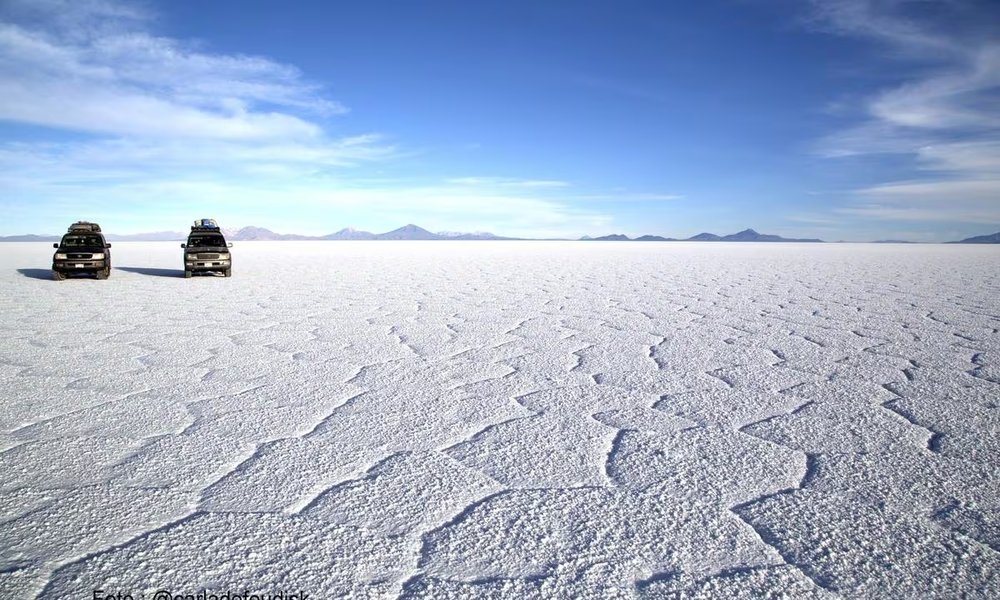
The Salar de Uyuni is the world’s largest salt flat. Located in southwestern Bolivia, it covers a vast expanse of the Andean plateau. Its flat, white surface creates a unique landscape that seems to stretch on forever.
This salt flat was formed from ancient prehistoric lakes. Over time, the water evaporated, leaving a thick layer of salt that now covers the entire area. Thanks to this characteristic, it is possible to walk and travel great distances across its surface.
Dimension and location of the salt flat
The Salar de Uyuni covers an area of over ten thousand square kilometers, making it the largest salt flat on the planet. It is located at an altitude of over 3,600 meters above sea level and is surrounded by volcanoes, mountains, and landscapes typical of the Bolivian highlands.
Origin and formation of the Salar de Uyuni

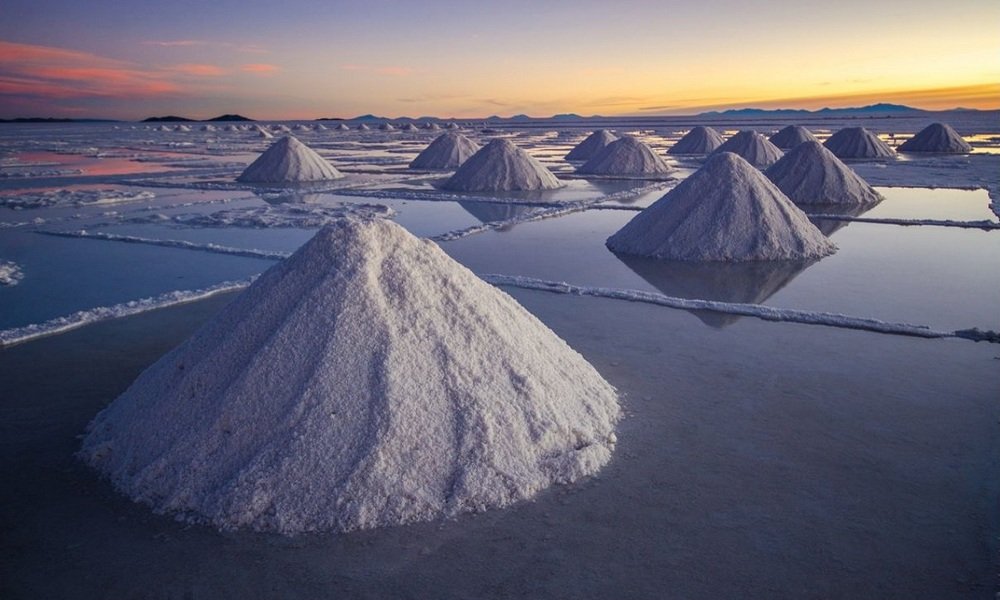
The origin of the Salar de Uyuni dates back thousands of years, when large lakes covered this region of the Altiplano. Over time, these lakes evaporated, leaving behind mineral deposits that gave rise to the vast salt flat seen today.
This natural process formed a solid surface composed primarily of salt and other minerals. Thanks to its geological formation, the salt flat stands out not only for its beauty but also for its natural and scientific importance.
From ancient lake to salt desert
In the past, the area was covered by large bodies of water. As they evaporated, the minerals concentrated and solidified, creating the uniform white surface that characterizes the Salar de Uyuni today.
Why is the Salar de Uyuni famous?
The Salar de Uyuni is world-famous for its endless expanse, its uniform white landscape, and the feeling of being in a place beyond this planet. There is no other salt desert in the world with such a large and perfectly flat surface.
In addition, this destination has become an icon of photography and nature tourism. Travelers from all over the world are drawn to its surreal scenery, absolute silence, and the opportunity to enjoy a unique experience in the Bolivian highlands. Its fame is also due to the variety of landscapes it offers throughout the year, changing completely depending on the season.
A unique destination for photography
One of the main reasons for its fame is the opportunity to take creative and perspective photographs. The absence of visual references allows you to play with sizes, distances, and reflections, creating striking images that have gone viral on social media and international media.
The Salar de Uyuni is recognized as the largest salt desert in the world, a milestone confirmed by a Récord Guinness en 2024.
The mirror effect and its unique landscapes

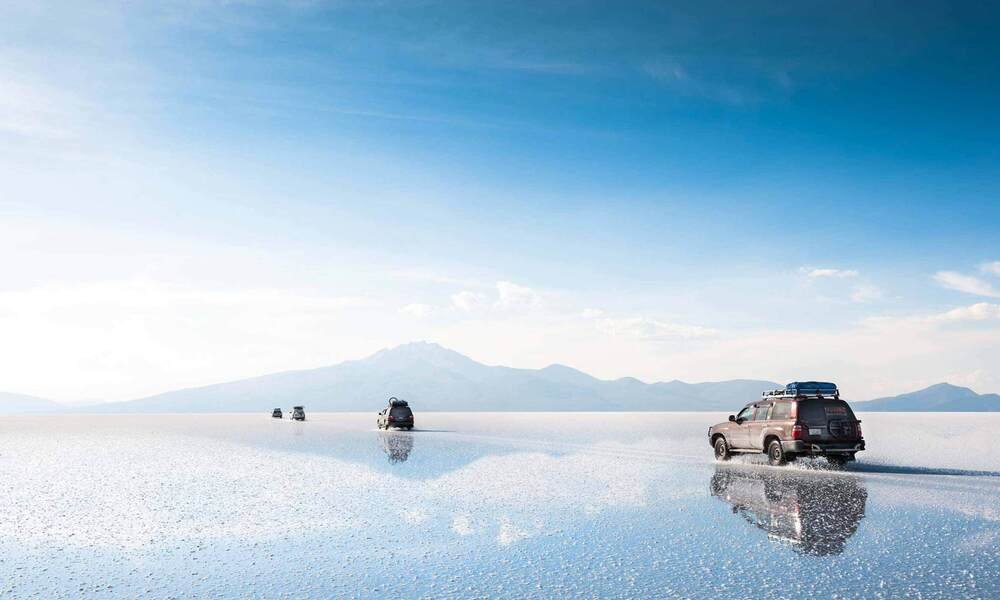
The famous mirror effect occurs when a thin layer of water covers the surface of the salt flat during the rainy season. At that moment, the ground transforms into a huge natural mirror that reflects the sky, clouds, and horizon.
This phenomenon creates the illusion of walking on the sky, blurring the line between the earth and the heavens. It is one of the reasons why the Salar de Uyuni is considered one of the most impressive landscapes in the world.
When does the mirror effect occur?
The mirror effect usually appears between January and March, when rains lightly cover the salt flat. During this time, the landscape changes completely and offers a visual experience that is totally different from the dry season.
Natural and scientific importance of the Salar de Uyuni
The Salar de Uyuni is not only notable for its beauty, but also for its great natural and scientific importance. Beneath its surface lies one of the largest reserves of lithium on the planet, a key mineral for the manufacture of batteries and modern technology.
In addition, the salt flat functions as a huge natural calibrator for satellites. Its flat, reflective surface allows space observation instruments to be adjusted, making it a benchmark for scientific and technological studies worldwide.
A highland ecosystem
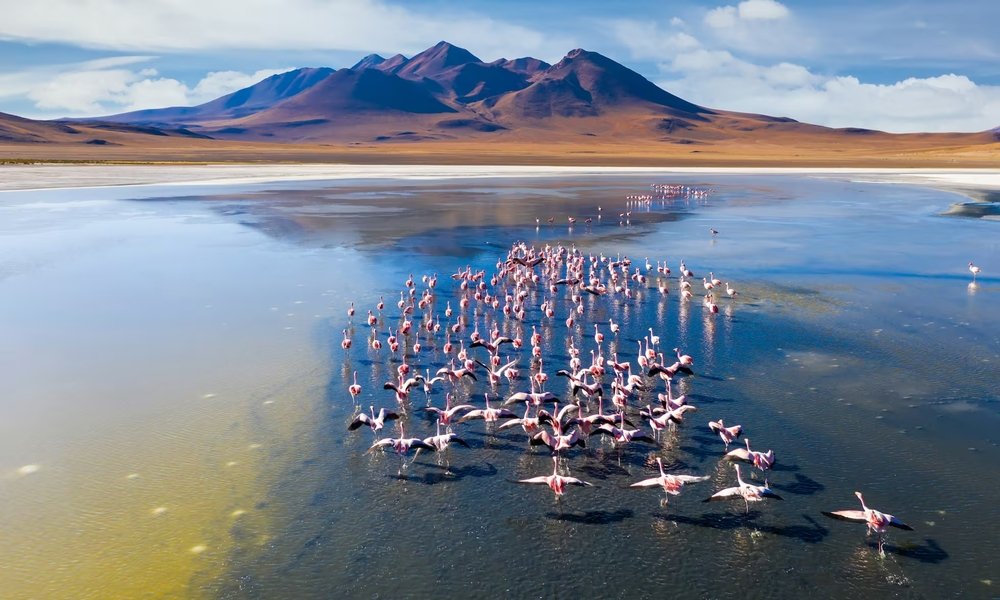
Although it resembles a desert landscape, the salt flat is part of a fragile highland ecosystem. Species adapted to the altitude, such as Andean flamingos and plants resistant to extreme conditions, inhabit its surroundings.
Interesting facts that make the Salar de Uyuni unique
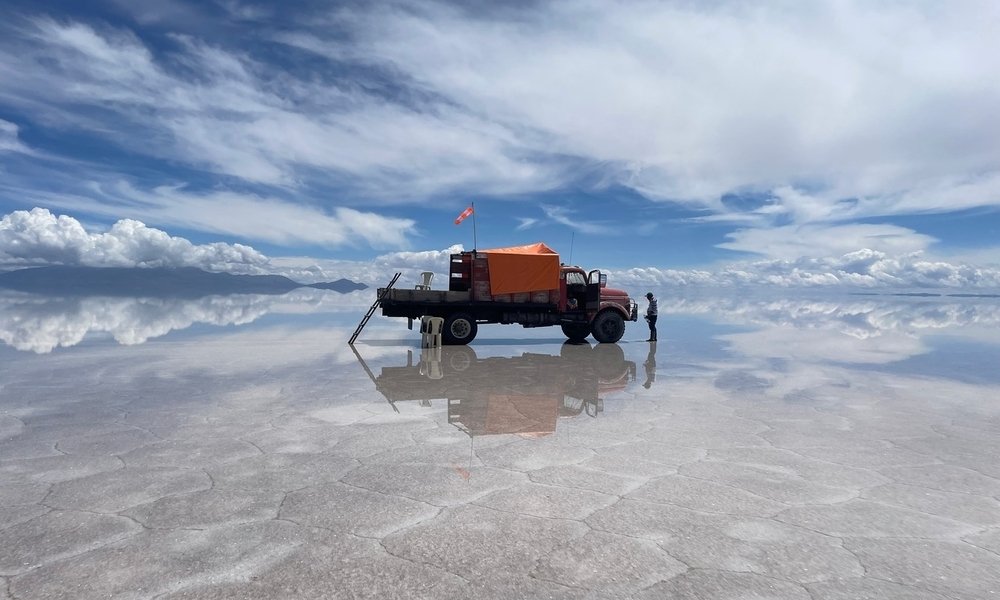
The Salar de Uyuni holds several curiosities that make it a truly special place. One of the most striking is that, during certain times of the year, the surface of the salt flat can deceive one’s sense of direction due to the lack of visual references.
Feeling of infinity
Walking across the salt flats, many people experience the sensation of being in a boundless space. The horizon seems endless, and the landscape changes with the light of day, creating a unique visual experience.
Extreme temperature changes
Another interesting feature of the salt flats is their abrupt temperature changes. During the day, the climate can be warm, while at night temperatures drop considerably, a typical characteristic of the Bolivian highlands.