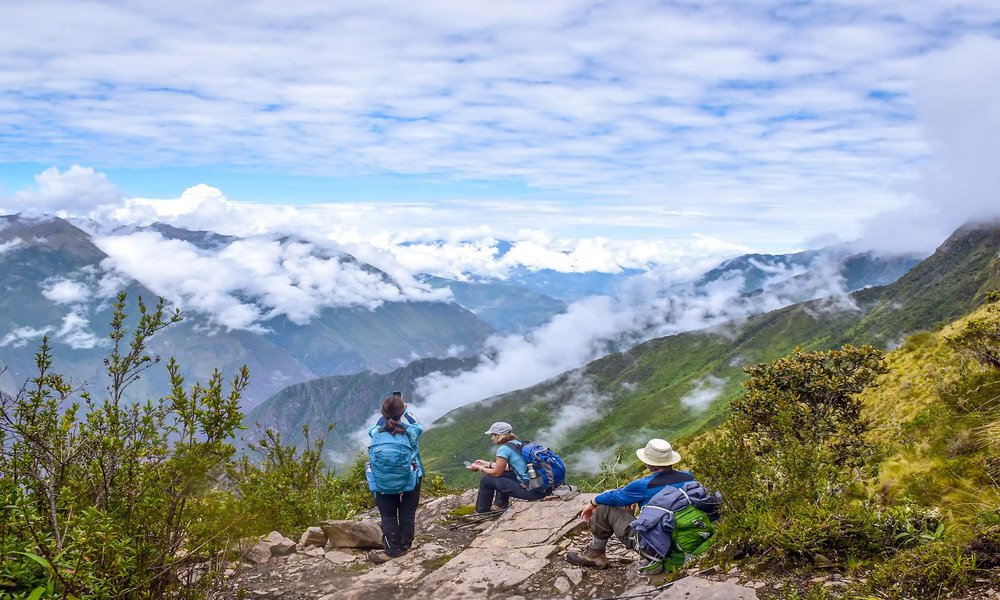
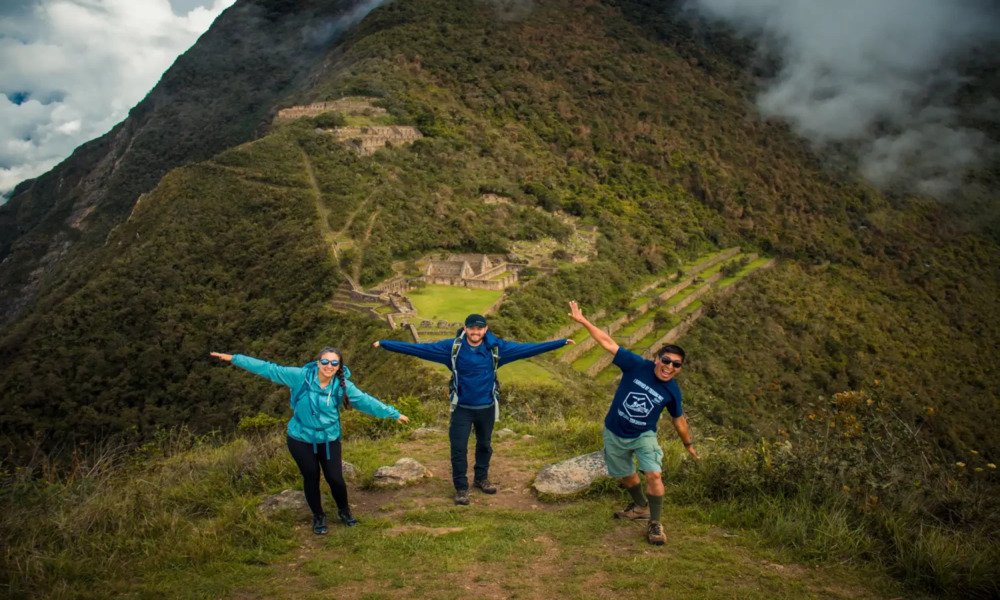
Choquequirao is a stunning Inca archaeological complex located in the Cusco region of southern Peru. Situated at over 3,000 meters above sea level, high in the Apurímac River canyon, it is considered one of the best-preserved treasures of the Inca Empire and is often compared to Machu Picchu for its majesty and historical significance. Unlike other more accessible tourist destinations, Choquequirao requires a multi-day trek to reach, making it an ideal experience for adventurous travelers seeking nature, history, and tranquility away from the crowds.
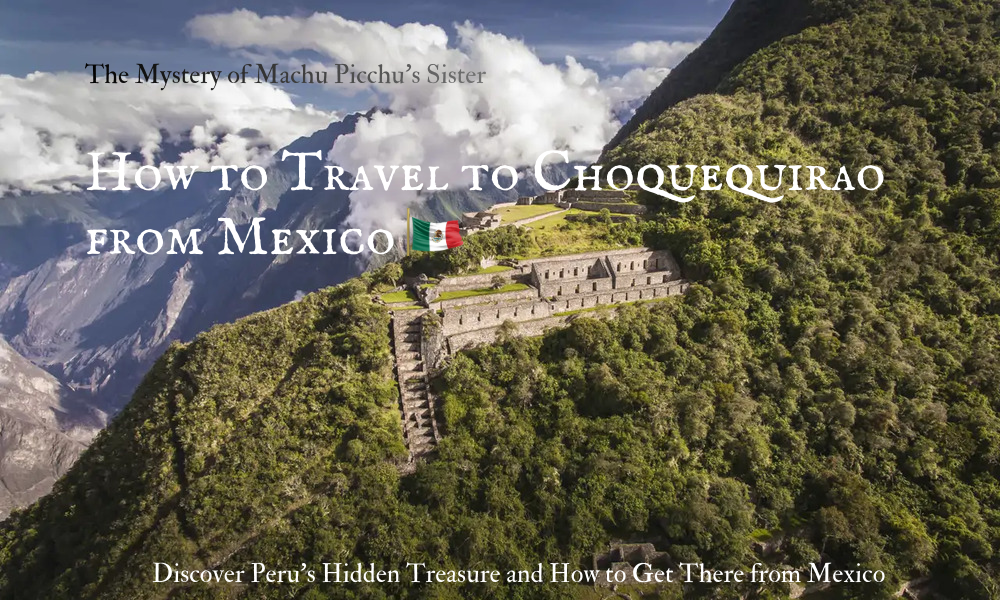
To travel from Mexico, you need to take the following into account:
What is Choquequirao and why is it so special?
Known as the “sacred sister” of Machu Picchu, Choquequirao was built between the 15th and 16th centuries, during the height of the Inca Empire. Its name comes from Quechua: “Choque” (gold) and “K’iraw” (cradle), which is interpreted as “Cradle of Gold .” Beyond its literal meaning, this name reflects the importance of the site as a highly significant ceremonial center and possibly as an enclave reserved for the Inca elite. Some historians suggest that Choquequirao functioned as a strategic and spiritual refuge, connected by a complex network of roads to other administrative and religious centers of the Inca Empire.
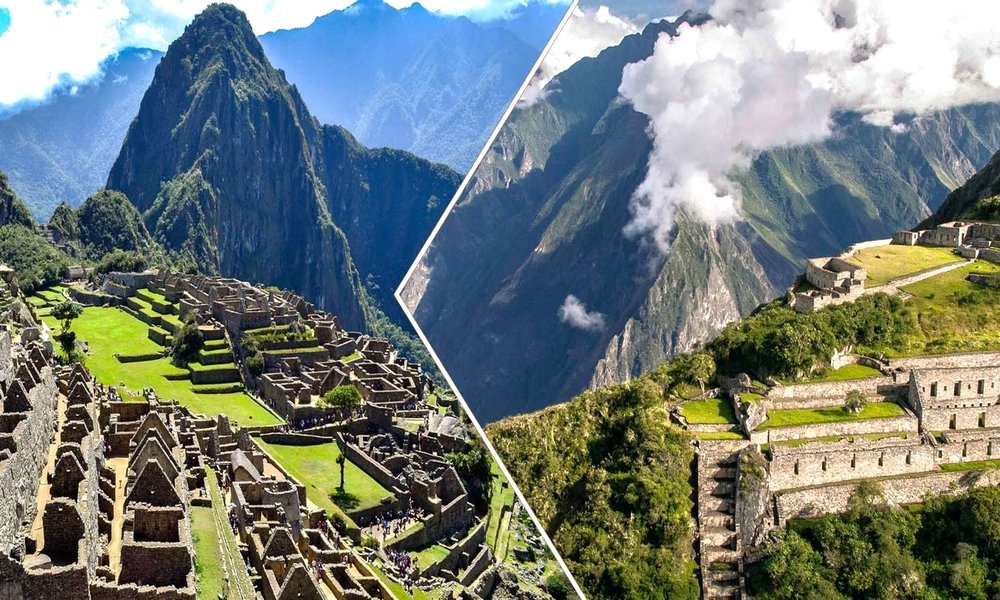
What makes Choquequirao so special is not only its impressive architecture, with terraces, plazas, and temples carefully aligned with the landscape, but also the complete experience offered by the trek. From the moment you begin the descent into the Apurímac Canyon, you feel the immensity of the nature surrounding the site: the absolute silence of the mountains, the whisper of the wind among the terraces, and the panoramic view of the canyon create an almost magical atmosphere.
How to get there from Mexico?
Step 1: Getting from Mexico to Peru
🟥⬜🟥
The journey begins with an international flight to Lima, the country’s capital and main gateway for international travelers. From cities like Mexico City, Cancún, or Guadalajara, there are direct flights or flights with one layover, operated by airlines such as LATAM Airlines, Aeroméxico, or Copa Airlines. The average flight time from Mexico City is approximately 5 to 6 hours for a direct flight, although it can vary slightly depending on weather conditions and the specific route. Advance booking is recommended, especially during peak season (May to September), when demand for visits to the Peruvian Andes is highest.
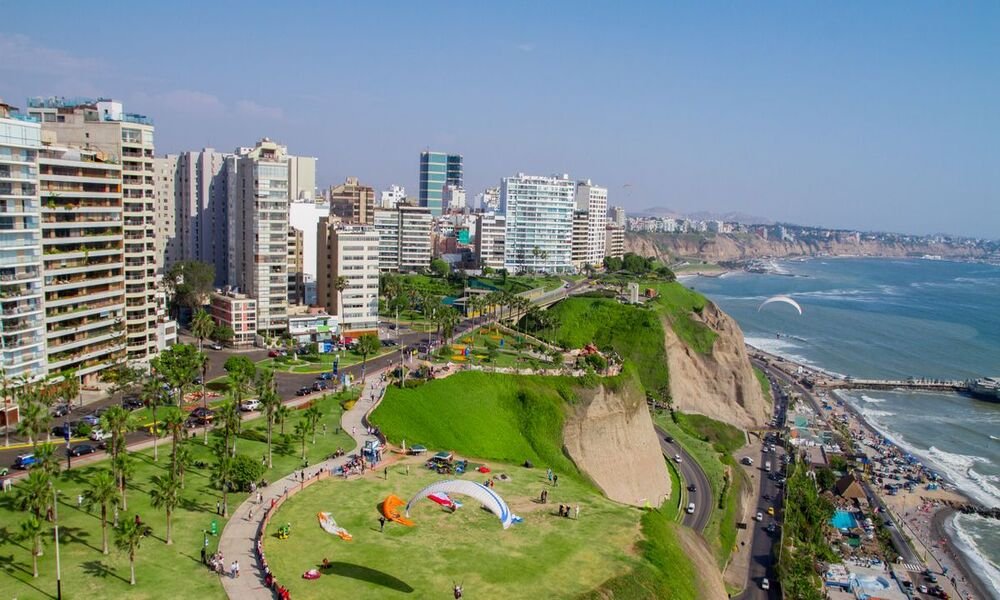
Once in Lima, the next step is to take a domestic flight to Cusco, the former capital of the Inca Empire and now the starting point for most routes to the major Andean archaeological sites. This flight takes about 1 hour and 20 minutes and offers spectacular views of the Andes Mountains on clear days. Several local airlines operate this route with multiple daily flights, making it easy to connect even if your international flight arrives in the morning or at midday.
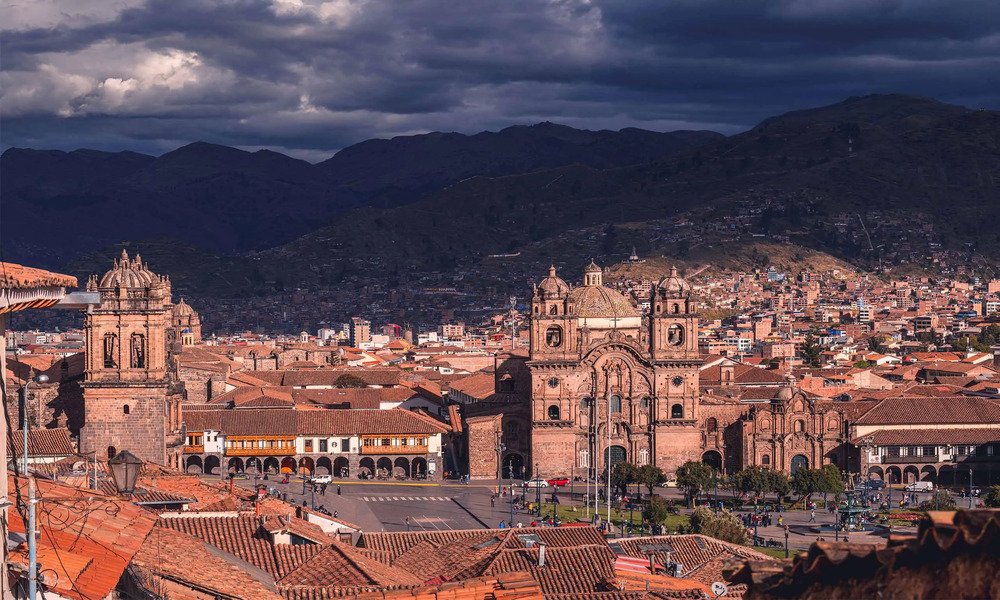
It is recommended to stay at least one or two days in Cusco to acclimatize to the altitude (3,400 m above sea level) and avoid altitude sickness before starting the trek.
Step 2: From Cusco to the starting point of the trek
From Cusco, the next leg of the journey is by road to the town of Cachora or directly to the Capuliyoc viewpoint, considered the classic starting point for this trekking route. The journey takes between 4 and 5 hours by private transport or organized tourist bus, depending on road conditions and stops along the way. Generally, agencies include this transfer in the tour package, although it is also possible to arrange your own transportation.
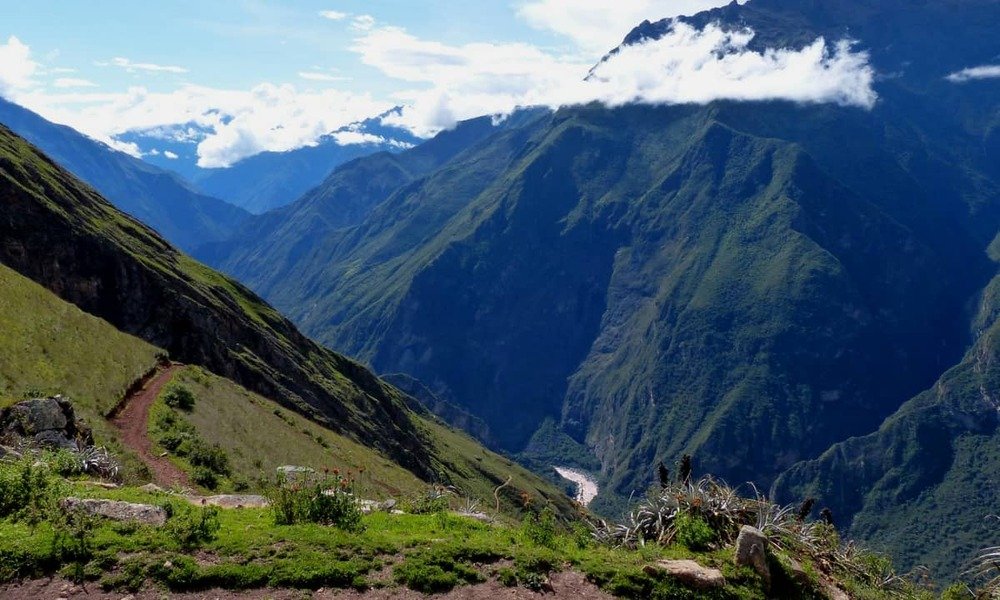
During the journey, the landscape gradually changes as you leave the urban environment of Cusco and enter rural areas of great scenic beauty. You’ll travel through verdant mountains, wide Andean valleys, and small traditional villages where ancestral customs are still preserved. The contrast between the agricultural fields, the adobe houses, and the imposing Andean peaks offers a first glimpse into the geography and culture of the region.
Step 3: Trekking to Choquequirao
The classic trail follows the route:
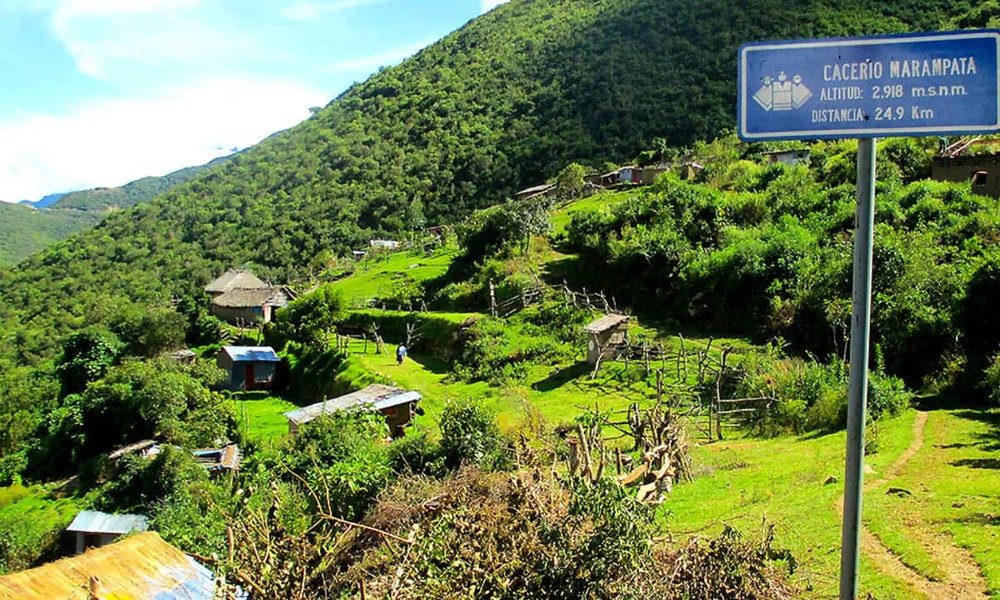
Puppy → Capuliyoc → Rosalina Beach → Marampata → Choquequirao
The total distance is approximately 30 to 32 kilometers one way. While this may seem moderate in terms of mileage, the real challenge lies in the elevation gain. The route begins with a steep descent from Capuliyoc to the Apurímac River, followed by a demanding and lengthy climb to Marampata and finally to the archaeological complex. This combination of intense descents and long ascents makes the route a physically demanding, yet deeply rewarding, experience.
Trekking Duration
4 days / 3 nights (classic route): allows you to reach Choquequirao, explore it and return by the same route.
5 days / 4 nights (more relaxed pace): ideal for those who want to walk more calmly and enjoy more time at the archaeological site.
8–9 days if connected to Machu Picchu on a longer and more challenging trek, considered one of the most spectacular routes in the Andes.
The hike requires good physical condition, as each day involves ascents and descents that can exceed 1,000 meters in elevation gain. It’s highly recommended to train beforehand or join an organized tour with a professional guide, cook, and mules for carrying gear.. This not only enhances the experience but also provides safety and historical knowledge about the region.
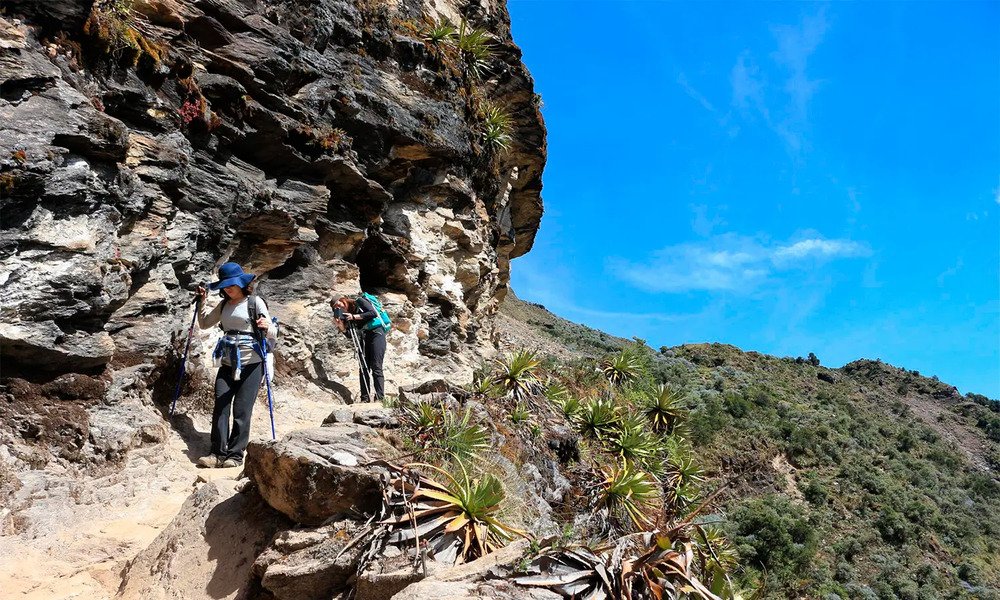
Along the way, you’ll cross diverse ecosystems that shift with altitude—from arid canyon bottoms to cloud forests and high-altitude rainforests—where you can spot Andean condors, colorful hummingbirds, and native flora like orchids and bromeliads. Each day offers different landscapes, making the journey as breathtaking as the final destination.