


Chullos Peruanos
Chullos Peruanos
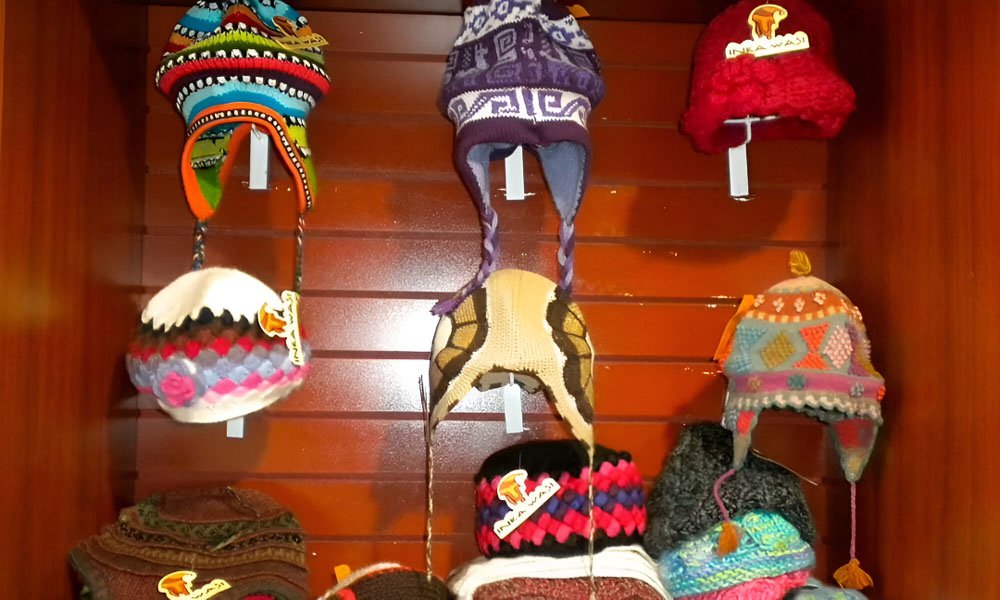
Peruvian “chullos,” also known as Andean hats, are emblematic of the mountainous regions of Peru and other Andean areas in South America.
These hats are characterized by their unique and striking designs, often incorporating geometric patterns, cultural symbols, and vibrant colors. They are hand-woven with alpaca, sheep, or other natural fibers, making them warm and suitable for the cold climate of the Andean highlands.
One of the most distinctive features of chullos is the presence of ear flaps that hang down on either side. Some chullos also feature a braided cord or pom-pom at the top, adding a touch of style and tradition.
Chullos not only serve a practical purpose by keeping the wearer warm, but they are also an important cultural symbol that reflects Andean identity and heritage. They are often worn during celebrations, festivals, and traditional events, and represent the rich craftsmanship and connection to nature that characterizes Andean communities.
Origin
Although the Peruvian chullo is now appreciated and valued as a genuine artistic expression of the country, historian Luis Repetto indicates that there has been strong prejudice against it due to its Andean origin. However, Repetto also clarifies that, while the garment originated in the mountains, its roots lie in Spanish tradition.
“We could then say that it the chullo is a kind of syncretic garment, the result of the adaptation of the medieval beret imported during the Viceroyalty of Peru, as part of the imposition of European clothing on the indigenous Andean people after the rebellion of Túpac Amaru II in 1780.
While some anthropologist has a mestizo origin, and that the main Peruvian contribution was the ear flaps. Furthermore, in our pre-Inca history, there were other types of headwear, such as the four-pointed Huari hat,” he adds.
Chullos in the Medieval Period
However, some argue thats and historians claim that the chullo is a mestizo product derived from a blend of various influences, such as the four-pointed Huari hat, the Spanish beret, and the medieval beret (brought by the Spaniards), others reject this version and maintain that its origin is purely pre-Hispanic, as anthropologist Leonidas Casas Ballón asserts.
Long before the arrival of the Spaniards in our territory, the use of headwear had a very special meaning in the visual language of the Andean world. These garments served to identify the social rank, class, and even the ethnicity of those who wore them.
The chullo is the culmination of an extensive process of traditional knowledge and techniques. Since pre-Hispanic times, headwear was part of the visual language of the Andean world. These elements immediately conveyed the identity and ethnicity of the wearer, in addition to protecting the part of the body closest to the deities.
Given the extreme climatic variations of the Andes, protecting the head was essential. The first Peruvians used various materials, such as the skins of small animals, leaves, and even grasses. With the establishment of trade routes, they were able to obtain the fine Andean fiber.
Crafting
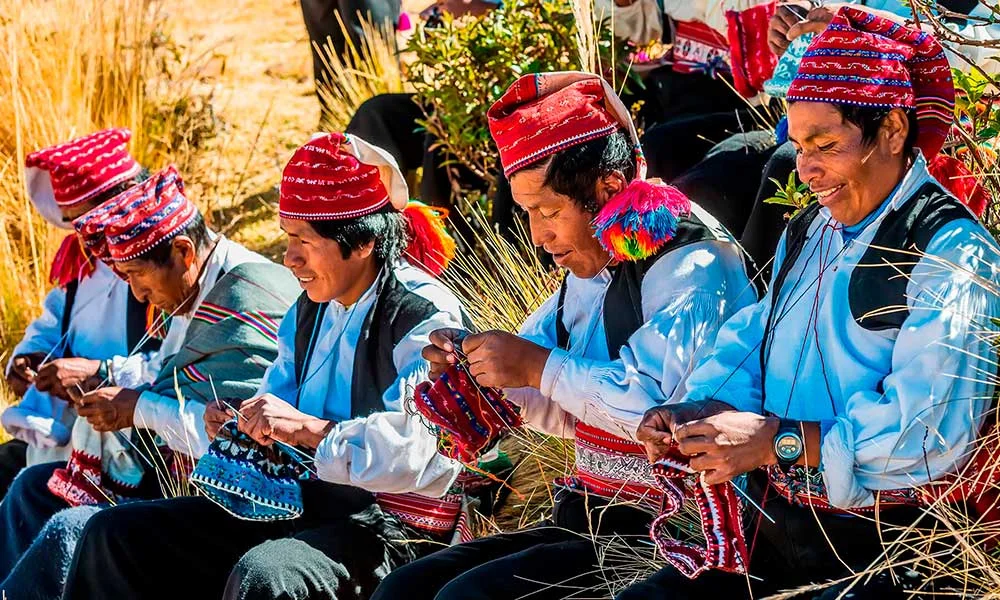
In the making of the chullo hats, different materials were used, such as wood, feathers, and metal, employing various techniques. Rosie Barnes, who exhibited part of her chullo collection in the “The Chullo: Emblem of Peru” exhibition, inaugurated at the Museum of Popular Arts and Traditions of the Riva-Agüero Institute at the Pontifical Catholic University of Peru (PUCP) in September 2016, states that the Spaniards introduced three new techniques: crochet, lace-making, and knitting with needles, which were used to begin weaving the chullos. The first traces of the knitting technique in Peru were found around 1578 in the colonial town of Magdalena de Cao Viejo, near Trujillo.
Later, drastic cultural changes imposed by the Spaniards occurred, which were reflected in the cultural expressions of the common people, including the use of adornments in their clothing.
Although it is difficult to determine when chullos began to be knitted in Peru, Rosie Barnes maintains that it was probably not long after the introduction of stockings to the new territories, since both are tubular garments that elongate.
The chullo, then, could be considered a mestizo garment that originated during the colonial period, to which earflaps and colorful Andean designs were added. A similar process occurred with the creation of the charango or the Peruvian cajón (box-shaped percussion instrument), which now form part of our national heritage.
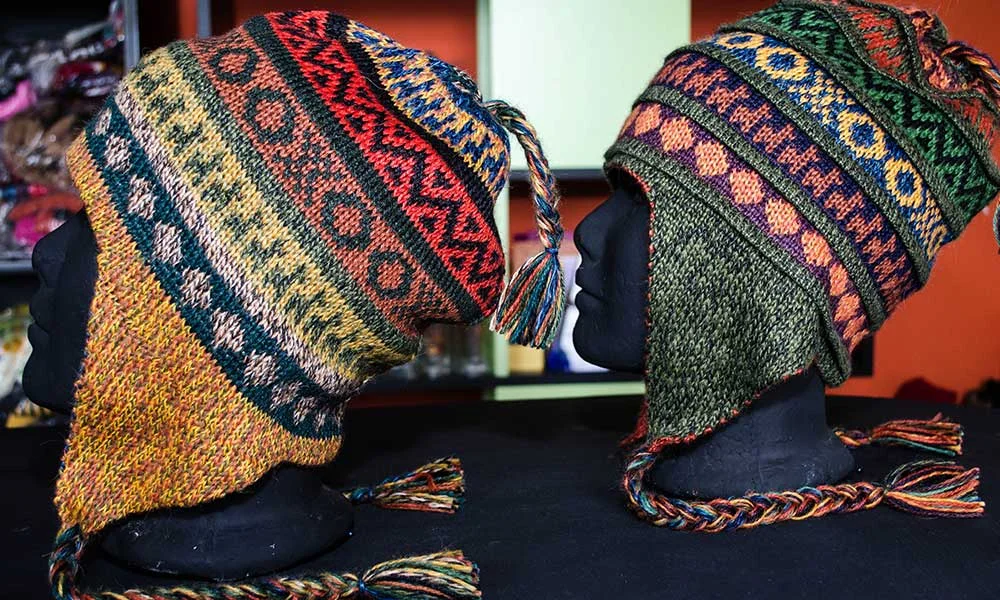
The chullo is a garment that is knitted in different shapes and sizes, with designs that reflect the imagination of its creators and symbolize their identity.
History
The warm and colorful chullo, with its classic wool earflaps, which now graces the world’s top fashion runways, has transcended its original function as a simple garment to combat the cold. It has evolved to become a representative symbol of our country and the Andean region.
The chullo (Aymara and Quechua word: ch’ullu) is a knitted hat with earflaps, made with alpaca wool or other types of wool, sometimes combined with synthetic fibers. It originated in the Andean highlands of Peru and is used to protect against the intense cold of the high-altitude plains. Its presence also extends to Chile, Bolivia, Argentina, and Ecuador. In Peru, it is characterized by its variety of colors, pointed earflaps, and hanging wool decorations in different shades. Over time, the chullo has gained a place in fashion, both in Peru and abroad, and it is now common to see young people and tourists wearing them.
Each region of Peru exhibits a diversity not only in colors, but also in uses, ranging from everyday wear to identifying social status or marital status. The chullo reflects the rich cultural diversity of the country.
Chullos on the Dior Runway
The chullo has crossed borders and gained international recognition thanks to the Gibraltar-born designer John Galliano, who presented it on prestigious runways in March 2002. Later, in 2005, he included it in his Fall/Winter 2006 collection for Dior. Although figures like French singer Manu Chao and the lead singer of Jamiroquai had already worn the chullo before Galliano, its use was limited in Peru, being mostly requested by foreign tourists.
Ana Flores, a vendor who has been selling chullos from Huancayo for over 25 years, acknowledges the improvement in business. Coming from a family of artisans, she learned the secrets of traditional weaving from a young age. Over time, she managed to establish the company Sidrik’s and export its products, including the chullo hats, which are valued for their use of natural fibers and their ability to protect the ears from the cold.
Titi Giulfo, a designer who has been committed to modernizing the chullo for over six years, sees it as a garment with personality that can be worn by young people. Her designs feature natural colors and fibers, with tassels, pom-poms, fringes, braids on the top, and hanging ear flaps, all handcrafted.
In short, the chullo has evolved from being a functional garment against the cold to becoming an emblem of Peruvian identity and an expression of the cultural richness of the Andes. Its presence in international fashion has raised its status, and in its country of origin, it has gradually gained the recognition it deserves.
Where are chullos made?
Chullos are made in all regions of the country due to the great commercial boom that has promoted their use, resulting in nearly a thousand different styles. However, those who know the craft best understand that the finest Peruvian chullos are made in the provinces where they have been crafted for centuries.
These are the highest regions of the Andes; that is, the high-altitude areas of Huancavelica, Ayacucho, Puno, and Cusco. Of these four, Puno is most likely the historical origin of this garment, although Cusco is currently the region that offers the greatest variety and selection, both in designs and materials, especially alpaca wool and natural dyes, which are the most sought-after abroad. The Cusco towns of Quispicanchi, Lauramarca, Pisac, Tinta, Calcas, Sicuani, Ocongate, and Ausangate stand out for the quality and variety of their chullos, ranging from the simplest, made using a pre-Hispanic technique called ‘circular’, to the most ornate, typically with buttons, beads, and wool ribbons. Cusco is the region that offers the widest variety and selection of knitted hats (chullos), both in terms of designs and materials, especially those made with alpaca wool and natural dyes. (Source)
Iconography
“The iconography of the chullo hats may seem simple, but it reflects the origin, aspirations, and desires of its creator. The intricate designs (pallays) are miniature representations of their world and a way to express their beliefs. Through these designs, weavers distinguish themselves from one another, demonstrating their skill and artistry within their community. For example, the chullo from Ocongate was originally made to attract a wife, conveying to women the experience and status of the man who wove it,” explains Rosie Barnes.
It is important to promote and preserve this significant tradition, which is part of the cultural identity of the Andean world, so that it can serve as a source of inspiration and research for future generations.
Facts:
One of the most striking features of chullo hats is the weaving itself and the symbols or figures depicted, which reveal the origin of the community that made them. These may include letters, soft and vibrant colors, symbols, drawings of camelids, plants, and some even indicate the marital status of the wearer.
The chullo hats sold in tourist areas are handmade by local artisans. Tourists are the ones who appreciate this garment the most, wearing it with great enthusiasm.
Peruvian chullo hats can keep the world warm. Peru exports chullo hats made of various materials to a total of 22 countries, with Mexico, France, and the United States being the top destinations. Other countries that demand this garment, which is very popular in cold climates, include Colombia, Costa Rica, Chile, Canada, Italy, Germany, Japan, Denmark, French Guiana, the Netherlands, Israel, and Uruguay, among others.