How to travel sustainably in Peru
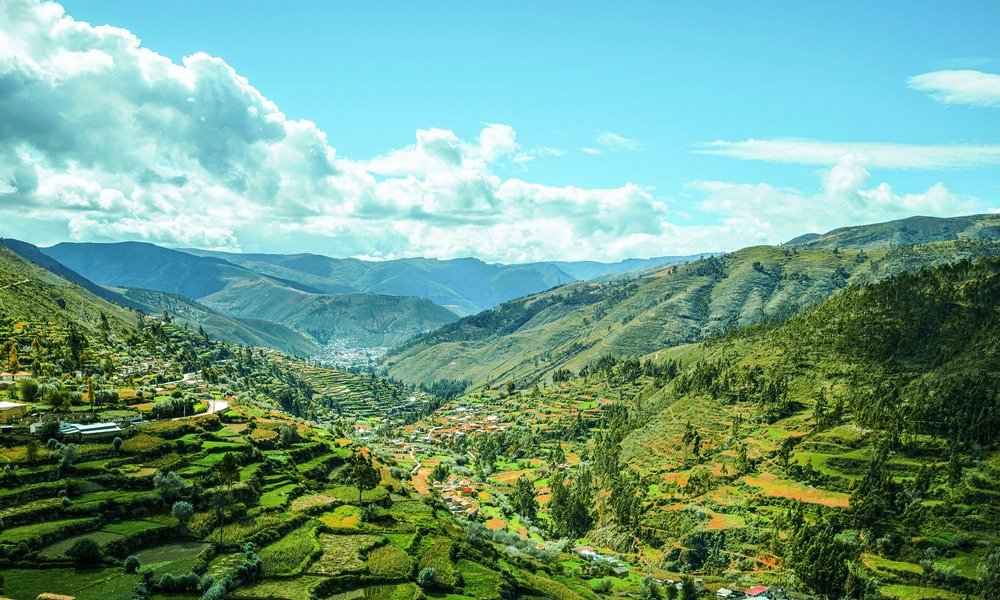
Understanding how to travel sustainably in Peru is essential for anyone who wants to explore the country responsibly and respectfully. Peru is a place of breathtaking diversity — from the towering peaks of the Andes and the ancient city of Cusco, to the deep Amazon Rainforest and vibrant coastal culture. Traveling here is an opportunity to learn, connect, and experience landscapes and traditions found nowhere else on Earth. But it also comes with the responsibility of ensuring that our presence benefits, rather than harms, the places we visit.
Traveling sustainably does not mean giving up comfort or adventure. Instead, it means making conscious decisions that support local communities, protect natural environments, and honor cultural heritage. Every traveler has the power to create a positive impact — through where we stay, what we buy, how we move, and the way we engage with people and wildlife.
For example, choosing locally owned guesthouses and community-operated lodges keeps income within the region and helps preserve living traditions. Buying handmade textiles directly from artisans in the Sacred Valley supports ancestral weaving knowledge that has been passed down through generations. Being mindful on hiking routes — especially around protected areas like Machu Picchu, Ausangate, and the Andean cloud forests — helps conserve fragile ecosystems. And observing wildlife in its natural habitat, rather than participating in harmful interactions, protects the species that make Peru so unique.
The goal is simple: to travel in a way that gives back as much as it receives.
When we understand how to travel sustainably in Peru, we don’t just visit — we participate in the ongoing story of the land and its people. We become travelers who listen, learn, and respect. And that transforms the journey into something truly meaningful, both for us and for Peru.
Support Local Communities
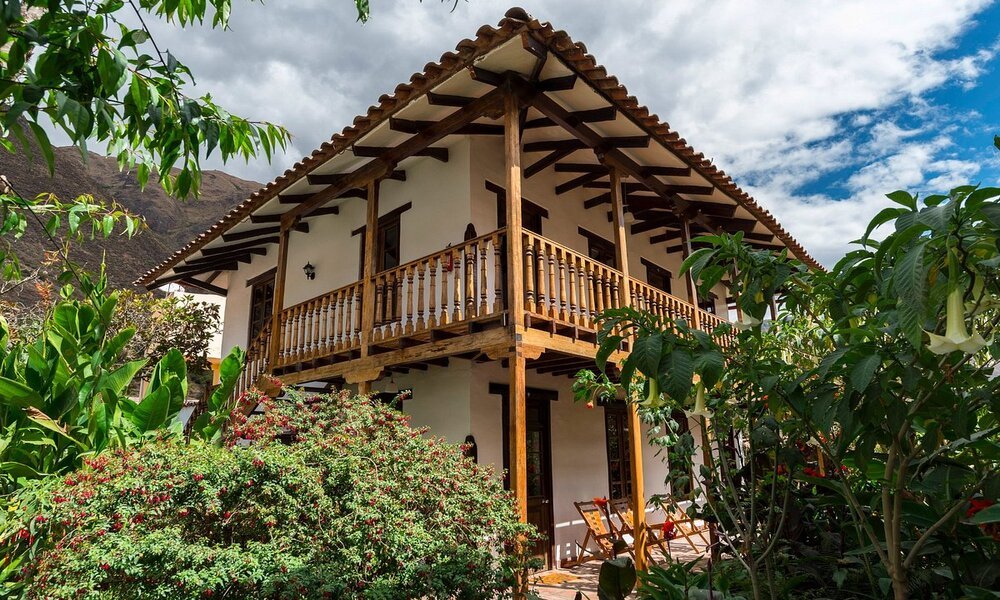
When we talk about sustainable travel Peru, supporting local communities is one of the most impactful things you can do. Peru is made up of countless cultures, traditions, and identities — especially in Indigenous Andean and Amazonian regions. Traveling in a way that uplifts local people ensures that cultural heritage remains alive, and that those who care for the land benefit directly from tourism.
Sustainable travel is about connection — not consumption. When you choose community-led services, your trip becomes more meaningful, more personal, and more real.
Choose Locally Owned Hotels, Restaurants & Guides
Locally owned hotels and guesthouses often reflect the character and history of the region. The décor, food, and hospitality feel personal — not standardized.
Instead of a generic travel experience, you receive stories, warmth, and cultural context.
The same applies to restaurants where ingredients come from nearby farms and local markets, preserving culinary traditions and supporting family agriculture.
- Local guides bring something money cannot buy:
A living relationship with the land, mountains, rivers, and sacred sites.
They don’t just explain — they interpret.
Choosing locals means your journey is not just through Peru — it is with Peru.
Buy Handcrafted Products Directly From Artisans
Handcrafts in Peru carry identity. Every weave, dye, carving, and stitch reflects generations of knowledge passed down through families.
When you buy directly from artisans:
- You pay fairly, without intermediaries
- You help preserve ancestral techniques
- You create human exchanges, not just transactions
In the Sacred Valley, for example, weaving cooperatives run by women support families, fund education, and keep Quechua textile tradition alive.
Your purchase becomes part of that story.
Protect Natural Environments
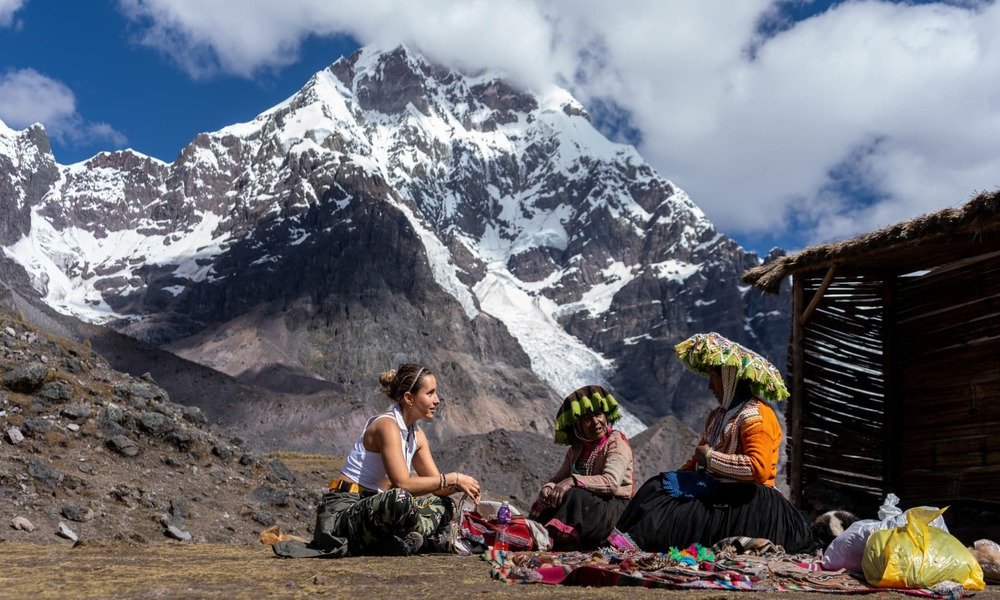
Peru’s natural ecosystems are sensitive and interconnected. From the high-altitude puna grasslands, to the cloud forests around Machu Picchu, to the biodiverse Amazon, everything depends on balance.
Travel can help protect nature — or harm it.
The difference lies in awareness and intention.
Sustainable travel in Peru means recognizing that you are a guest in ancient landscapes shaped long before us — and deserving of care long after us.
Follow “Leave No Trace” Principles
Even the smallest footprint leaves an impact.
Stay on marked trails to avoid damaging fragile vegetation
Never remove plants, stones, or animals — they belong to the ecosystem
Dispose of waste responsibly, especially in mountain and jungle regions
Do not feed wildlife — it changes natural behavior
These guidelines may seem simple, but when multiplied across thousands of visitors, they make the difference between preservation and loss.
Avoid Single-Use Plastics & Bring Reusable Items
Peru is moving toward sustainability, but remote areas still struggle with waste management.
Carrying your own:
- Refillable water bottle
- Reusable tote bag
- Metal or bamboo utensils
- Solid shampoo / soap
reduces your waste immediately and visibly.
In Cusco, Huaraz, Puno and Iquitos, many hotels now offer water refill stations, making this easy and convenient.
Choose Ethical Wildlife Experiences
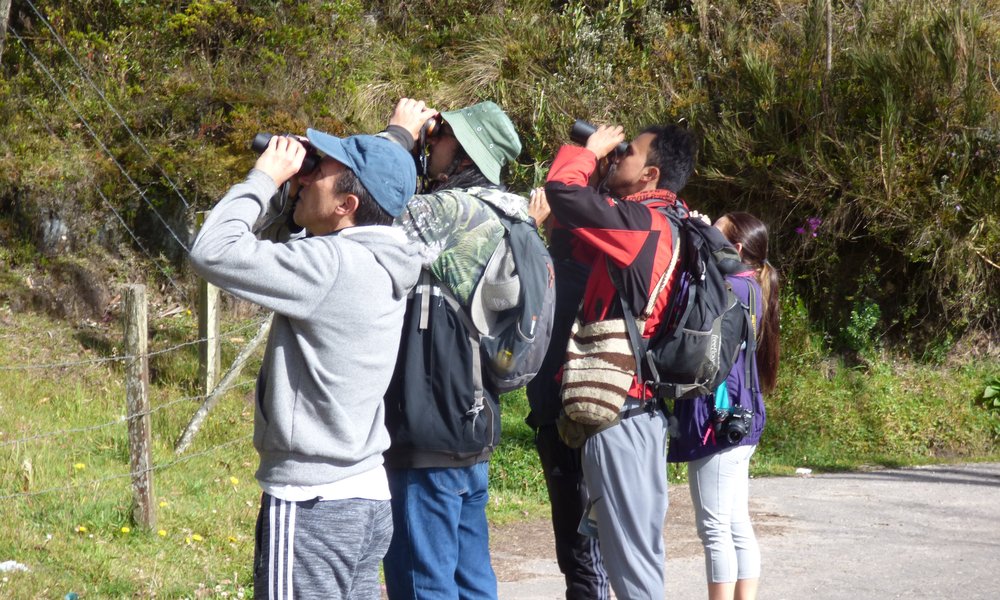
The Amazon, the Andes, and Peru’s cloud forests are home to some of the most unique wildlife on Earth. Seeing animals in their natural habitat is one of the greatest privileges travelers experience here.
However, tourism can sometimes put pressure on wildlife — especially when animals are treated as entertainment. Sustainable travel Peru means choosing observation over disturbance.
Prioritize Respectful Observation
Responsible wildlife encounters are calm, quiet, and guided.
This allows animals to behave naturally and to be seen as themselves, not as props.
Keep a comfortable distance
- Move slowly
- Speak softly
Let the guide determine how long to stay
When observation is respectful, animals remain wild — and that is the greatest wonder.
Support Accredited Conservation Centers
In places like Iquitos, Manu, Tambopata, Arequipa and Cusco, there are ethical rehabilitation centers that protect species injured by trafficking and habitat loss.
Visiting these places:
- Supports healing, not exploitation
- Funds rescue and release programs
- Educates travelers on real environmental challenges
Instead of taking from nature, you help restore and defend it.
Travel Mindfully & Choose Low-Impact Transportation
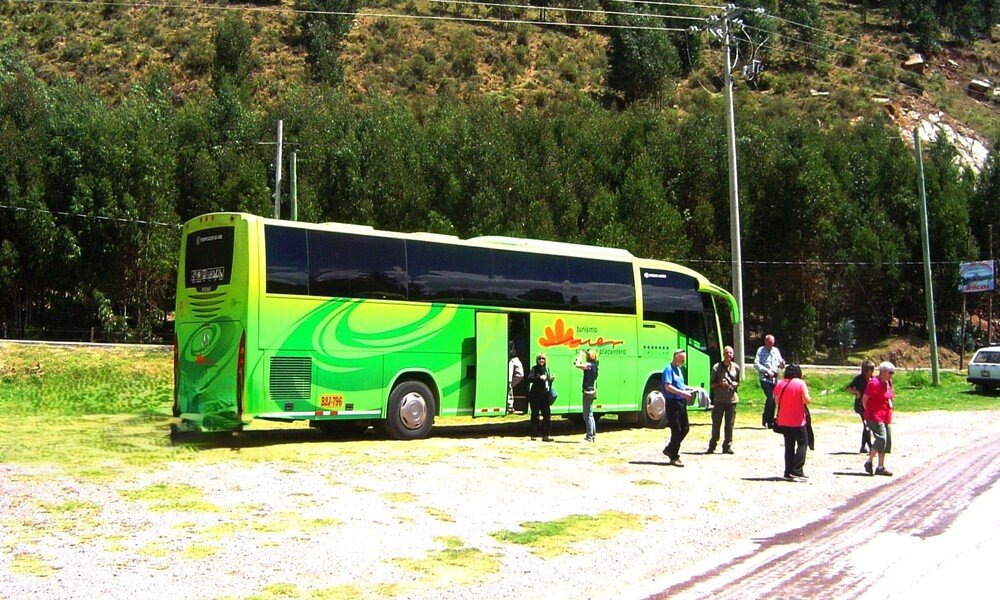
Transportation decisions play a major role in sustainability. In Peru, distances can be long and geography dramatic, but there are many ways to travel that honor the landscape rather than overwhelm it. Moving slowly allows you to feel the journey: to notice how the mountains change with elevation, to observe how the river valleys curve into the jungle, and to connect deeply with place.
Traveling mindfully is not about speed — it is about presence.
Use Shared Transport When Possible
Shared transportation reduces emissions, keeps roads less crowded, and offers a chance to meet people along the way.
Peru has a strong network of:
- Intercity buses
- Tourist shuttles in Cusco and Sacred Valley
- Colectivos (shared vans) in local communities
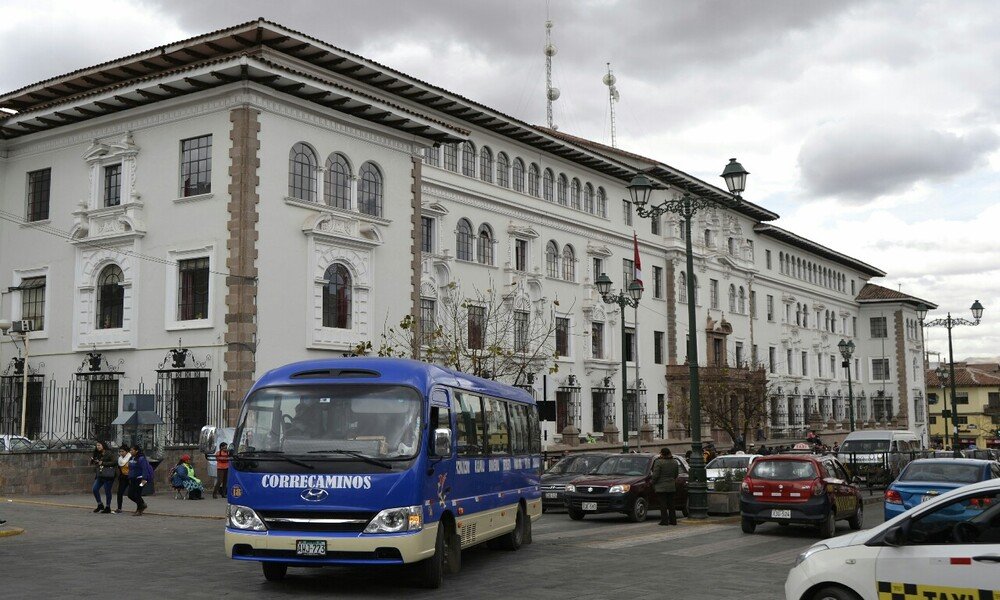
These options often follow routes known for their scenery — giving you the gift of landscapes that unfold slowly rather than flash past.
Even on long routes, shared travel becomes part of the story of the journey, not just the logistics.
Choose Slow Travel: Trekking, Walking & Cycling
Peru is a country of paths — ancestral trails connecting villages, farms, and sacred sites. Many of these paths still exist, and walking them gives you a unique kind of connection that cannot be experienced from behind a vehicle window.
Whether it’s:
- A gentle afternoon walk in the Sacred Valley
- A multi-day trek in the Andes
- A quiet cycle along lake paths in Puno
Slow travel allows time — time to breathe, to listen, to understand the land on its own terms.
In sustainable travel Peru, movement is not just practical — it is meaningful.
Learn & Respect Local Culture

Peru’s cultures are diverse and alive. Quechua, Aymara, Shipibo-Konibo, Asháninka, and many other Indigenous communities maintain traditions that stretch far beyond tourism. Respect begins with recognizing that you are entering someone else’s home — not a stage set for visitors.
The most sustainable travelers are those who approach culture with curiosity, humility, and gratitude.
Ask Before Photographing People or Sacred Sites
Photographs are powerful, but permission is even more powerful.
Asking before taking a picture acknowledges:
- The person’s dignity
- The sacredness of ceremonies and textiles
- The cultural meaning of place
This simple act transforms tourism into relationship, not extraction.
Learn Basic Quechua or Local Phrases
Even a few words can open hearts:
- Allin p’unchay (Buenos días / Good morning)
- Sulpayki (Gracias / Thank you)
- Tupananchiskama (Hasta que nos volvamos a encontrar)
Language is not just communication — it is respect.
Using even small phrases shows that you see and value the culture that surrounds you.
This is sustainable travel Peru at its core: presence, listening, and connection.
Offset Your Environmental Impact
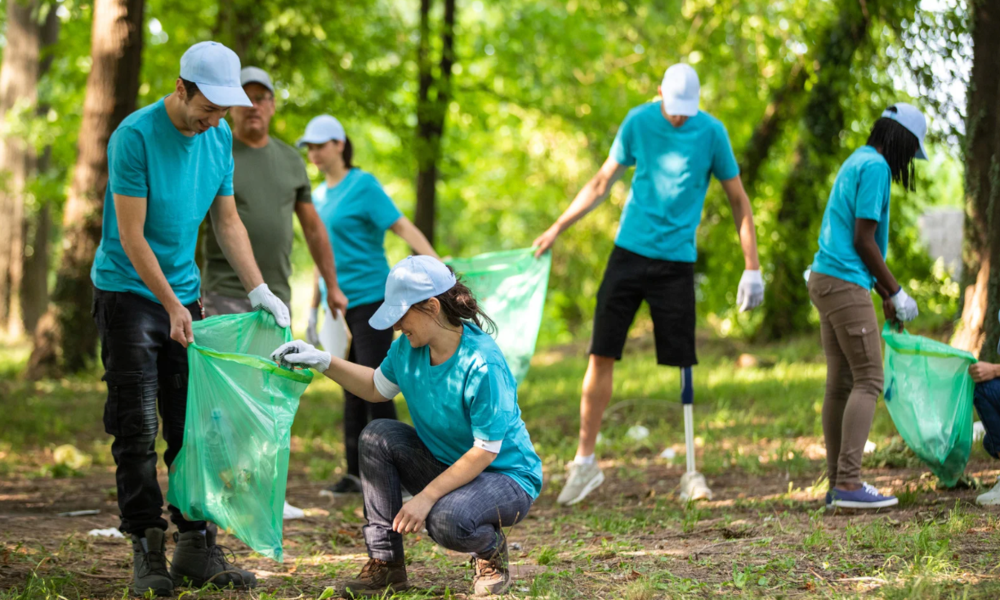
No matter how mindful we are, travel leaves a footprint. The goal is not to erase it completely — but to balance it through choices that restore more than we take. Peru offers powerful opportunities to support conservation and community-driven ecological healing.
Support Reforestation & Regeneration Projects
From Andean forests being replanted near Cusco, to Amazonian tree nurseries outside Iquitos, to community conservation areas in Manu and Tambopata — Peru is full of locals working to heal their landscapes.
Travelers can:
- Plant native species
- Donate to community-managed reforestation funds
- Visit regions where forests are being restored
You become part of a future that grows.
Choose Responsible Tour Operators
Sustainable tour operators:
- Prioritize local hiring
- Follow wildlife protection guidelines
- Reduce plastic and waste on tours
- Partner with Indigenous and rural communities
- Give back to the regions they operate in
Choosing them means your journey is part of a cycle of respect and reciprocity.
Travel becomes something shared, not taken.