Tiahuanaco Culture Summary, Architecture, Textiles | Discoverer
TIAHUANACO CULTURE
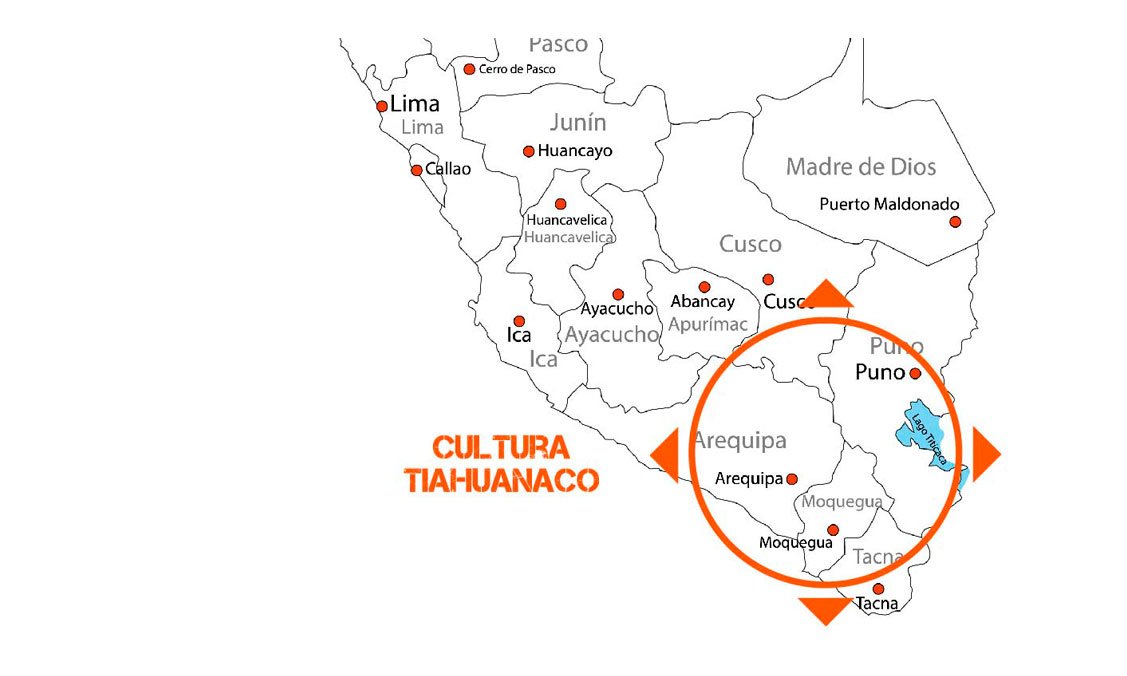
Between approximately 300 and 1000 AD, the Tiahuanaco culture, also known as Tiwanaku, developed and became one of the most important and advanced civilizations of ancient Peru and Bolivia. Its domain extended throughout the Andean region, including areas of present-day Bolivia, Peru, Chile, and Argentina. The main center of this culture was located in what is now the city of Tiahuanaco, in the Bolivian highlands, near Lake Titicaca.
The Tiahuanaco culture (also known as Tiwanaku) is a pre-Columbian civilization that developed between approximately 300 and 1000 AD in the Andean region of South America, mainly in the Bolivian highlands, near Lake Titicaca. It is considered one of the most advanced and influential pre-Inca cultures.
How did the Tiahuanaco culture originate?
The Tiahuanaco culture developed in parts of what are now Peru, Argentina, Chile, and Bolivia in South America.
During the first half of its history, Tiahuanaco was a modest population that lived off agriculture and fishing, drawing supplies from Lake Titicaca. The domestication of the llama changed their lives, as this animal could be used as a beast of burden, allowing them to trade with other cultures in the Titicaca basin. It was thanks to trade that they were able to expand so much.
Its origins date back to the 16th century BC. The capital city of Tiahuanaco was located on the southern shore of Lake Titicaca, on the current border between Bolivia and Peru.
The soil was marshy and flooded seasonally due to snowmelt.
The farmers of the Tiahuanaco culture used this natural phenomenon to their advantage, building raised grass platforms to grow potatoes and quinoa.
The inhabitants of the Tiahuanaco culture were aware of all these details and cleverly managed to settle in such a difficult area, thus establishing a civilization that later spread to several South American countries.
Who discovered the Tiahuanaco culture?
The chronicler and historian Pedro Cieza de Leon discovered this culture in 1551, on the orders of the president of the Royal Audience of Lima and interim governor of the Viceroyalty of Peru (Pedro de la Gasca).
Location of the Tiahuanaco Culture
The Tiahuanaco culture developed mainly in the Andean highlands, near Lake Titicaca, in what is now western Bolivia. Near the city of Tiahuanaco, about 72 kilometers west of La Paz, the capital of Bolivia, is its most important ceremonial center. The altitude of this place, which is around 3,800 meters above sea level, and its natural environment, which includes mountains and lakes, are its main characteristics. In addition, the strategic location of Tiahuanaco facilitated trade and interaction with other cultures in the Andes.
Architecture of the Tiahuanaco Culture
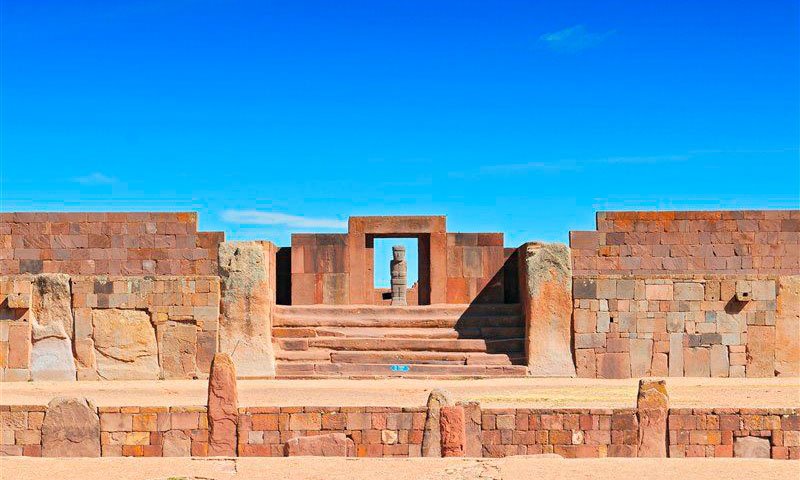
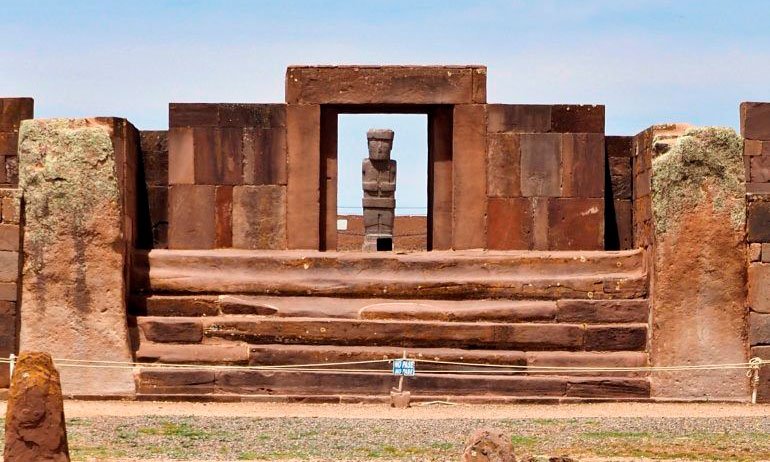
This area is defined by enormous monoliths measuring around 6 meters high. The purpose of this construction is still unknown, although some researchers believe that it is a solar observatory used to mark the seasons.
Later, chullpas were built for funerary purposes, made from stone and mud. Initially, they were square in shape, but later they were built cylindrical with a carved stone base, as can be seen in the chullpas of Sillustani, in Puno.
The architecture of the Tiahuanaco culture is truly impressive and reflects their advanced knowledge of engineering and design. Among the main architectural examples are the rectangular stone constructions, also called dolmens, which were built for housing purposes.
The most notable features include:
1. Construction Materials: Stone was primarily used, mainly andesite carved with great precision. The stones were very stable because they were fitted together in such a way that they did not require mortar.
2. Monumental Structures: Some of the most impressive structures include:
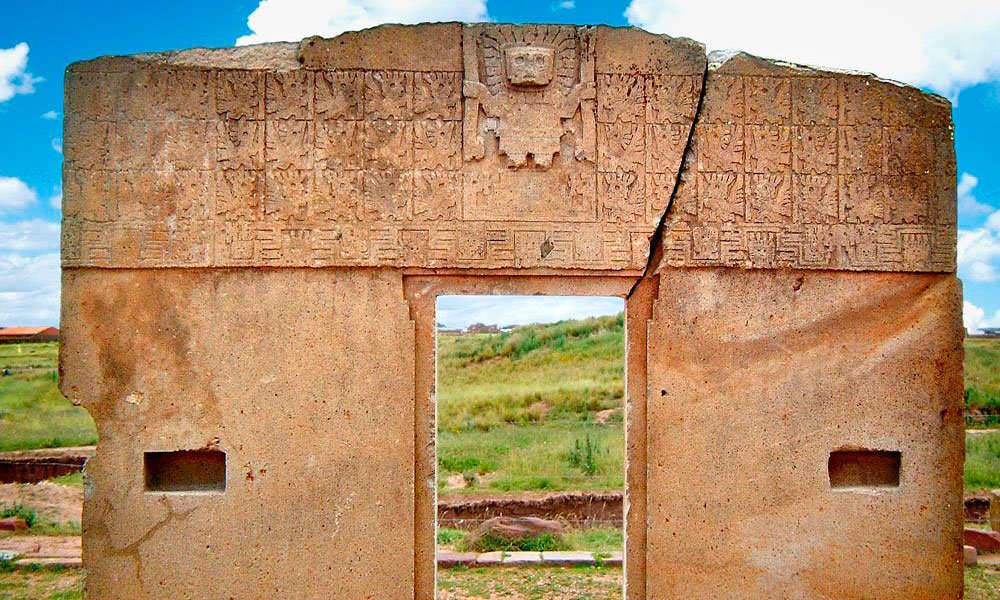
- The Gate of the Sun is a carved monument with complex structures that is considered an important religious and astronomical symbol.
- The Kalasasaya Temple: a large ceremonial temple with stone platforms and walls that are believed to have been used for rituals and ceremonies. Kalasasaya is a quadrangular construction covering an area of 18 hectares.
- Puma Punku is part of the Tiahuanaco complex, renowned for its large stone blocks and precision cutting, which has raised many questions about the techniques used.
3. Urban planning: Tiahuanaco had a well-planned city with well-organized streets, squares, and buildings. It is believed that it had a sophisticated drainage system and that the buildings were related to astronomical events.
4. Sculptures and reliefs: The architecture also includes sculptures and reliefs depicting deities, mythological figures, and elements of daily life, which provide information about their worldview and culture.
5. Influence on Other Cultures: The architecture of Tiahuanaco had a major impact on later civilizations, such as the Incas, who adopted and adapted many of its techniques and customs.
Where did the Tiahuanaco culture develop?
The Tiahuanaco culture, also known as Tiwanaku, originated in the mountains of South America, particularly in what is now the Andean highlands of Bolivia. It was located near Lake Titicaca, in the present-day city of Tiahuanaco, in the department of La Paz, Bolivia, where its main center was located. Approximately between 300 and 1000 AD, this civilization existed and is known for its impressive megalithic constructions, pottery, advanced metallurgy, and cultural influence on other Andean regions.
Who discovered the Tiahuanaco culture?
Although it was already known to the local indigenous peoples living in the region, Western explorers and scholars “discovered” the Tiahuanaco culture in the 19th century. In the 16th century, Pedro Cieza de León, a Bolivian archaeologist and explorer, was one of the first to describe the ruins of Tiahuanaco in his chronicles. However, due to research conducted by French naturalist Alcide d’Orbigny in the 1830s and later by American archaeologist Ephraim George Squier in 1870, the site received greater scientific attention.
In the early 20th century, researchers such as Arthur Posnansky began to study Tiahuanaco and devoted much of their lives to the study of this site, which intensified systematic archaeological interest in the site. Posnansky contributed significantly to our knowledge of the Tiahuanaco civilization by conducting excavations, documentation, and theories about its chronology and significance.
Ceramics of the Tiahuanaco Culture
The ceramics of the Tiahuanaco culture are divided into three stages.
Early stage:
The ceramics are not very fine and their shape is uniform. The decoration is simple and the motifs used are complex. Birds, felines, fish, and snakes can be seen.
Classic stage:
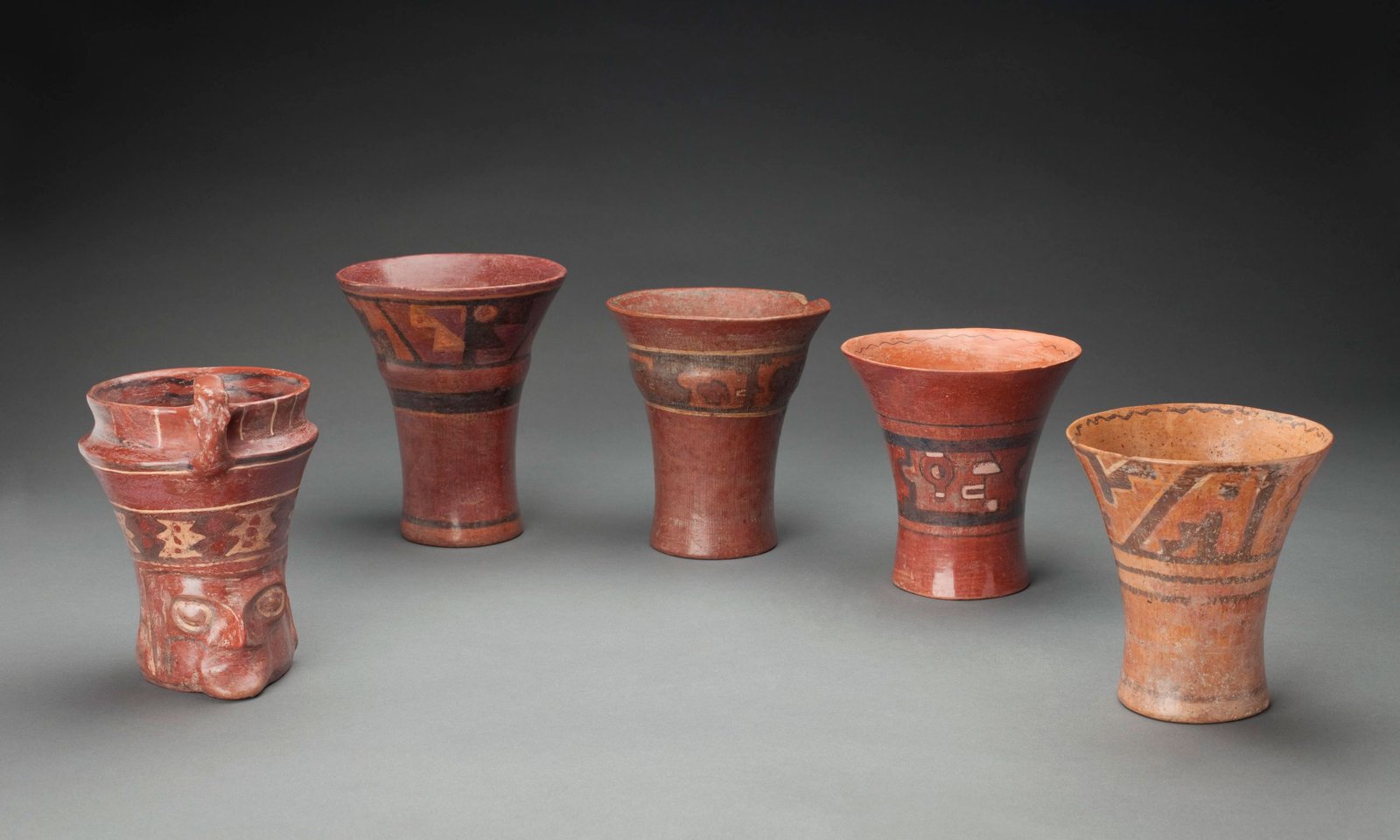
The pottery-making technique becomes more refined, and the pottery becomes finer, with a wide variety of shapes and designs. The most common shapes are vessels with the narrowest part in the center.
Decline stage:
The pottery loses quality in its finish, texture, and polish. Of all the pieces made by the Tiahuanaco, the Kero stands out.
It was mainly made of wood and clay. It was a large vase, whose sides are almost perpendicular in the lower half of its height. They then gradually widen towards the top. Some have a horizontal groove on the inside, which is reflected in a pronounced rim on the outside.
The kero usually has a puma, bird, or human head.
NOTE: There is not a single female representation in Tiahuanaco art, neither in ceramics, nor in textiles, nor in monoliths; perhaps the result of a religious prohibition stemming from an extreme patriarchy.
Religion
The Tiahuanaco culture was polytheistic; the people believed in many gods related to agriculture. Their main god was Wiracocha, or the God of the Staff.
Wiracocha was worshipped on the Collao plateau even before the Tiahuanaco culture. Today, an image of him can be seen at the Gate of the Sun, appearing in the center surrounded by winged beings.
The Tiahuanaco maintained their position not through weapons but through their religious prestige. Such was their influence that some of their practices, such as underwater offerings and the worship of the god Wiracocha, would be adopted centuries later by the Incas.
Textiles of the Tiahuanaco Culture
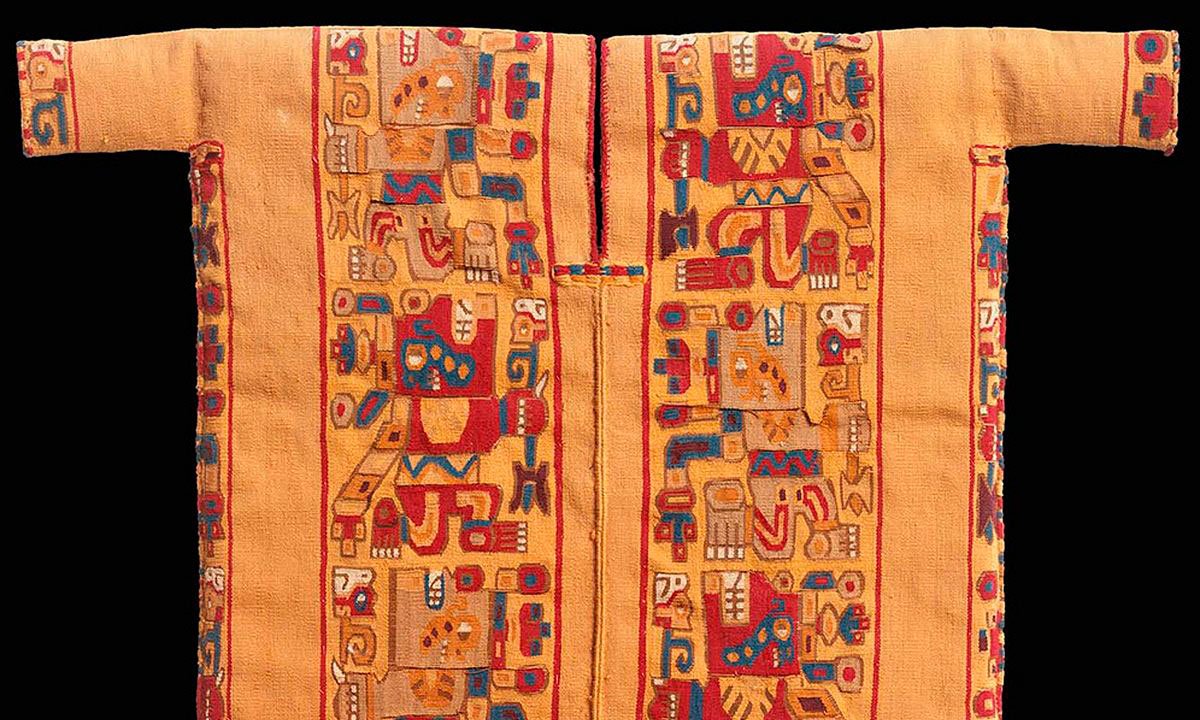
One of the most outstanding artistic expressions of Andean civilization is the textiles of the Tiahuanaco culture, which reflect both their technical sophistication and their profound cultural and religious symbolism. The complexity, colorfulness, and use of iconography that included human figures, animals, and geometric elements distinguish Tiahuanaco textiles.
Characteristics of Tiahuanaco textiles
Materials and Techniques: Tiahuanaco textiles were mainly made from camelid fibers, such as llama and alpaca, although cotton was also used. They used advanced weaving techniques, such as interlacing, brocade, and tapestry, which allowed them to produce textiles with complex and diverse designs.
Designs and Motifs: The iconography of Tiahuanaco textiles included deities, anthropomorphic and zoomorphic figures, geometric patterns, and stylized elements. The main figure of the god Wiracocha or “God of the Staffs,” found in numerous textile representations, is one of the most frequent motifs.
Colors: The textiles had vibrant hues, and dyes were used from natural sources such as insects, minerals, and plants. The colors red, yellow, blue, green, black, and white were the most common.
Function and Use: Textiles were used for clothing and in ceremonies and rituals. Some textiles were used as offerings or to cover mummies, demonstrating their ritual and spiritual significance.
Influence and Legacy: Tiahuanaco textiles had an impact on later Andean cultures, such as the Inca culture, which adopted and inherited many of the textile motifs and techniques developed by the Tiahuanaco.
Textile remains discovered in archaeological excavations have helped researchers better understand the cosmology and social practices of the Tiahuanaco culture, highlighting the importance of textiles in their daily life and ceremonial rites.
Tiahuanaco Agriculture
The Tiahuanaco were an agricultural and livestock culture. This culture dominated the highlands where they expanded their lands and perfected techniques for farming at high altitudes. These techniques were clearly passed down to the Incas and were undoubtedly necessary due to the difficult climatic conditions experienced every year throughout the highlands at an altitude of over 4,000 meters.
The Tiahuanaco cultivated plants with significant nutritional value, such as potatoes and quinoa.
Later, the civilization devoted itself to the cultivation of other important cereals such as corn, as well as cassava, oca, legumes, coca, and manioc.
NOTE: Quinoa was one of the plants best cultivated by the Tiahuanaco people using a technique that was unique at the time, dating back more than 5,000 years. According to historians, Lake Titicaca is the main source of this plant.
Sacrifices
Excavations were carried out in the Akapana Pyramid, where offerings, pottery, copper fragments, camelid bones, and human burials were found.
At the base of the first level of Akapana, dismembered men and children were found with their skulls missing; these human remains were accompanied by disarticulated camelids and pottery.
A completely disarticulated human torso was also found on the second level of the pyramid. A total of 10 human burials were found, 9 of which were male. These sacrifices apparently correspond to offerings dedicated to the construction of the pyramid.
Political organization of the Tiahuanaco
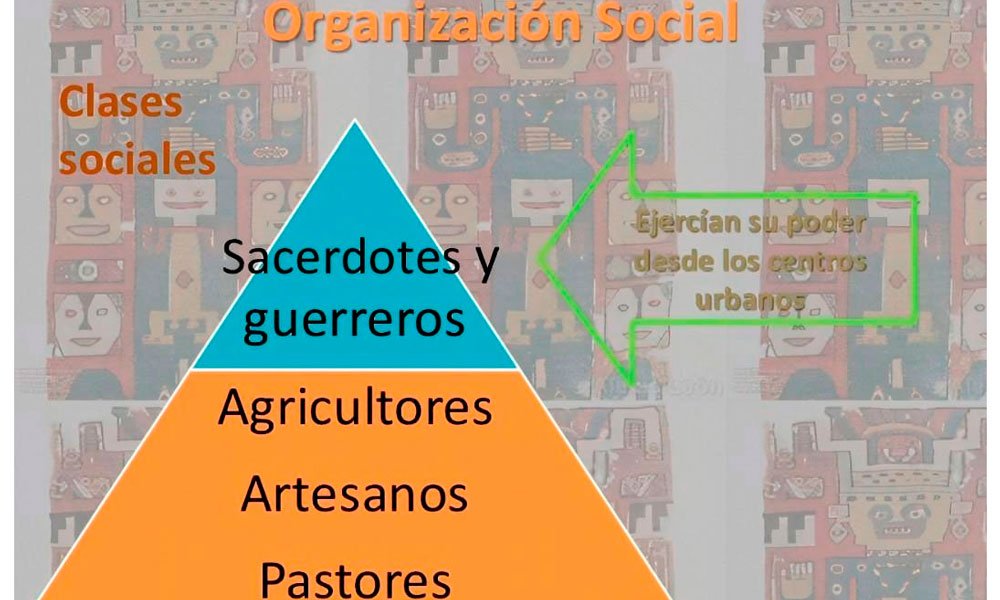
The Tiahuanaco culture was a theocratic society with a hierarchical society divided into three classes:
- The elite
- The artisans
- The commoners or peasants
Distinctive characteristics of the Tiahuanaco culture
This culture is characterized by its knowledge of bronze.
It was a pre-Inca civilization.
Its government was theocratic.
They developed agriculture and livestock farming.
They developed crafts and textiles.
Their architecture had religious motifs.
The language they used was Uro.
Their main god was Wiracocha.
How to get to the archaeological site of Tiahuanaco?
From La Paz: If you are in La Paz, it will be easier to get there as it is only an hour away by bus or car. By bus, the schedule varies as they make several stops at different points, and it can take approximately 2 hours. Prices range from 56 bolivianos (8 USD).
Access from Puno: After visiting the attractions of Puno, it is your chance to visit Tiahuanaco. If you are planning to travel on your own, the first thing you should do is go to the bus terminal on Simón Bolívar Avenue in Puno and buy a ticket, which costs approximately 110 to 140 soles (35-55 USD) depending on the company and the schedule.
From Desaguadero: Once we arrive at this location, we will go to immigration to complete the necessary paperwork to enter Bolivia. After completing the formalities, continue your journey to Tiahuanaco. There are shared taxis that provide this service, with prices ranging from 90 to 124 bolivianos (13–18 USD) one way. The trip takes approximately 1 hour to the Tiahuanaco archaeological site.
Opening hours
The archaeological site is open to visitors from 9:00 a.m. to 5:00 p.m.
Admission fees
The cost of admission to the archaeological site of Tiahuanaco, Puma Punku, and museums is $13 USD per person (100 Bs).
What to see at the archaeological site of Tiahuanaco
- The Gate of the Sun
- Akapana Pyramid
- Kalasasaya Complex
- Pumapunku
- Cat Museum and Lithic Museum of Tiahuanaco
Ideal season to visit
Keep in mind that the climate in this archaeological complex is dry and cold because it is located in the Bolivian highlands at 3,855 meters above sea level. This causes sudden changes in temperature throughout the day. The average daytime temperature varies between 15°C and 20°C, but after sunset it can drop to 0°C.
Recommendations
Don’t forget to bring a bottle of water.
Sunscreen, sunglasses.
Cap or hat.
A waterproof jacket.
A personal first aid kit, preferably with altitude sickness pills.