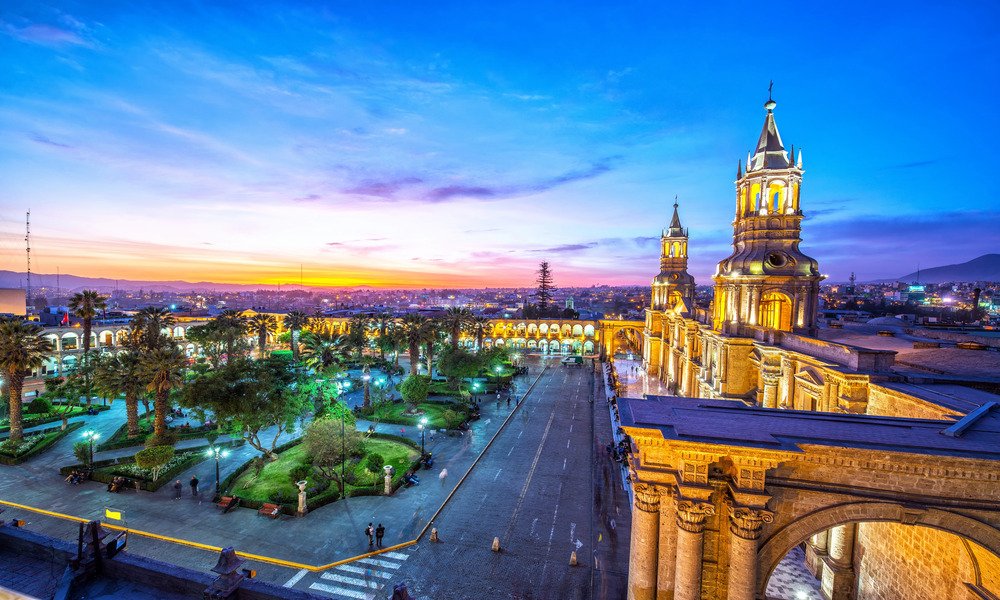
Church of La Compañía and Its Cloisters
The Church of the Society of Jesus and its Cloisters in Arequipa is one of the most emblematic monuments of Peruvian mestizo Baroque architecture. Built in the 17th century by the Jesuit order, it is notable for its finely carved sillar stone façade, its Baroque altarpieces, and the famous Chapel of Saint Ignatius, decorated with vibrant murals that combine European tradition and Andean influences. Located in the heart of the Historic Center, it is one of the most representative architectural gems of the White City.
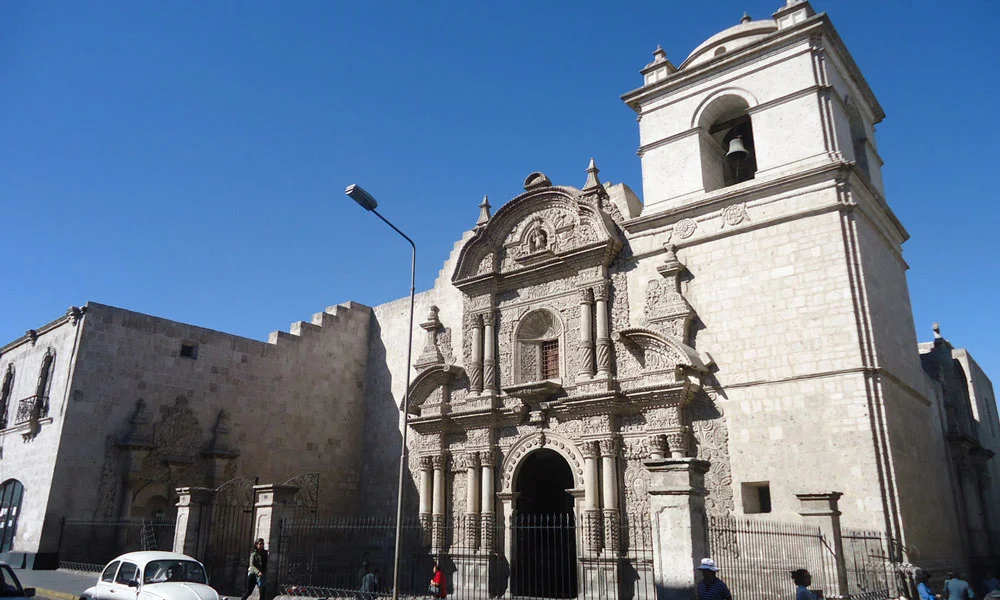
The Church of the Society of Jesus was built by the Jesuits in the 17th century using sillar , the characteristic white volcanic stone of Arequipa.
What makes it special?
-
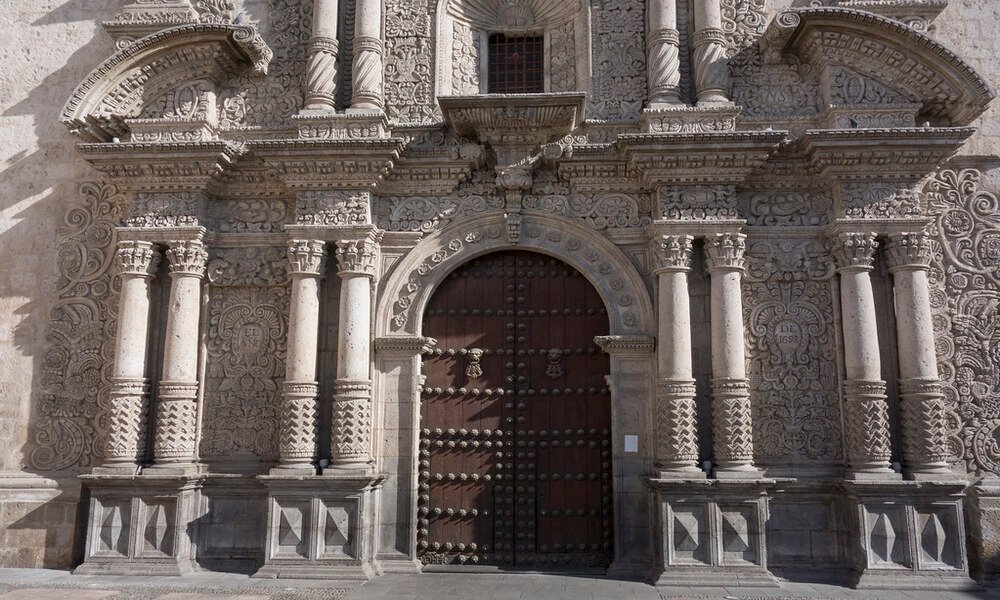
Mestizo Baroque facade:
Carved with plant motifs, angels and symbols that mix European and indigenous elements.
-
Main temple:
Interior with gilded altars, baroque altarpieces and decorated domes.

-
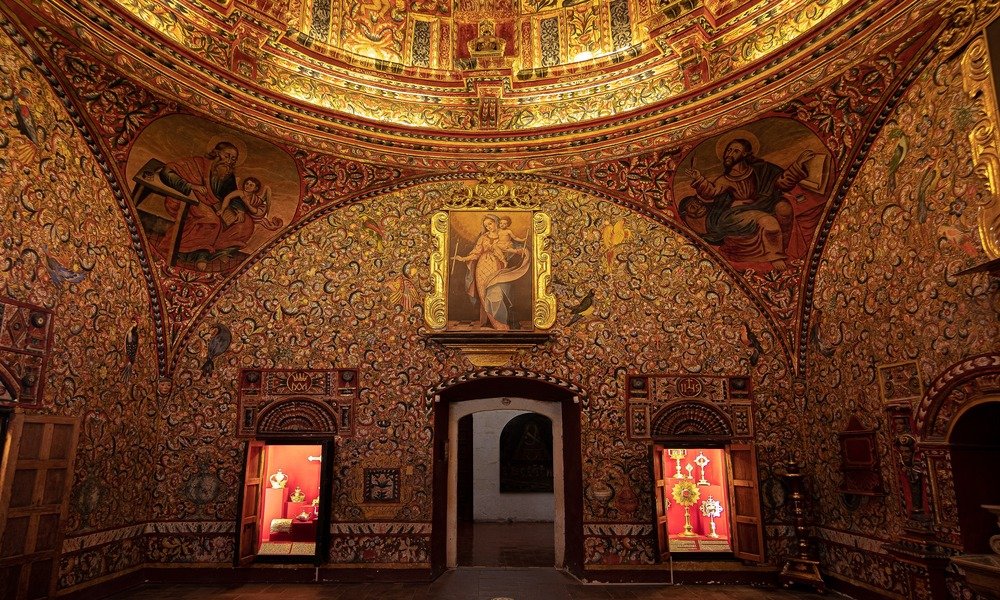
Chapel of San Ignacio:
Famous for its colorful murals with fauna, flora and symbolic elements of the Andean world.
The Cloisters of the Company
This architectural complex, consisting of two courtyards and their respective arcades (the main and smaller cloisters), is built entirely of ignimbrite (a volcanic stone known in Arequipa as sillar, a name that actually refers to the type of block cut in the shape of a rectangular prism with two equal sides) and constitutes a magnificent expression of the Baroque-Mestizo architecture that characterizes colonial Arequipa. This mestizo influence is evident primarily in the syncretic interaction of Andean and European elements in harmonious conjunction.
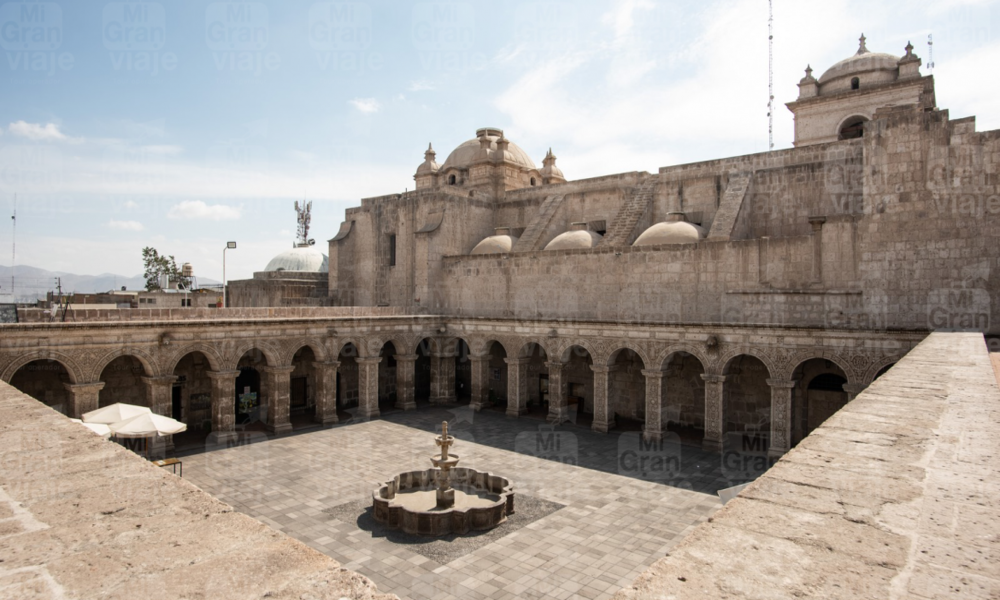
They are known for:
-
The architecture is very well preserved:
The walls and columns are made of sillar , the white volcanic stone typical of Arequipa. The semicircular arches and symmetrical galleries create a harmonious design that reflects the Spanish Baroque aesthetic adapted to the local context. -
Arches, galleries, and courtyards of volcanic stone:
The interior courtyards were spaces for contemplation and study. The layout facilitates circulation, ventilation, and natural light, essential characteristics of colonial architecture. -
Tranquil atmosphere:
Originally reserved for the daily life of the Jesuits, the cloisters retain their serene ambiance today. They have been adapted as cultural spaces, art galleries, and cafes, allowing visitors to enjoy the historical heritage without losing its colonial essence. -
Original inscriptions and carvings:
Some walls and columns preserve reliefs and ornamental details that show the fusion of Christian iconography with Andean motifs , demonstrating how evangelization incorporated local elements to connect with the indigenous population. -
Historical and cultural significance:
The cloisters were not only functional spaces, but also educational centers and centers of cultural influence in Arequipa during the colonial era. Their preservation allows us to understand the lives of the Jesuits and the interaction between European and Andean cultures.
What to do in the Cloisters of the Company
-
Explore and appreciate the mestizo colonial architecture.
Walk through the courtyards, passageways and galleries to admire the carved stone arches, columns decorated with baroque motifs (flowers, fruits, cherubs), cornices, gargoyles and artistic details that blend European tradition and Andean influences. -
Visit craft shops, souvenir shops and local products.
In the cloisters there are shops selling typical products: textiles (made from alpaca or vicuña), jewelry, ceramics, Arequipa crafts and souvenirs — ideal if you want to take home a souvenir of your trip or support local artisans. -
Enjoy a coffee or a quiet meal in a colonial setting.
There are cafes, coffee shops, and small restaurants within the cloisters. It’s a great way to unwind after exploring the historic center, relax, or enjoy a light meal in a truly special environment. -
Architectural and artistic photography.
Thanks to their arches, shadows, white stone, and mestizo Baroque design, the cloisters are one of the most photogenic places in Arequipa. Perfect if you love photography: details, textures, light—everything invites you to capture memorable images. -
Visit the adjacent church and its religious and artistic heritage.
Very close by is the Church of the Society of Jesus: you can enter the temple, admire its Baroque ashlar façade, its gilded altarpieces, the Chapel of Saint Ignatius, murals, and its historical value. It is an essential complementary visit. -
Enjoy a tranquil atmosphere and appreciate living history.
The complex is not just for tourists: the cloisters preserve their colonial past and allow you to experience a piece of Arequipa’s history: its architecture, its religious history, and its modern adaptations. It is ideal for those seeking contemplation, culture, or a break during a stroll.

Location and Access
Located in the Historic Center of Arequipa , which is the colonial heart of the city and was declared a World Heritage Site by UNESCO in 2000. It is characterized by its buildings made of sillar , the white volcanic stone that gives the city the nickname “White City”.
- The Cloisters are located in the heart of the Historic Center:
- At the corner of General Moran and Alvarez Thomas streets, Arequipa
- Visiting hours are generally from 9:00 am to 6:00 pm, although this may vary depending on the season.