


Which areas of the Historic Center are the most photogenic?
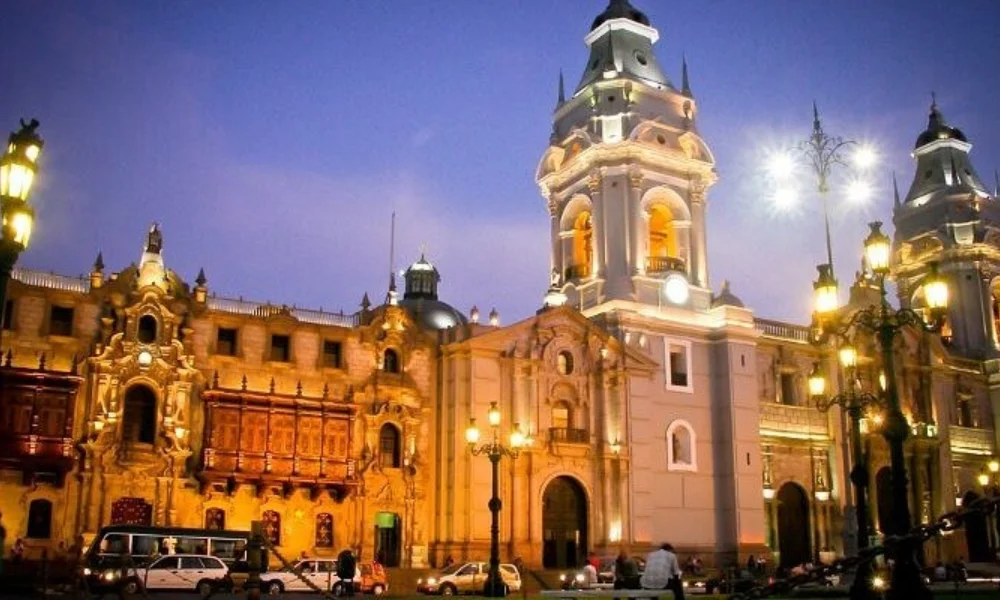
The Historic Center of Lima is full of highly photogenic spots wide plazas, colonial façades with wooden balconies, and imposing churches perfect for travelers who want to capture special memories. As you walk through its streets, you quickly notice that there is always something catching your eye: a lively plaza full of movement, an old balcony that makes you imagine what the city looked like centuries ago, or a church whose presence alone is striking.
Here is a clear and precise guide to the best photo spots, including what you can see, the best time to go, and the details you shouldn’t miss.
1. Plaza Mayor de Lima
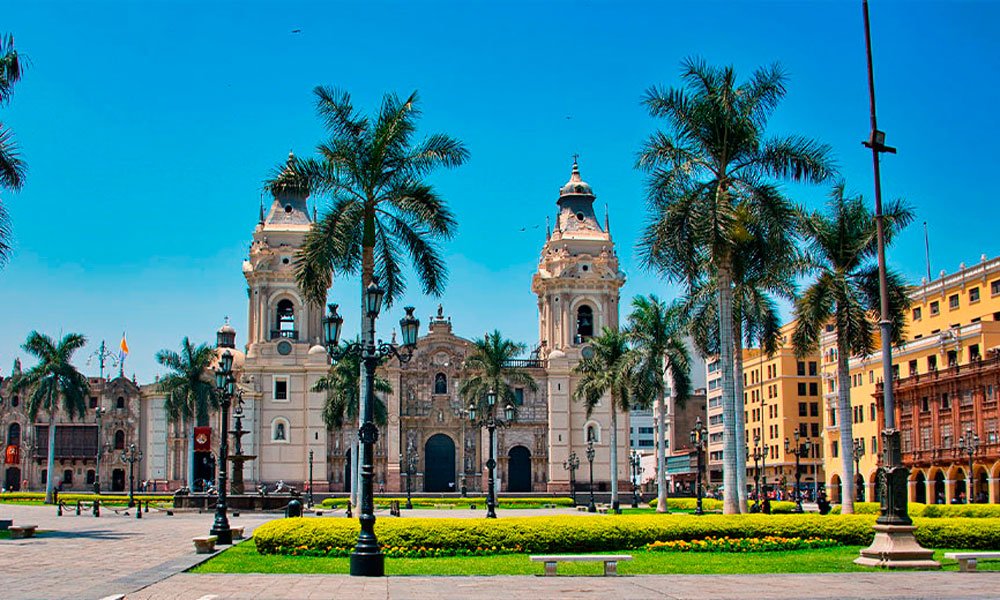
Why it’s photogenic:
-
It’s the central point of the historic center, where the city was first founded by Francisco Pizarro in 1535.
-
Surrounded by majestic buildings: the Cathedral of Lima, the Government Palace, and the City Hall.
-
The combination of palm trees, the central fountain, and colonial architecture creates a very “postcard-like” setting.
What to look for when taking photos:
-
A wide shot that includes the fountain + palm trees + the cathedral façade.
-
An architectural detail: for example, the balconies of the Government Palace or the carved stone of the cathedral.
-
If possible, visit at sunset when the light is golden and creates long shadows.
Useful tips:
-
It’s best to go early in the morning (between 8 and 9 a.m.) when there are fewer people and you can capture clean shots.
-
Be mindful of your gear: as in any busy historic center, it’s wise to keep an eye on backpacks and personal items.
2. Plaza San Martín
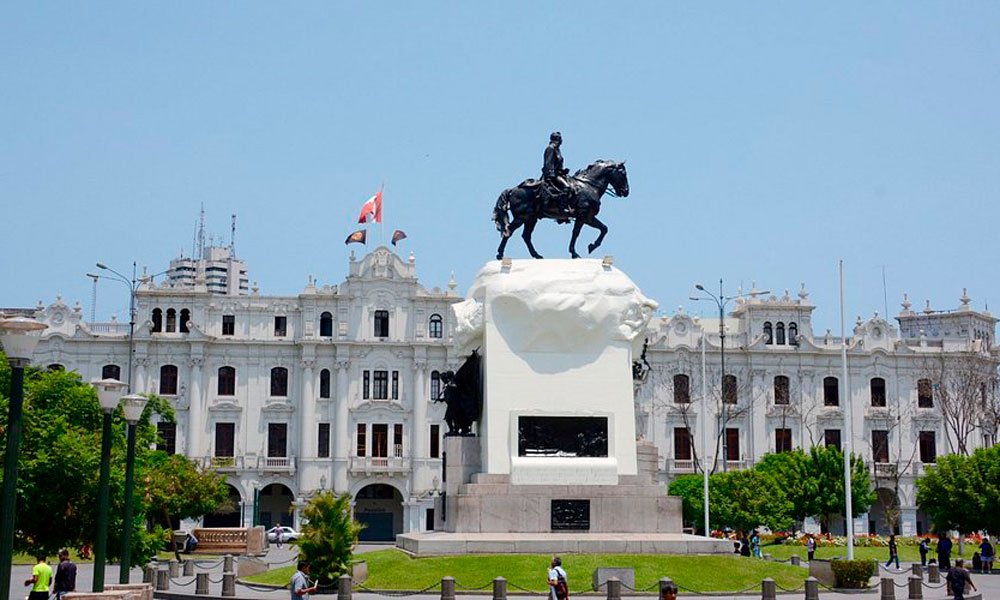
Why it’s photogenic:
-
It’s the most elegant square in the city center, surrounded by republican-era architecture and the iconic Gran Hotel Bolívar.
-
Its white and elegant architectural style.
-
The central monument helps create striking compositions.
What to look for when taking photos:
-
The statue of the Liberator José de San Martín.
-
The “Republican Architectural Ensemble.”
-
The Gran Hotel Bolívar, one of the most emblematic buildings, with its elegant façade and antique lanterns.
Useful tips:
-
Go during the “golden hour” (5:00–6:00 p.m.); the sunset light makes the white buildings look warmer and softer.
-
For architectural shots, look for symmetry.
3. Church and Convent of San Francisco
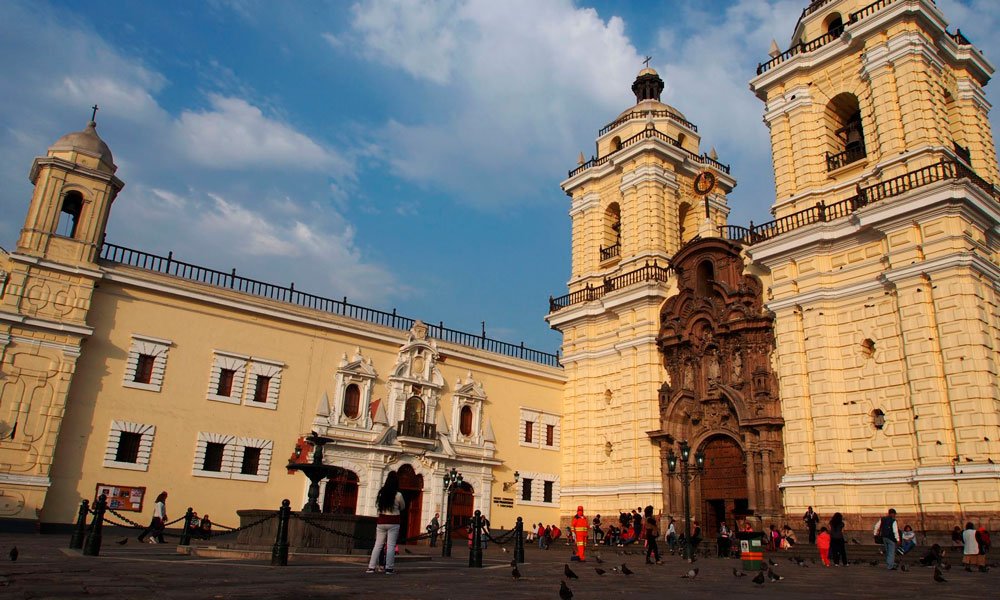
Why it’s worth the visit and the photo:
-
It’s a gem of Lima’s baroque style, with stone façades and impressive ornamental details.
-
Beneath the church are its catacombs—an underground gallery with human remains, unique in both atmosphere and historical value.
-
Its cloisters and ceramic tiles offer decorative details that contrast beautifully with daylight.
What to look for when taking photos:
-
A full view of the façade from a nearby avenue to capture the entire vertical structure.
-
The interior of the cloister, preferably with side lighting to highlight the tiles and carved wood.
-
A creative shot from the floor level in the catacombs (if photography is allowed) for a different effect.
Useful tips:
-
Check the opening hours, since some areas (like the catacombs) have restricted visiting times.
-
Use a wide-angle lens (or panorama mode on a phone) to capture the large interior spaces.
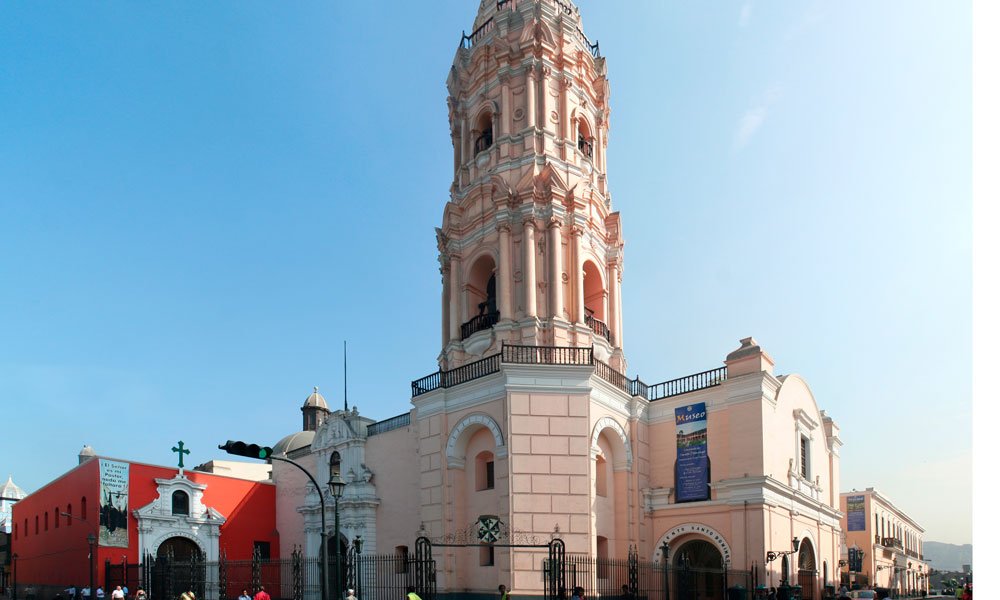
4. Church and Convent of Santo Domingo
Why it’s worth it:
-
It’s one of the oldest churches in Lima, with an architectural ensemble that includes cloisters, Hispano-Moorish tiles, and colonial-era art.
-
It combines exterior and interior elements with details that are striking to the photographic eye.
-
It houses relics and unique spaces.
What to look for when taking photos:
-
The main façade at sunrise or when side light enhances its features.
-
Interior: altars, retablos, decorative details — try aiming for a perspective that highlights the depth of the nave.
-
The cloister: repeating arches, columns, tiles — perfect for playing with lines and symmetry.
Useful tips:
-
Bring a fast lens (or adjust ISO) for indoor shots, as lighting can be low.
-
Try to avoid using flash to preserve the atmosphere.
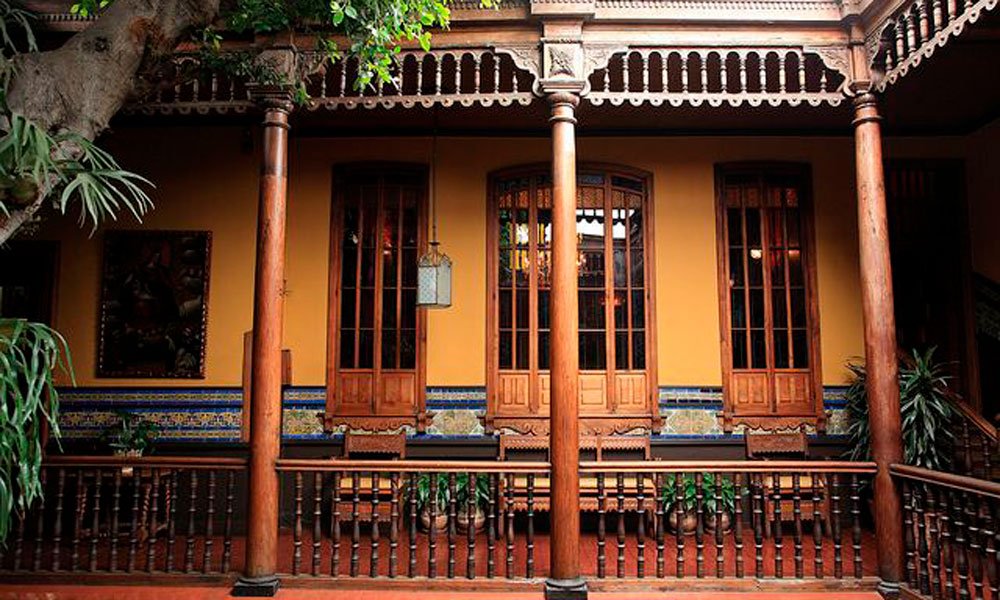
5. Balconies of Casa Aliaga
Why it’s worth it:
-
It is the oldest house in Lima still inhabited by the same family since 1535.
-
Its balconies combine dark wood, colonial details, and an intimate atmosphere.
-
They form part of the oldest continuously inhabited home in the city.
What to look for when taking photos:
-
The carved wooden details.
-
Lima’s colonial balconies look especially good when photographed from a low-angle perspective (looking upward).
-
The light-colored façade contrasted with the dark wood creates a very pleasing visual effect.
Useful tips:
-
Focus on the contrast between the bright façade and the carved balcony.
-
The dark wood of the balcony stands out beautifully against the lighter walls.
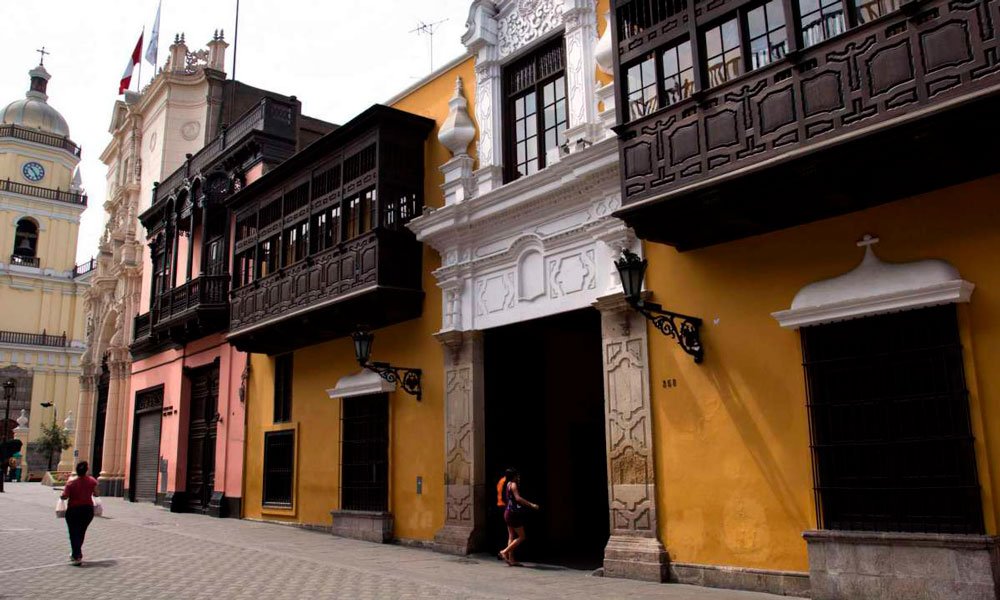
6. Balconies of Casa Goyeneche
Why it’s worth it:
-
It blends baroque and rococo architecture with classic Limeño balconies.
-
It showcases traditional Limeño style: enclosed wooden balconies typical of the colonial period.
-
Excellent preservation — it’s one of the best-maintained colonial mansions in the historic center.
What to look for when taking photos:
-
Include the narrow street and the surrounding colonial houses to capture the full historic atmosphere.
-
Best times: morning or late afternoon, when the sunlight hits from the side.
-
Stand directly in front to get clean, symmetrical shots.
Useful tips:
-
If you want photos without many people, go before 10 a.m.
-
Lima’s weather is cloudy most of the year — take advantage of it! Soft light is ideal for highlighting the wooden balconies.
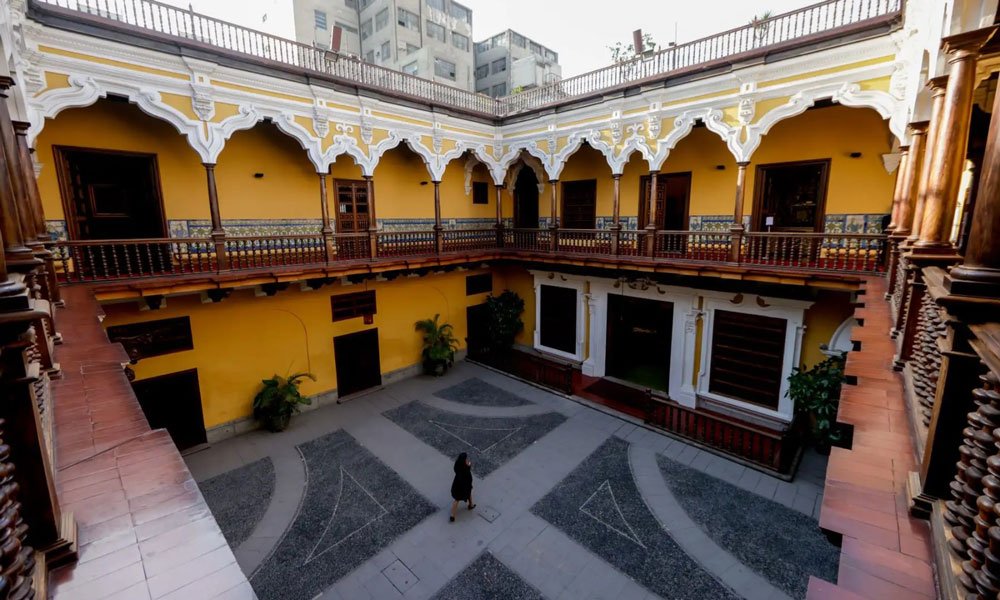
7. Torre Tagle Palace
Why it’s worth it:
-
It is a standout example of Lima’s colonial (Viceroyalty-era) architecture, featuring carved wooden balconies in the mudéjar style — a visual luxury.
-
Its façade and decorative details make every angle worthy of a photo.
-
It has some of the most beautiful and emblematic balconies in Lima.
What to look for when taking photos:
-
Close-ups of the carved wooden balconies: latticework, brackets, reliefs.
-
A frontal view that captures the entire façade, with its color and texture.
-
Shoot during golden hour so the wood stands out with warm tones.
Useful tips:
-
Make sure there is good overhead light, as surrounding buildings can cast deep shadows.
-
Keep in mind that some areas may have restricted access or security presence — keep your gear visible and respect the rules.