


How to get from Cusco to the start of the Salkantay Trek
Arriving from Cusco to the start of the Salkantay Trek is much more than a simple transfer: it is the first stage of an adventure that combines culture, nature, and physical challenge. For many travelers, this stage is just as important as the hike itself, because it marks the moment when the body begins to adapt to the altitude, climate, and terrain, and the mind starts to connect with the natural and spiritual environment that characterizes the Peruvian Andes.
The Salkantay Trek crosses a diversity of ecosystems ranging from high Andean grasslands to intermediate valleys and finally the Amazonian cloud forest that precedes Machu Picchu. Each section of the journey offers unique landscapes, living local cultures, and different challenges for the traveler.
The most frequent starting points are Challacancha (3,500 m) and Soraypampa (3,900 m). Choosing one or the other not only affects the initial difficulty of the hike, but also how the body acclimatizes and the way you perceive the majestic Nevado Salkantay and its surroundings.
This text is a detailed, extensive, and step-by-step guide that will allow you to organize your transfer from Cusco to the beginning of the trek, focusing on public transportation and organized tours, describing the landscape, culture, history, physical and mental preparation, and all the details a traveler needs to know.
Public transportation from Cusco
Public transportation is the option chosen by backpackers, independent travelers, and those who want to immerse themselves in local life. Unlike an organized tour, here every detail requires planning: schedules, connections with other transportation, and adaptation to climate and altitude. However, this route offers more authentic contact with Andean culture, allowing you to closely observe the daily life of rural communities and local traditions.
First leg: Cusco – Mollepata
This first section marks the beginning of the experience. The main road connecting Cusco with the province of Anta is paved, but features sharp curves, ascents, and descents that allow travelers to observe the transformation from urban landscape to rural Andean surroundings.
Where to take transportation?
Shared vans and minibuses mainly depart from:
Terminal Terrestre de Cusco: a place where much of the interprovincial transportation is concentrated. Vehicles usually wait until full, and it is common to see local passengers buying goods or traveling to different destinations.
The Arcopata area, near the historic center: more accessible if your accommodation is in the heart of the city.
There is no formal ticket office or strict schedule; the system is dynamic, and vehicles leave once they reach capacity. For this reason, it is recommended to arrive early and ask your accommodation the night before to confirm the exact departure point, which may vary slightly depending on the season.
Recommended schedules
Departures begin around 4:30 a.m. and can extend until 8:00 or 9:00 a.m. Leaving early is essential to:
Arrive in Mollepata with enough time to coordinate the second leg.
Avoid city traffic and take advantage of the morning light to appreciate the landscapes.
Reduce the risk of reaching the trek starting point near midday, when the sun is stronger or rain begins during the wet season.
Approximate cost
The price ranges between 25 and 35 soles per person, payable directly to the driver or assistant. It is recommended to carry cash in soles, as digital payments are not accepted, and to keep water and a snack handy for the journey.
Travel time
Between 2 and 3 hours, depending on the season, weather conditions, and intermediate stops to pick up additional passengers or small local cargo bundles.
During the trip, travelers can observe how the city disappears and the first agricultural fields emerge, with mountains rising in every direction.
What the road to Mollepata is like
The journey begins on a paved road that winds through the outskirts of Cusco. As you advance, the landscape transforms:
Fields of potatoes, corn, quinoa, and other Andean crops appear.
Herds of llamas and alpacas can be seen grazing on steep hillsides.
Small communities with adobe houses and tile or metal roofs appear, many with improvised markets.
The topography becomes increasingly mountainous, with tight curves and prolonged ascents.
During the dry season (May – September), the road is stable and dust is the main challenge; during the rainy season (November – March), humidity and fog can reduce visibility.
Temperatures at dawn can be quite cold, so it is recommended to bring warm clothing even inside the vehicle and protect your skin from high-altitude wind.
Second leg: Mollepata – Challacancha or Soraypampa
Upon arriving in Mollepata, the travel experience changes. This small town is a transition point where you can have breakfast, buy snacks, fresh fruit, and provisions for the first days of trekking, and observe local life. Its markets offer products such as fresh eggs, Andean fruits, cheeses, artisanal bread, and coca leaves, traditionally used to relieve altitude effects.
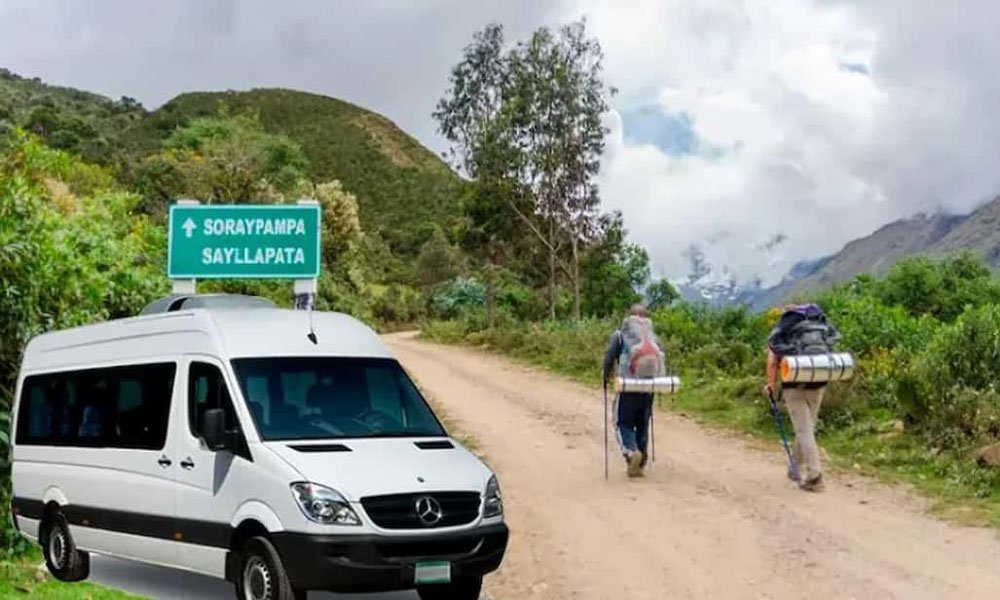
From here, you must arrange transportation to Challacancha or Soraypampa. Vehicles may include local taxis, rural pickup trucks, or shared transfers with other travelers. Immediate availability is not always guaranteed, so patience and communication with local drivers are essential.
Estimated cost
Between 70 and 120 soles per full vehicle. When shared with other passengers, the individual cost is considerably reduced, making it an economical and efficient option.
Travel time
Approximately 1 to 1.5 hours. Although short, this section represents a radical change: you leave the paved road and enter dirt and stone paths, increasing the sense of adventure.
Road conditions
The road is unpaved, with potholes, stones, and uneven stretches. Dust during the dry season and mud during the rainy season make properly securing luggage essential. It is advisable to use waterproof covers to protect backpacks and equipment.
Phone signal begins to disappear, and the environment becomes completely natural, surrounded by mountains, rivers, and Andean vegetation.
Differences between starting in Challacancha or Soraypampa
Challacancha (3,500 m)
Allows for a more gradual and gentle start, ideal for those who want to acclimatize progressively to the altitude before the more demanding ascents. The trail crosses a wide valley with crystal-clear rivers, varied vegetation, and small Andean villages, offering diverse and peaceful scenery. Initial hikes are moderate, helping the body adapt to thinner air while enjoying the natural surroundings and observing the daily life of local residents. This option is perfect for those who want to combine acclimatization and scenic beauty before facing the higher sections of the trek.
Soraypampa (3,900 m)
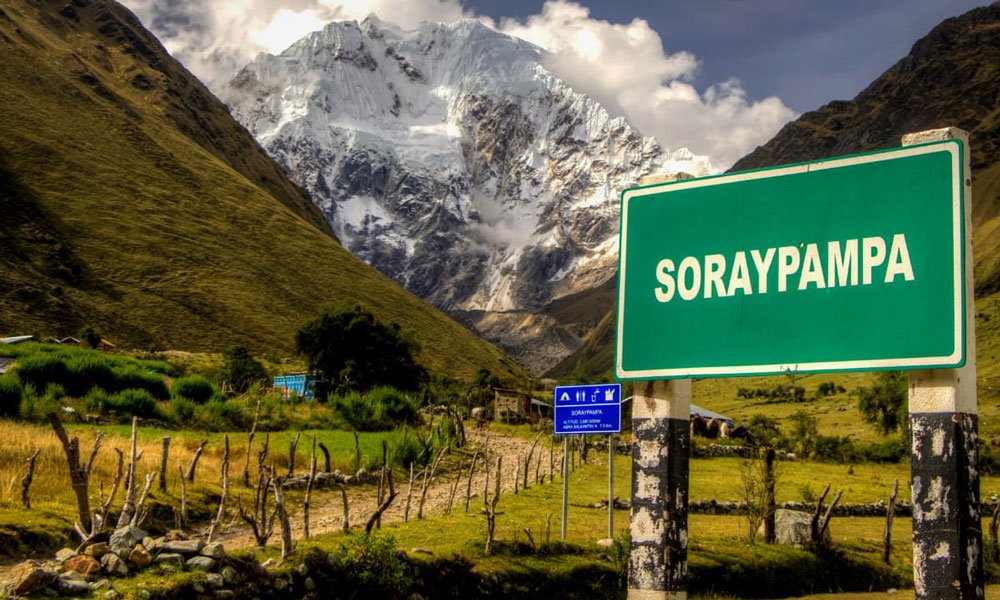
Offers a more direct and popular start, ideal for those who want quick access to the most spectacular points of the route, such as Laguna Humantay and the imposing view of Nevado Salkantay. This starting point implies a greater challenge from the very beginning, as the altitude is considerable and the body must adapt quickly to thinner air. Therefore, it is recommended only for those who have spent at least 48 hours acclimatizing in Cusco. Although it requires more physical effort at the start, Soraypampa allows you to enjoy breathtaking landscapes and begin the hike with spectacular views from the very first steps.
Transportation with an organized tour
For those who prefer comfort and coordination, organized tours are the ideal alternative. They include:
Pickup from your hotel in Cusco between 4:30 and 5:00 a.m.
Transportation in a minivan or small bus with an experienced driver.
Stop in Mollepata for breakfast, purchasing provisions, or resting.
Continuation to Challacancha or Soraypampa.
The total transfer duration is usually 3 to 4 hours. The tour avoids the uncertainty of negotiating prices, coordinating vehicles, or facing unexpected weather changes without guidance. In addition, the guide explains during the journey the history of the region, the Andean worldview, and the importance of Nevado Salkantay as an “Apu,” or protective mountain spirit of the area.
What happens upon arriving at the starting point
When stepping out of the vehicle at the starting point, the change is immediate and felt through all the senses. The air is colder, purer, and clearer, and the altitude begins to be noticeable in breathing and heart rate, reminding travelers that they are entering an authentic mountain environment.
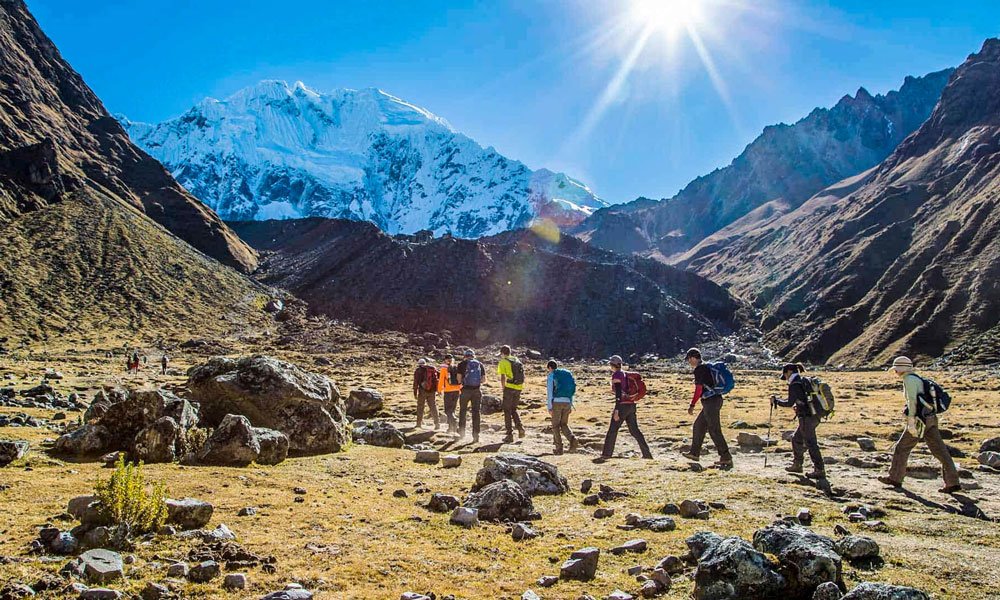
The landscape surrounding the trail is dominated by majestic mountains, imposing snow-capped peaks, and vast meadows that seem endless. From Soraypampa, Nevado Salkantay towers above everything else, capturing attention and generating a sense of respect and awe before its grandeur.
This is the moment when the hike officially begins, and excitement mixes with anticipation for what lies ahead. The experience becomes unique from the very first step, inviting you to enjoy nature, breathe deeply, and prepare physically and mentally for the challenges of the route.
Among the most notable aspects of this beginning are:
Purer and fresher air: feeling how each breath becomes lighter and more energizing.
Impact of altitude: the body begins to adapt, increasing awareness of physical effort.
Imposing landscapes: snow-capped mountains, wide meadows, and mountain rivers defining the environment.
Presence of Nevado Salkantay: the visual protagonist of the trek, symbol of strength and Andean spirituality.
Official start of the trek: the mix of excitement, respect, and anticipation that marks the beginning of a unique adventure in South America.
Importance of leaving Cusco early
Leaving before dawn allows you to:
Take advantage of natural light throughout the first day of trekking.
Avoid afternoon rain or weather changes.
Maintain a steady and safe pace.
Reach base camp with enough time to rest and acclimatize.
In the mountains, time planning is key to safety and trek efficiency.
Essential recommendations for the transfer
Acclimatize at least 48 hours in Cusco before traveling.
Sleep well the night before.
Avoid alcohol and heavy meals before the transfer.
Have a light breakfast and stay hydrated.
Carry cash in soles for local payments.
Always confirm the exact starting point of the hike.
Prepare warm clothing, sunscreen, sunglasses, and a hat.
Even during the transfer, altitude and climate can affect your body, so it is important to listen to your body’s signals and not rush.
The travel experience: much more than a transfer
The journey from Cusco to the start of the Salkantay Trek goes far beyond a simple transfer; it is an experience that engages the senses and allows you to connect with Andean culture.
As you travel along mountain roads, you pass through lively Andean villages where local markets display the authenticity of rural life: aromas of freshly baked bread, fresh fruits, vegetables, and traditional products reflecting centuries of agricultural and gastronomic customs.
The route also offers impressive views of stepped pre-Inca agricultural terraces, evidence of ancestral engineering that allowed communities to adapt to mountainous terrain and sustain agriculture for generations.
Among the mountains, crystal-clear rivers wind through valleys, waterfalls cascade forcefully, and deep ravines announce the majesty awaiting hikers on the trek. Local flora and fauna accompany the journey: llamas and alpacas graze in meadows, Andean birds soar across the skies, and wildflowers brighten the roadside with vibrant colors, creating a natural spectacle that changes with every curve in the road.
Climate changes are also gradually felt, shifting from mild valley temperatures to intense cold as you ascend into the high mountains, preparing both body and mind for the challenge that begins in Challacancha or Soraypampa.
Together, this section is not merely a transfer, but a prelude to the trekking experience, where every detail — cultural, natural, and sensory — anticipates the unique adventure awaiting those who venture onto the Salkantay Trek.