


Differences between Salkantay Trek and Inca Trail to Machu Picchu
If you plan to visit Machu Picchu, one of the most important decisions is choosing the right trekking route. The two most popular options are the Salkantay Trek and the Inca Trail, each with unique characteristics, difficulties, and experiences. Knowing their differences will help you choose the route that best suits your physical level, interests, and expectations.
The Salkantay Trek is ideal for those seeking adventure, diverse landscapes, and contact with nature at high altitude. On the other hand, the Inca Trail is historical, more regulated, and famous for its ancestral route, connecting Inca ruins all the way to Machu Picchu.
Historical context and cultural significance
Inca Trail: The original route of the Inca Empire
The Inca Trail is not simply a mountain path; it is part of a vast road network known as the Qhapaq Ñan, the system of roads that connected the entire Inca Empire from Colombia to Chile and Argentina.
Walking this route means traversing paths built over 500 years ago, passing through tunnels carved into rock, original stairways, and strategically located archaeological sites.
The final entry to Machu Picchu is through the Sun Gate (Inti Punku), recreating the ceremonial entrance experience that ancient pilgrims likely followed.
This historical significance makes the Inca Trail a deeply symbolic experience.
Salkantay Trek: The sacred mountain and spiritual connection
The Salkantay Trek is not part of the original Inca path to Machu Picchu, but it has enormous spiritual importance.
The Salkantay Snowcapped Mountain is considered an “Apu,” that is, a sacred mountain within the Andean worldview. Apus were spiritual protectors and living entities according to Inca tradition.
This trek offers an experience more connected with nature and Andean spirituality than with structured archaeology.
Duration and distance
Salkantay Trek
The Salkantay Trek generally lasts between 4 and 5 days in its most common version, although there are extended programs of 6 or even 7 days for those who want a more relaxed pace or include additional activities such as visits to lagoons and local communities. The total distance is approximately 70 kilometers, usually starting in Soraypampa and ending in Aguas Calientes, the base town for visiting Machu Picchu.
From the first day, the route involves a progressive challenge. The initial hike is usually moderate, allowing the body to acclimate to the altitude, but the second day is considered the most demanding. On this day, you ascend to the Salkantay Pass, located at 4,650 meters above sea level. This ascent can involve a positive elevation gain of over 800–1,000 meters in a few hours, depending on the starting point of the camp.
Daily hikes usually last between 6 and 8 effective hours, although they can vary according to the group’s pace and weather conditions. The terrain is diverse and natural: compacted dirt trails, rocky paths, steep slopes, muddy areas in the rainy season, and long descents toward the high jungle.
Another important factor is the total accumulated elevation of the trek. Not only do you ascend to the highest pass, but you also descend progressively toward warmer and more humid climates. This altitude change—from cold high mountain to cloud forest and jungle—means the body must quickly adapt to different environmental conditions.
Additionally, the greater total distance of the Salkantay makes it a more demanding experience in terms of overall physical endurance. It’s not just about climbing mountains, but maintaining constant energy over several consecutive days.
Inca Trail
The classic Inca Trail officially lasts 4 days and covers approximately 42 kilometers to reach Machu Picchu. There is also a short 2-day version that covers the final stretch of the trail and allows entry through the Sun Gate (Inti Punku).
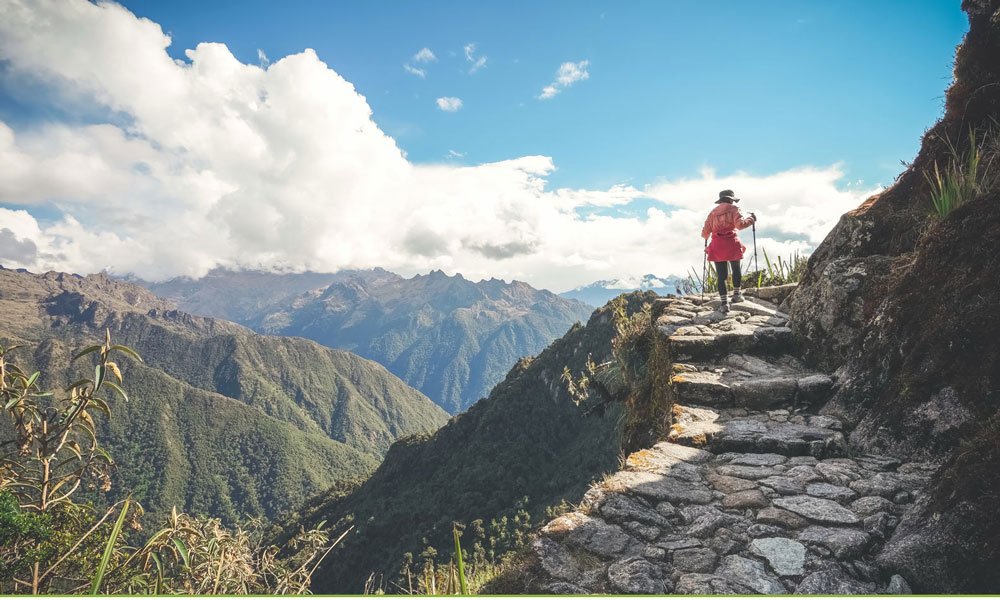
Although the total distance is considerably less than the Salkantay, the physical effort is concentrated in specific challenging sections. The second day is the most demanding, as you ascend to the Warmiwañusca Pass, located at 4,200 meters above sea level. This climb is continuous and steep, mostly composed of original stone steps built by the Incas over five centuries ago.
Daily hikes usually last between 5 and 7 hours. However, the perception of effort may be greater due to the technical nature of the terrain. Unlike the Salkantay, the Inca Trail consists mostly of paved paths and irregular staircases. Many steps are uneven in height, requiring constant attention and additional muscular effort, especially on long descents.
The accumulated elevation is also significant, as the trail includes multiple intermediate ascents and descents, not just the main pass. This means the body is never on completely flat terrain for long periods.
Despite being shorter in kilometers, the Inca Trail can feel intense due to the combination of steep slopes, continuous stairs, and the structured pace of the itinerary.
Level of difficulty
Salkantay Trek
The Salkantay Trek is considered medium-high to high difficulty, mainly due to the combination of extreme altitude, long distances, and variable weather conditions. The highest point of the route is the Salkantay Pass (4,650 m a.s.l.), where the oxygen concentration is significantly lower than at sea level. This can cause accelerated fatigue, shortness of breath, and, in some cases, altitude sickness if proper acclimatization is not undertaken.
The second day is usually the most physically demanding. The prolonged ascent to the pass involves several hours of continuous climbing. It is not a technical climb, but it does require solid cardiovascular endurance and mental strength. In addition, temperatures at high altitude can drop below zero at night, adding another component of physical challenge.
Another important factor is the variability of the terrain. There are rocky stretches, uneven paths, and long descents that can impact knees and ankles. The body works constantly over several consecutive days, requiring good prior preparation.
It is recommended to do physical training before the trip, including long walks, aerobic exercises, and leg strengthening.
Inca Trail
The Inca Trail is generally classified as medium difficulty. Although it reaches 4,200 meters at the Warmiwañusca Pass, the maximum altitude is lower than the Salkantay and prolonged exposure to extreme heights is more limited.
However, the effort should not be underestimated. The trail includes thousands of stone steps, many of them irregular and steep. The second day is the most challenging due to the continuous climb to the highest point. In addition, the third day includes long descents that can be demanding for the knees.
The advantage is that the route is better defined and structured, with established campsites and a planned pace. This helps maintain a more organized control of physical effort.
Landscapes and nature
Salkantay Trek
The Salkantay Trek is considered one of the most spectacular trails in the Peruvian Andes due to the incredible diversity of ecosystems crossed in just a few days. Each day offers a different landscape, and the transition between climatic zones is very noticeable, allowing travelers to experience multiple natural environments in a single trek.
Among the most notable landscapes are:
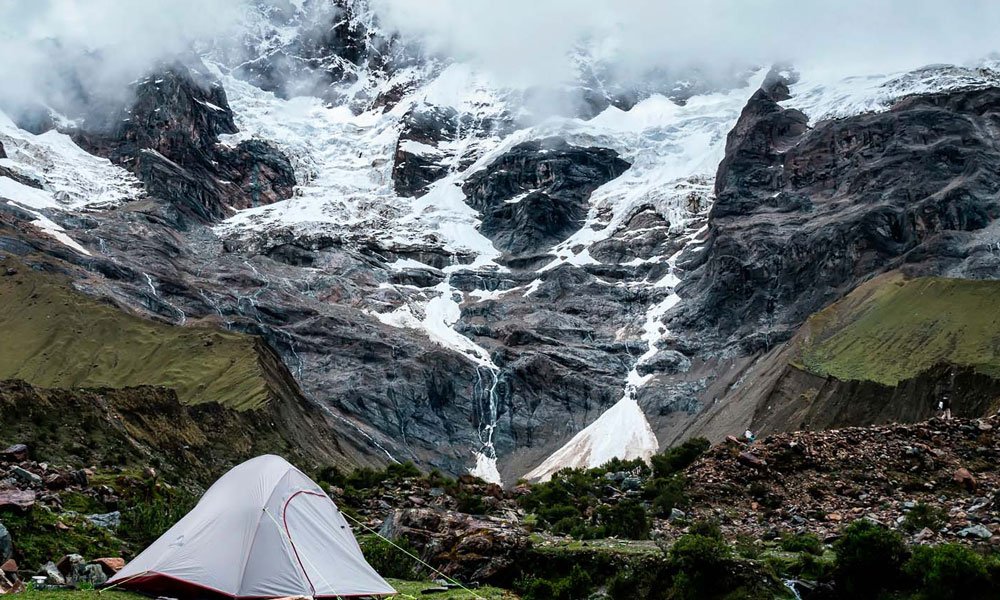
Imposing snowcapped mountains and glaciers:
From the start, the view of the Salkantay snowcapped mountain and its glaciers generates a sense of grandeur and majesty. The morning light on the icy peaks creates unique tones, a delight for photographers.
Turquoise glacial lagoons:
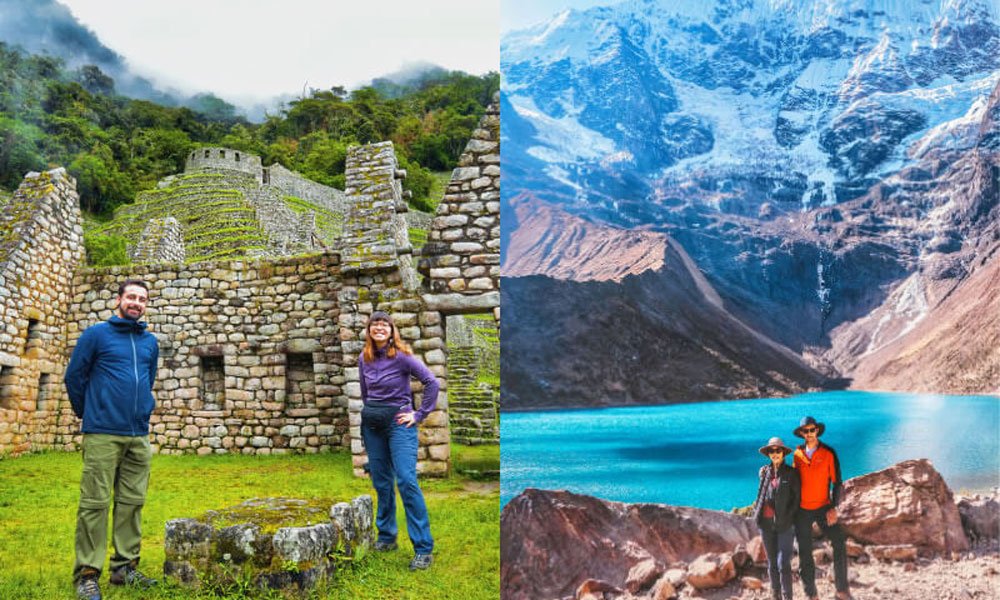
Humantay LagDiscover the differences between the Salkantay Trek and the Inca Trail. Compare them to choose the best route to Machu Picchu.on is a classic example, where the reflection of the sky in the water creates a spectacular contrast with the mountainous surroundings. This place is also a space for meditation and contemplation, highly appreciated by hikers.
Open high-altitude páramos:
Wide areas covered with Andean grasslands, with low vegetation resistant to cold and wind. Condors are commonly seen flying over, and the magnitude of the Andes can be observed in open panoramas.
Fertile inter-Andean valleys: As you descend from the main pass, agricultural valleys appear where maize, potatoes, and quinoa are cultivated. Interaction with small rural communities adds a human and cultural touch to the natural landscape.
Cloud forest:
Humidity increases, and trees are covered with moss and lichens. Morning mist creates a mystical and magical atmosphere, where each trail seems like a fairytale setting.
High tropical jungle:
Approaching the Aguas Calientes area, vegetation becomes lush. Giant ferns, wild orchids, and coffee plantations dominate the landscape, while the climate becomes warm and humid.
In addition to its ecological richness, the Salkantay Trek has abundant and varied wildlife. Birds such as the Andean condor, brightly colored hummingbirds, and toucans in the high jungle can be seen, along with mammals such as vizcachas and Andean foxes in higher zones.
The route is ideal for those seeking connection with pure nature, landscape photography, flora and fauna observation, and a sense of remote adventure. The wide panoramas and contrast between snowcapped peaks and tropical jungle make it a unique experience.
Inca Trail
The Inca Trail, although shorter and with less ecological diversity, offers equally impressive landscapes due to its integration of nature and historical heritage. The trail mainly crosses the Andean cloud forest, a humid ecosystem full of dense vegetation where morning mist creates an almost ceremonial atmosphere.
What sets the Inca Trail apart is the constant presence of archaeological sites along the entire route. These ancient Inca complexes—temples, viewpoints, agricultural terraces, and paved paths—integrate perfectly with the natural environment, making every view historically meaningful as well as aesthetic.
The route also includes:
Tunnels and stairways carved into rock, showcasing the advanced engineering of the Incas.
Ancient agricultural terraces, which were not only functional but now frame valley views with a unique geometric pattern.
Panoramic viewpoints, from which deep valleys and vegetation-covered mountains can be appreciated, providing moments of contemplation during the hike.
The final stretch before Machu Picchu, passing through the Sun Gate (Inti Punku), is the ultimate visual reward: a panorama that unites mountain, archaeology, and jungle perfectly, making the journey a memorable experience.
Crowds and permits
Salkantay Trek
The Salkantay Trek does not have a strict daily limit of hikers, except for entry to Machu Picchu at the end of the route. This allows:
Greater flexibility in planning dates.
Reservations closer to the travel date.
A more solitary experience, with fewer tourists on the trails and more direct contact with nature.
The trek is ideal for those seeking adventure without crowds and those who want to enjoy the route without feeling pressured by other groups.
Inca Trail
The Inca Trail is strictly regulated by the Peruvian government to preserve archaeological heritage and the ecosystem:
Only around 500 people are allowed per day (including guides and porters).
Permits sell out months in advance, especially during high season (June–August).
The trail completely closes in February for maintenance and conservation.
This control ensures a more exclusive and organized experience, although it requires advance planning and compliance with strict rules.
Logistics and transport
Salkantay Trek
Inca Trail
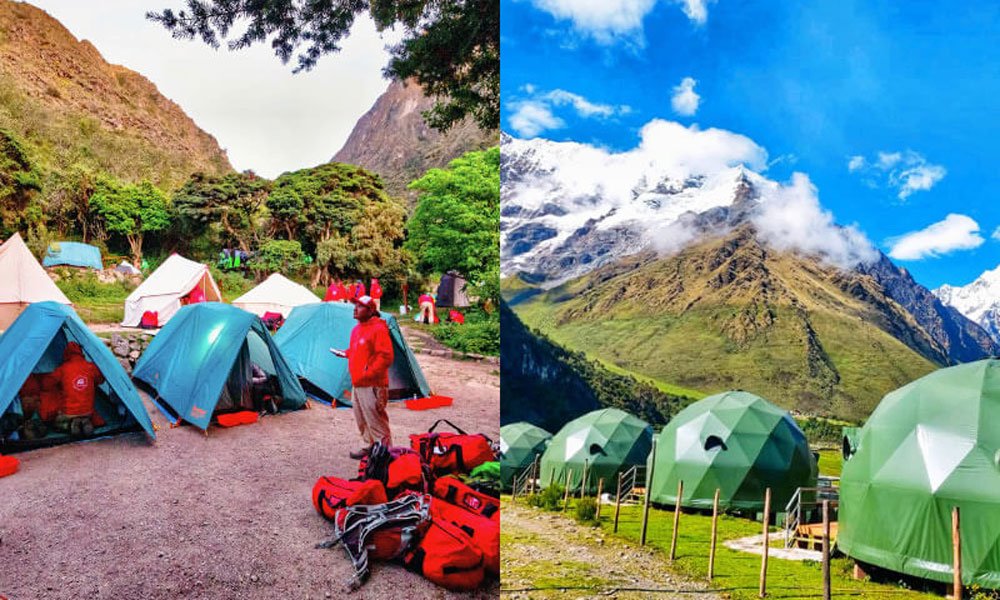
Accommodation: pre-established camps regulated by certified agencies.
Transport: not required, as the trek ends directly at the Sun Gate of Machu Picchu.
Organization: everything is structured, from walking schedules to camp and meal logistics, ensuring an orderly journey.
Climate and ideal season
The dry season, from May to September, is the most recommended time to do both the Salkantay Trek and the Inca Trail. During these months, rains are minimal, allowing safer trails, optimal panoramic visibility, and clear skies that highlight mountain landscapes and Inca architecture. Days are generally sunny, making hiking and photography easier, while nights can be cold, especially in high mountain areas.
In the rainy season (November to March), the situation changes considerably:
Salkantay Trek: Although possible, trails become slippery, and frequent rains can increase the difficulty of ascents and descents. The weather is more unpredictable, with cold and humid mornings and sudden afternoon showers. However, the route also offers greener and more vibrant landscapes, and lagoons and rivers usually have higher water flow, creating impressive views for those seeking adventure even in the rainy season.
Inca Trail: Trekking is not available in February, when the government closes the trail for maintenance and to prevent landslides. During the rainy months, trails can be extremely dangerous due to wet stone steps, strictly limiting access.
The Salkantay, crossing high mountain and high jungle areas, presents great thermal variability: at the upper part of the trek, nights can drop below zero, while in the lower jungle, days can be warm and humid, with temperatures exceeding 25 °C. This difference requires hikers to bring appropriate clothing for extreme climates, from warm layers for high mountains to light clothing for the jungle.
Cultural experience
Salkantay Trek
The Salkantay Trek offers a unique experience of direct interaction with rural Andean communities, allowing travelers not only to explore the landscape but also to immerse themselves in the daily life of local inhabitants. Throughout the route, it is possible to closely observe traditional agricultural practices, such as planting and harvesting potatoes, maize, and quinoa, which are carried out using ancestral methods passed down through generations. In addition, visitors can explore local markets, where fresh produce, handicrafts, and typical foods are showcased, and where hikers also have the opportunity to interact with residents, learn about their customs, and participate in cultural activities.
Moreover, the experience allows travelers to learn about the living and contemporary traditions of Andean culture, including local celebrations, weaving techniques, food preparation, and lifestyles adapted to the mountains. Altogether, this combination of contact with people, observation of their environment, and participation in their activities turns the trek into more than just a hike: it is a cultural and human journey that enriches the adventure experience with deep insight into the identity and heritage of the Andes.
Inca Trail
The Inca Trail is primarily focused on the history of the Inca Empire, offering a journey along original trails built centuries ago that allow firsthand experience of this civilization’s advanced engineering and planning. Along the route, one encounters temples, ceremonial centers, and various archaeological structures that showcase the Incas’ social, spiritual, and agricultural organization. This route allows understanding of their worldview, the connection between nature and architecture, and the way they integrated their constructions into the Andean landscape. The experience is deeply heritage- and archaeology-oriented, ideal for those seeking a direct connection with ancestral history and wishing to traverse paths that have remained almost intact for centuries.
Both the Salkantay Trek and the Inca Trail offer unique experiences to reach Machu Picchu. The Salkantay is ideal for those seeking nature, adventure, and variety of landscapes, with greater freedom and contact with local communities. The Inca Trail stands out for history, archaeology, and the integration of landscapes with Inca culture, offering a more structured and exclusive route.
In any case, both paths culminate at Machu Picchu, ensuring an unforgettable experience of landscapes, history, and Andean culture.