


Entry requirements to Peru to do the Salkantay Trek
To do the Salkantay Trek in Peru in 2026, tourists must meet basic entry requirements to the country, such as having a valid passport and, in some cases, a visa. Additionally, during the route, communal entrance fees and specific tickets must be paid, including the one for Machu Picchu. Although an official permit like the Inca Trail is not required, there are still mandatory payments that guarantee access and the conservation of the visited areas.
Entry requirements to Peru
To do the Salkantay Trek, travelers must meet certain basic entry requirements to the country. Although they are simple procedures, it is advisable to know them in detail to avoid setbacks and ensure that the experience flows smoothly from the first day.
Valid passport
The most important document to enter Peru. Immigration authorities require it to have a minimum validity of six months from the date of entry. This requirement is common in many countries and aims to ensure that the traveler does not encounter problems during their stay. Checking the expiration date before traveling is essential, and if the document is close to expiring, it is best to renew it in advance.
- Minimum validity: 6 months from entry.
- Early renewal: recommended if the passport is close to expiring.
- Strict control: authorities carefully check this requirement.
Tourist visa
Most tourists from Europe, North America, and South America do not need a visa for short stays of up to 183 days. This makes Peru an accessible destination for international travelers. However, those coming from countries with special requirements should check with the nearest Peruvian consulate. Additionally, it is recommended to carry a printed copy of the itinerary and accommodation reservations, as immigration officers may sometimes request them as proof.
- Visa exemption: valid for short stays (up to 183 days).
- Exception: some countries require prior processing at a consulate.
- Additional documentation: itinerary and reservations may be requested.
Andean Migration Card (TAM)
Upon entering the country, the Andean Migration Card (TAM) is issued, which records the visitor’s entry. This document can be physical or digital and must be kept until departure, as it will be requested at the airport. Losing it may cause delays and additional procedures, so it is advisable to keep it in a safe place or have a digital copy on your phone.
- Mandatory document: issued upon entry.
- Format: physical or digital.
- Importance: required when leaving the country.
Recommended vaccines
There are no mandatory vaccines to enter Peru, which makes traveling easier. However, it is recommended to get the yellow fever vaccine if you plan to visit jungle areas such as the Amazon. For those who will only travel through the Andean region and do the Salkantay Trek, this vaccine is not necessary. Still, it is always advisable to have international medical insurance and carry a small personal first aid kit for emergencies.
- Not mandatory: free entry without specific vaccines.
- Recommendation: yellow fever for travel to the Amazon.
- Precaution: international medical insurance and personal first aid kit.
Permits and tickets for the Salkantay Trek
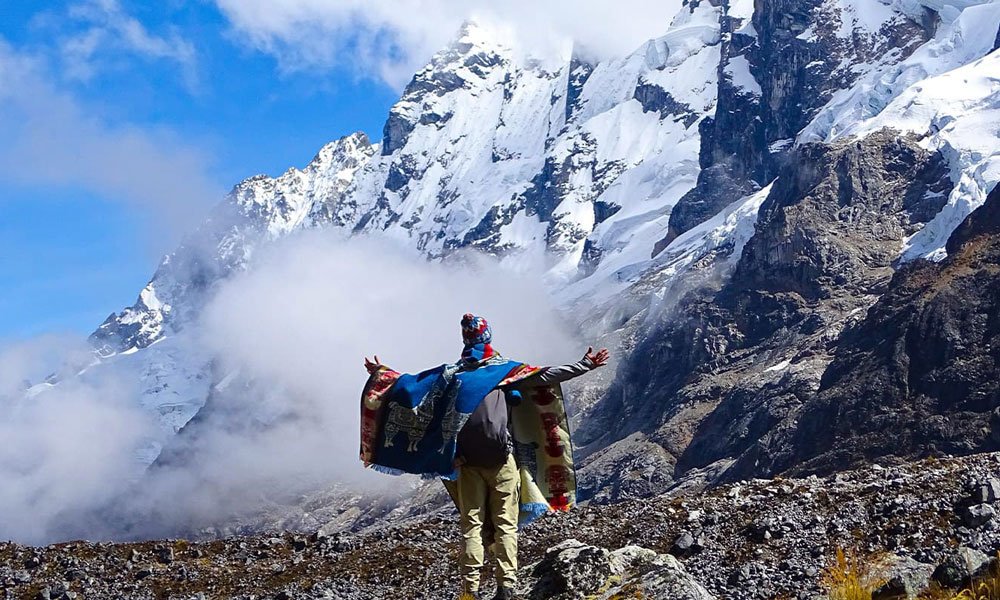
This is one of the most popular routes to Machu Picchu and, unlike the Inca Trail, it does not require an official government permit. This freedom allows travelers to organize their journey with greater flexibility, either by hiring an agency or planning the trek independently. However, access is not completely free: there are mandatory local payments that ensure trail maintenance, protection of natural spaces, and economic support for the farming communities that depend on tourism.
Mollepata Community Entrance Fee
The trek begins in the town of Mollepata, where a mandatory community fee is charged. This cost, usually between 20 and 30 soles, is used to fund local projects and ensure that the trails are in proper condition for visitors. Payment can be made directly in the town or at community checkpoints before reaching Soraypampa. Beyond being a requirement, it is a way to support the families who keep the trekking tradition alive in this region.
- Approximate cost: 20–30 soles
- Where to pay: in Mollepata or at community checkpoints
- What it includes: access to the initial section of the route
Humantay Lagoon Entrance Fee
One of the most spectacular points of the trek is Humantay Lagoon, famous for its turquoise waters surrounded by snow-capped mountains. This site is managed by a different community, so the fee is separate from Mollepata’s. The cost is usually between 10 and 20 soles and is used for environmental conservation and visitor control, preventing environmental degradation. For many travelers, this fee is worth every cent, as the lagoon is considered one of the most impressive landscapes of the entire trek.
- Approximate cost: 10–20 soles
- Administration: different community sector from Mollepata
- Importance: contributes to the conservation of the lagoon and its surroundings
Machu Picchu Entrance Ticket
The highlight of the Salkantay Trek is reaching Machu Picchu, the archaeological jewel of Peru. To enter the citadel, it is mandatory to have a ticket, which costs around 152 soles for foreign adults. This ticket must be booked in advance, especially during high season, as visitor capacity is limited. There are different circuits and entry times available, allowing travelers to organize their visit according to their schedule and interests. This payment is the perfect conclusion to the journey, granting access to one of the wonders of the modern world.
- Approximate cost: 152 soles (foreign adult)
- Reservation: in advance, especially in high season
- Options: different circuits and entry times available
Salkantay Trek modalities
It offers different alternatives depending on the available time and the level of adventure each traveler seeks. There is no single way to do it: some prefer the classic version that combines snowy landscapes with high jungle, while others choose shorter itineraries or even extensions that connect with legendary routes such as the Inca Trail or Choquequirao. This variety makes Salkantay a flexible experience adaptable to different types of travelers.
Classic 5 days / 4 nights
The most popular option, ideal for those who want the full experience. The route crosses highly contrasting landscapes, from the snowy mountains of the Salkantay Pass to the humid forests near Machu Picchu.
- Itinerary: Soraypampa – Salkantay Pass – Chaullay – Hydroelectric – Machu Picchu.
- Duration: 5 days / 4 nights.
- Attraction: combines high mountains, jungle, and archaeology.
Short version 4 days / 3 nights
Designed for those with less time but who do not want to miss the essence of the trek. Although one day of hiking is reduced, it keeps the most iconic points of the route.
- Duration: 4 days / 3 nights.
- Advantage: faster and more accessible itinerary.
- Ideal for: travelers with tight schedules.
Extensions of 6–8 days
There are longer options that connect Salkantay with other historic routes. These are perfect for those seeking a deeper and more challenging experience.
- Duration: between 6 and 8 days.
- Combinations: Inca Trail or Choquequirao.
- Recommended for: adventurers who want to explore beyond Machu Picchu.
Practical tips for travelers
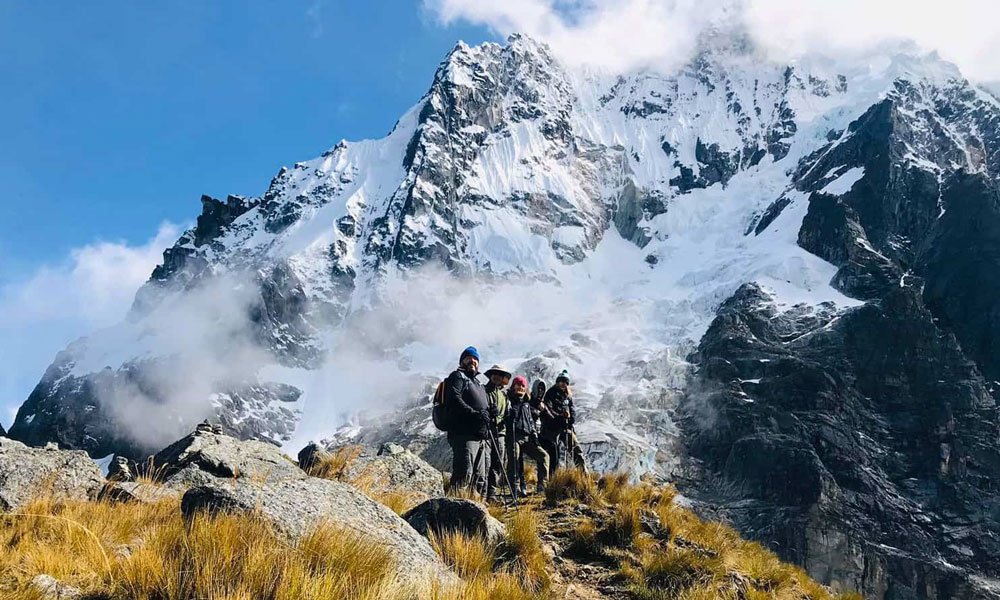
It is a demanding experience that combines high altitude, sudden weather changes, and long hiking days. To fully enjoy it, it is important for travelers to prepare in advance and consider key aspects such as altitude, weather, necessary equipment, and route logistics. These practical tips help reduce risks and enhance comfort during the adventure.
Altitude
The Salkantay Pass reaches 4,650 meters above sea level, making acclimatization essential. The body needs time to adapt to the altitude and avoid altitude sickness.
- Recommendation: stay in Cusco for at least 2–3 days before starting the trek.
- Previous activities: light walks around the city and consumption of coca infusions to aid adaptation.
Weather
The weather along the route is variable and can change drastically within hours. The dry season is the most recommended time to do the trek, as it offers better hiking conditions and clear landscapes.
- Best time: April to October (dry season).
- Avoid February: the Inca Trail closes for maintenance and rains are intense.
- Precaution: even in dry season, sudden rains may occur.
Recommended gear
Having the right equipment is essential to handle long days and temperature changes. Clothing and accessories should be practical, durable, and easy to carry.
- Thermal and lightweight clothing for sudden temperature changes.
- Sturdy and comfortable trekking boots.
- Sunscreen and insect repellent.
- Trekking poles for better stability on ascents and descents.
Water and food
During the trek, it is possible to buy water and food in local communities, but they are not always available in all sections. Therefore, it is recommended to carry your own supplies.
- Water purification tablets to ensure safe drinking water.
- Energy snacks such as nuts, cereal bars, or chocolate.
- Constant hydration to prevent altitude sickness.
Guides and agencies
Although hiring an agency is not mandatory, doing so can simplify logistics and reduce the weight you carry. Local guides provide safety and cultural insight, enriching the experience.
- Advantage: luggage transport and campsite organization.
- Added value: information about history, flora, and fauna of the region.
Cultural experience
It stands out not only for its natural landscapes but also for offering immersion in Andean culture. Along the route, travelers interact with local communities, visit sacred places, and finish at Machu Picchu, where history and spirituality merge in an unforgettable conclusion.
Farming communities
Families living along the route keep ancestral traditions alive and share aspects of their daily life with visitors.
- Agriculture and livestock as livelihood.
- Handicrafts and traditional textiles.
- Opportunity to support the local economy.
Sacred places
The trek passes through spaces considered spiritual protectors in the Andean worldview.
- Humantay Lagoon: turquoise waters surrounded by snow-capped mountains.
- Apu Salkantay: sacred mountain, symbol of strength and respect.
Machu Picchu
The trek ends at the Inca citadel, one of the wonders of the modern world. Booking a circuit in advance ensures a complete and organized visit.
- Advance reservation recommended.
- Different circuits and entry times available.
The Salkantay Trek is a route that combines nature, culture, and adventure in a single journey. Entry requirements to Peru are simple but necessary to avoid setbacks. Local payments ensure access to the route and support communities, while the different modalities allow the experience to be adapted to each traveler’s time and level. Preparing for altitude, weather, and having the right equipment is key to fully enjoying it. Finally, the trek offers not only spectacular landscapes but also a deep connection with Andean traditions and concludes at the wonder of Machu Picchu.