


Level of overcrowding on the Salkantay Trek compared to the Inca Trail
General context of the routes
The Inca Trail and the Salkantay Trek are two trekking experiences that lead to Machu Picchu, but they represent very different approaches to tourism in the Andes. The first is a historical route, rich in symbolism and strictly regulated by Peruvian authorities, making it an exclusive and highly sought-after option. In contrast, the second is a more recent alternative, designed for those seeking freedom of movement, direct contact with nature, and fewer planning restrictions. Because of these differences in origin and management, each route attracts distinct types of travelers, and the level of crowding varies significantly.
Inca Trail
- These original stone-paved paths once formed part of the vast road network of the Inca Empire.
- Along the way, hikers encounter intermediate archaeological sites that enrich the journey with tangible history.
- Access is strictly regulated, requiring reservations well in advance.
- Its international recognition as a World Heritage Site further increases prestige and demand.As a result, the atmosphere tends to be multicultural, with hikers from many nationalities sharing the route.
Salkantay Trek
- This modern route was created as an alternative to diversify access to Machu Picchu.
- Travelers benefit from greater flexibility in dates and formats, with options for small groups or independent trekking.
- The journey showcases diverse landscapes, including snow-capped mountains, high-altitude lagoons, and transitions into cloud forest.
- Fewer crowds make the experience more intimate and peaceful.Additionally, there is a strong spiritual connection with the Salkantay mountain, which is considered sacred by local communities.
Cultural and symbolic value
The appeal of these routes goes far beyond simply reaching Machu Picchu, as each one reflects deeper aspects of cultural identity and Andean symbolism. Serving as a living testament to the greatness of the Inca Empire, the Inca Trail preserves archaeological remains that tell the story of a highly advanced civilization. In contrast, the Salkantay Trek is closely tied to the Andean worldview and mountain spirituality, offering travelers a meaningful connection with ancestral traditions and the power of nature.
Inca Trail
- These original paths once formed part of the extensive Tahuantinsuyo road network, used by messengers and nobles.
- Along the route, archaeological sites such as Wiñay Wayna and Sayacmarca highlight the sophistication of Inca architecture and engineering.
- Its designation as a World Heritage Site strengthens its historical and cultural importance.
- Walking this trail evokes the sensation of following in the footsteps of a lost empire, with a strong archaeological focus.
Salkantay Trek
- Deep spiritual ties connect the route to the Salkantay mountain, regarded as sacred by Quechua communities.
- Traditions in the region associate the mountain with the protection of local villages and the fertility of the land.
- Travelers may witness Andean rituals, including offerings to Pachamama that are still practiced today.
- Such experiences foster a connection with the indigenous worldview, where nature is understood as a living and sacred entity.
Level of crowding
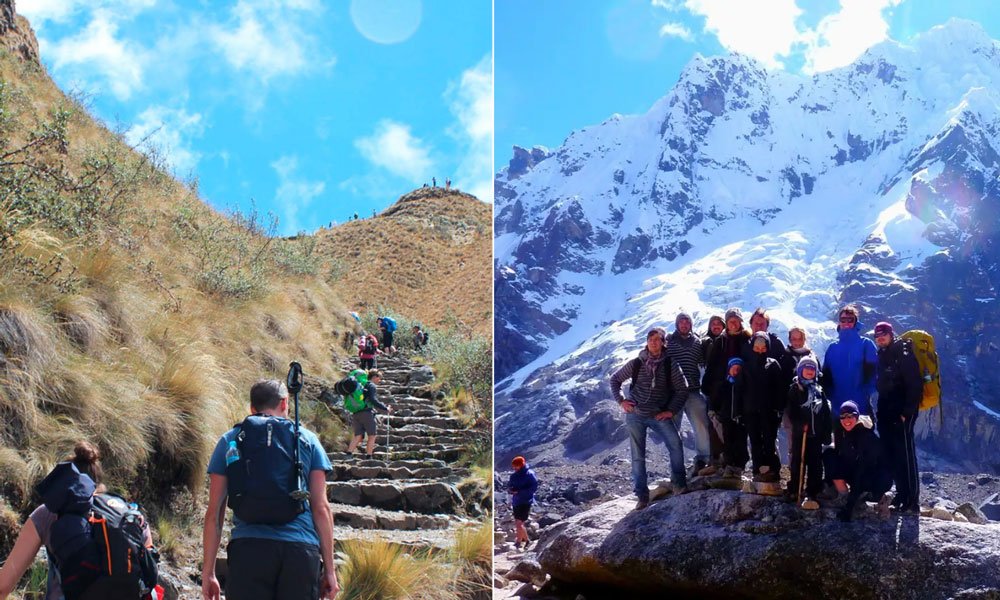
The number of people on each route has a direct impact on how the journey is experienced and the overall atmosphere of the trek. Owing to its historical importance and strong international demand, the Inca Trail usually brings together larger groups in a more tourism-driven setting. By contrast, the Salkantay Trek sees fewer visitors, offering a quieter and more intimate experience with a stronger sense of adventure. This variation in crowd levels ultimately shapes both social interaction and the degree of tranquility along the way.
Inca Trail
- Groups are typically organized and may include dozens of hikers supported by guides and porters.
- Along the route, it is common to encounter other trekkers at various points on shared paths.
- Campsites are established with basic infrastructure to host a significant number of people each night.
- Cultural diversity defines the atmosphere, as travelers from many countries take part in the experience.
- Access and schedules are carefully controlled, maintaining a steady flow of hikers across the same sections.
Salkantay Trek
- Hikers tend to be more spread out, often traveling in smaller groups that reduce any sense of congestion.
- Campsites are generally quieter, offering more space and a more relaxed environment for resting.
- Certain stretches of the trail can feel completely isolated, allowing nature to be experienced without interruptions.
- Passing through rural areas creates opportunities for closer interaction with local communities.
- Greater freedom of movement enhances the feeling of adventure, especially in the absence of large crowds.
Regulations and accessibility
The rules governing each route directly influence how travelers must organize their experience. The Inca Trail is subject to a strict control system designed to preserve archaeological heritage and ensure an orderly flow of visitors. This requires tourists to plan well in advance and rely on authorized agencies. The Salkantay Trek, in contrast, is known for its flexibility: it does not require official permits and allows for freer planning, making it an attractive option for those who prefer spontaneity.
Inca Trail
- Permit system managed by the Peruvian government, with limited daily quotas.
- Reservations required several months in advance due to high international demand.
- Mandatory hiring of certified agencies to manage logistics, guides, and porters.
- Designated campsites with regulated schedules to prevent overcrowding.
- Controlled access points ensuring an organized and supervised route.
Salkantay Trek
- Open access with no government permits required, facilitating spontaneous planning.
- Option to choose between different tour operators or complete the trek independently.
- Flexibility in dates and formats, adapting to traveler availability.
- More varied campsites, including eco-domes, refuges, or improvised spaces.
- Less official intervention, allowing greater autonomy in planning and execution.
Landscapes and natural environment
The Inca Trail and the Salkantay Trek offer very different settings that enrich the travel experience. While the former focuses on the combination of archaeological ruins with jungle and mountain landscapes, the latter stands out for the grandeur of its snow-capped peaks and the variety of ecosystems it crosses. This difference gives each trek a unique character: one more historical and archaeological, the other more natural and scenic.
Inca Trail
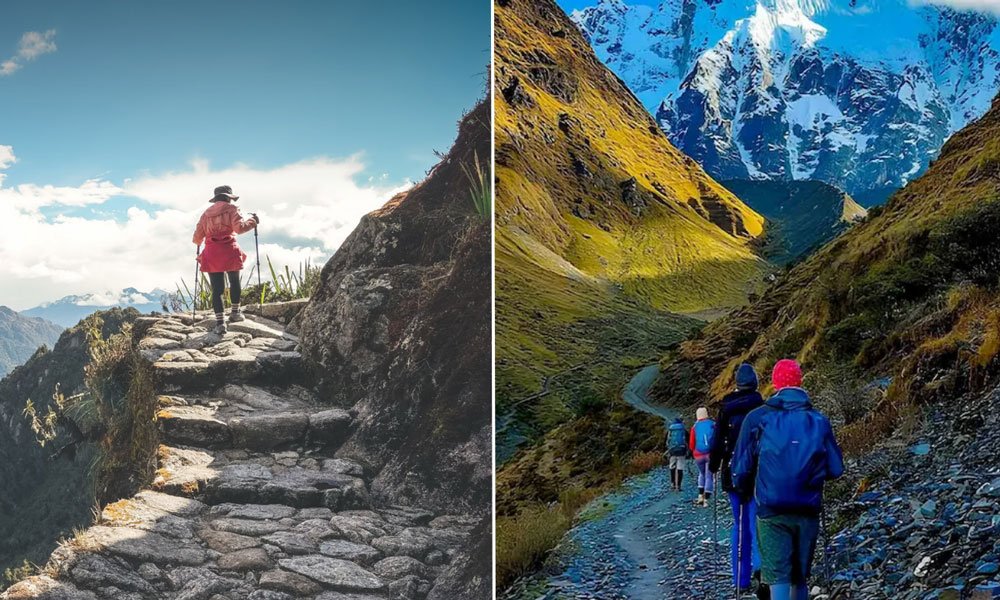
- Paths that cross cloud forests where vegetation envelops the ruins, creating a mystical atmosphere.
- Natural viewpoints offering views of deep valleys and lush mountains.
- Archaeological sites hidden in the jungle, such as Wiñay Wayna, remarkable for their preservation and strategic location.
- Entrance to Machu Picchu through the Sun Gate (Inti Punku), an iconic access point with a unique panoramic view of the citadel.
- Sections with Inca stone steps integrated into the landscape, showcasing ancestral engineering in harmony with nature.
Salkantay Trek
- Imposing snow-capped peaks such as Salkantay, rising above 6,000 meters and dominating the horizon.
- Turquoise glacial lagoons like Humantay, adding vibrant contrast to the mountain scenery.
- Diverse ecosystems ranging from high mountains to cloud forest, with dramatic changes in climate and vegetation.
- Trails that cross open valleys, where the vastness of the landscape conveys a sense of immensity.
Costs and services
The budget for each route reflects not only the level of crowding but also the type of infrastructure and logistics involved. Because the Inca Trail is strictly regulated and requires official permits, it generally comes with higher costs that include mandatory services such as porters, certified guides, and designated campsites. In contrast, the Salkantay Trek provides a broader range of price options and travel styles, from basic setups to more comfortable experiences, making it suitable for different types of travelers.
Inca Trail
- Due to limited and highly demanded permits, overall prices tend to be higher.
- Hiring authorized agencies, professional guides, and porters to carry equipment is included in the cost.
- Standard services typically cover meals, organized camps, and entry to Machu Picchu.
- Depending on the season and agency, prices usually range between USD 700 and 1,200.
- Strict regulations reduce flexibility when it comes to choosing or customizing services.
Salkantay Trek
- With more accessible pricing, the trek generally ranges from USD 450 to 900 depending on comfort level and operator.
- Travelers can choose between budget camps or more exclusive options such as eco-domes and mountain refuges.
- A wider selection of tour operators makes it easier to compare services and adjust the budget.
- Most packages include meals and entry to Machu Picchu, although extras like trekking poles or high-quality sleeping bags may involve additional costs.
Physical difficulty level
The level of difficulty of each route shapes the type of traveler who chooses it. While the Inca Trail presents a challenge, it stays within a moderate range due to its altitude and the support infrastructure available. On the other hand, the Salkantay Trek demands more from hikers, as it includes high mountain passes and harsher weather conditions. Because of this contrast, the routes attract different profiles, ranging from those seeking a manageable adventure to those aiming for a more intense high-altitude experience.
Inca Trail
- Reaching a maximum altitude of 4,215 meters, the route requires a considerable yet manageable effort for intermediate hikers.
- Throughout the journey, steep stone steps built by the Incas put both leg strength and cardiovascular endurance to the test.
- Maintaining a steady rhythm becomes essential due to the long ascents and descents along the trail.
- Compared to higher-altitude treks, weather conditions are generally more stable and temperatures more moderate.
- Support from guides, porters, and established infrastructure helps balance the overall physical demand.
Salkantay Trek
- At its highest point, the trail climbs to 4,630 meters at the Salkantay Pass, increasing the risk of altitude sickness without proper acclimatization.
- More rugged paths and steep slopes require hikers to exert greater physical effort throughout the trek.
- Weather varies dramatically, combining freezing temperatures in the high Andes with humid conditions in the cloud forest.
- Daily hikes can stretch beyond 7 hours, often involving significant elevation gain and loss.
- Such conditions make this route especially suitable for experienced trekkers prepared for sudden environmental changes.