Qeswachaka Inca Bridge Tour | Last Inca Bridge in Peru
Summary
Qeswachaka Inca Bridge | General Information
1
Q’eswachaka
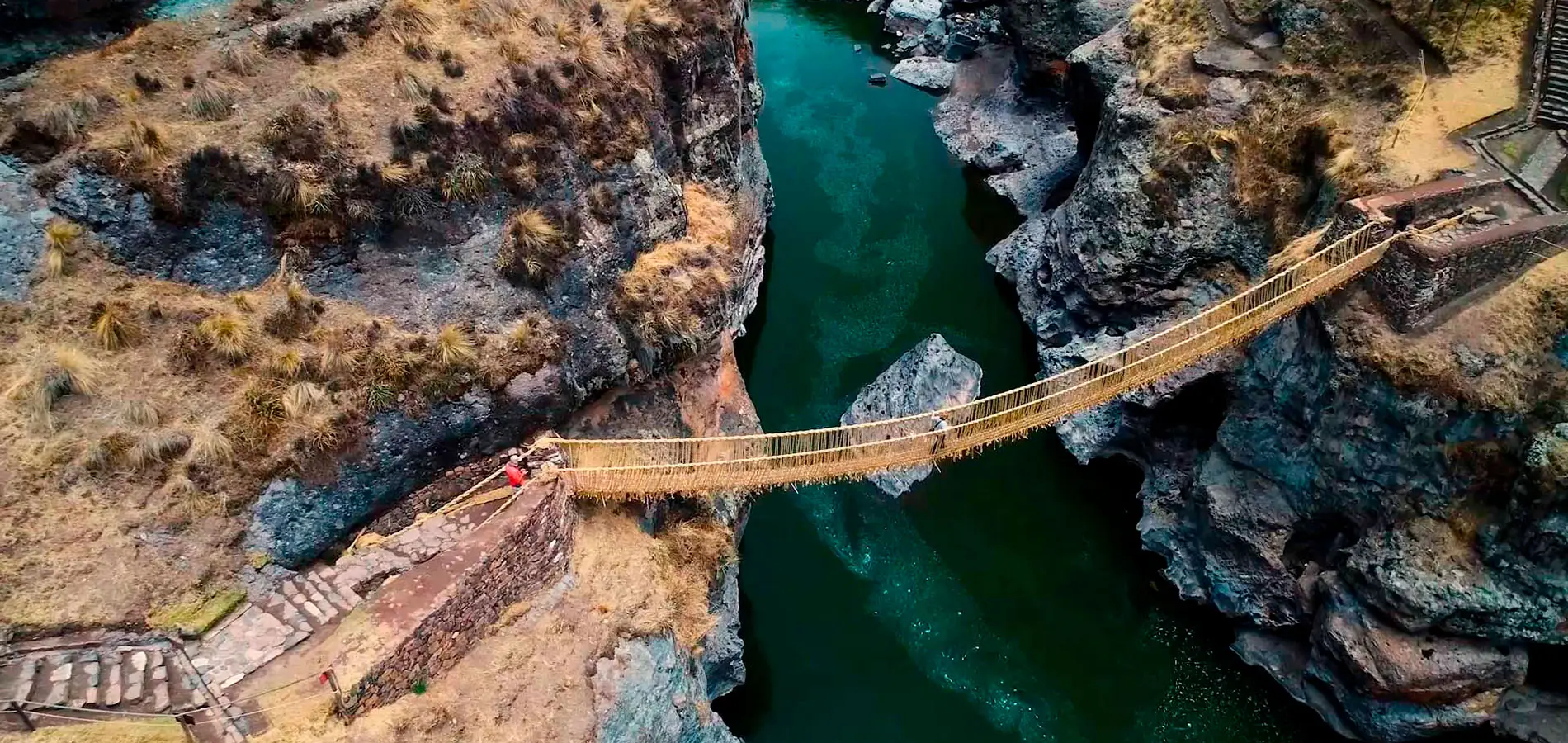
- The bridge is made entirely from ichu grass or q’oya, handwoven plant fiber. It continues to preserve traditional Inca construction methods combined with modern communal techniques.
- The communities of Huinchiri, Chaupibanda, Choccayhua, and Ccollana-Quehue carry out the annual renewal ritual and keep ancient Inca traditions alive. Each community has specific responsibilities: women braid the ropes, while men assemble the bridge under the supervision of the chakaruwak, the local bridge master. This event represents a modern form of minka (traditional communal work) and strengthens social bonds, cultural identity, and community unity.
Location
- Quehue Community, Canas Province, Cusco Region approximately 180 km from Cusco City; around 3.5 hours by car.
Altitude
- Approximately 3,700 meters above sea level 12,139 ft.
Dimensions
- Approximately 28 meters long, 1.2 meters wide, suspended about 30 meters above the Apurímac River.
Construction and Renewal Ceremony
- Every year, during the second Sunday of June, a 3 to 4 day reconstruction ceremony takes place. More than 700 to 1,000 people from four local communities participate: Huinchiri, Chaupibanda, Choccayhua, and Ccollana-Quehue.
- The process includes offerings to the Apus sacred mountain spirits and Pachamama Mother Earth, the dismantling of the old bridge, the braiding of new cables, and the collective construction of the new bridge. The celebration concludes with a traditional community festival featuring music and dances.
The Q’eswachaka Inca Bridge Tour | Last Inca Bridge in Peru is a unique cultural experience from Cusco that transports you back to the time of the Inca Empire. This hanging bridge, built from vegetable fibers ichu grass and wood, stretches 28 meters across the Apurímac River and is part of the ancient Qhapaq Ñan, the Inca road system. Its annual reconstruction by local communities is an ancestral ceremony recognized by UNESCO Intangible Cultural Heritage of Humanity.
During the excursion, travelers visit several natural attractions in the province of Canas, including the Pabellones volcano and four Andean lagoons: Pampamarca, Asnacocha, Acopia, and Pomacanchi. This route offers breathtaking panoramic views of high Andean landscapes, ideal for lovers of nature, photography, and cultural tourism. The average altitude of the journey is 3,700 meters (12,140 ft) above sea level, so prior acclimatization in Cusco is recommended.
Perfect for those seeking a unique one-day tour, the Q’eswachaka Bridge combines living history, ancient traditions, and stunning scenery. This excursion not only connects visitors with the legacy of the Incas but also with the identity and living culture of the Andean communities that preserve it to this day.
Itinerary
Qeswachaka Inca Bridge Tour | Ancestral Journey from Cusco
1
Day 1
ITINERARY
Hotel Pickup in Cusco approx. (4:00 – 5:00 a.m)
- We begin the tour with hotel pickup in Cusco, then travel through scenic Andean landscapes and traditional villages toward Qeswachaka Bridge.
Scenic Route through the Four Andean Lakes
- Along the route, we stop at Pomacanchi, Acopia, Asnaqocha, and Pampamarca lakes, surrounded by mountains, rural life, and stunning scenery.
Visit to the Small Pabellones Volcano
- We continue toward the small Pabellones volcano near Yanaoca, where travelers enjoy panoramic views and learn about the area’s geology.
Arrival at the Qeswachaka Inca Bridge
- We arrive at Qeswachaka, the last Inca suspension bridge made from woven ichu grass, hanging above the impressive Apurímac River.
Cultural Experience at Qeswachaka Bridge
- Cross the ancestral bridge, take memorable photos, and discover how local communities rebuild it yearly using ancient Inca traditions.
Lunch at a Local Restaurant
- Enjoy a traditional Andean lunch at a local restaurant, tasting regional flavors while relaxing before beginning the return trip to Cusco.
Visit to the Inca-Colonial Bridge of Checacupe
- On the return route, visit Checacupe, where Inca, Colonial, and Republican bridges stand together as part of Peru’s living history.
Return to Cusco approx. (5:30 p.m)
- We return to Cusco after a cultural journey exploring Qeswachaka, one of the Andes’ most important and living ancestral traditions.
Includes
What’s Included in the Q’eswachaka Inca Bridge Tour from Cusco?
Round-Trip Tourist Transportation
- Comfortable and safe tourist transportation is provided throughout the journey from Cusco to Qeswachaka Inca Bridge and back.
Hotel Pickup in Cusco
- Pickup service is included from hotels located in Cusco’s historic center or nearby areas before starting the journey to southern Cusco.
Professional Bilingual Guide
- A professional Spanish and English-speaking guide shares information about Inca history, Andean communities, and local traditions.
Box Lunch Breakfast
- The tour includes a light box breakfast provided during the route, allowing travelers to begin the experience with enough energy.
Lunch at a Local Restaurant
- Enjoy a traditional Andean lunch at a local restaurant, where travelers can taste regional dishes and local culinary specialties.
Permanent Assistance During the Tour
- Agency staff accompanies the group throughout the tour, offering support and assistance for a safe and organized travel experience.
What’s not Included in the Q’eswachaka Tour from Cusco?
Official Entrance Ticket to Q’eswachaka Bridge
- The tour does not include the entrance fee to the Q’eswachaka site. Crossing the bridge is optional and has no extra charge.
- Peruvians: 12 soles
- Foreign visitors: 22 soles
Bottled Drinks and Additional Snacks
- Soft drinks, alcoholic beverages, energy drinks, and personal snacks are not included. Bringing water and snacks is recommended.
Personal Travel Insurance
- Travel or health insurance is not included. Having personal insurance is recommended due to the high altitude of the destination.
Personal Expenses
- Souvenirs, handicrafts, extra restaurant purchases, and additional personal expenses are not covered during the tour experience.
Recommendations
Recommendations for the Q’eswachaka Inca Bridge Tour | Ancestral Journey from Cusco
Clothing for Andean Weather
- Wear layers to adjust to cold mornings, strong sun, and windy afternoons.
- Bring a windproof or waterproof jacket for sudden weather changes.
- Use long sleeve breathable clothing for sun and cold protection.
- Carry a warm hat or beanie for early morning cold.
- Use sunglasses and a hat for UV protection.
- Apply sunscreen regularly, even on cloudy days.
Footwear and Accessories
- Wear trekking shoes with good grip for uneven paths.
- Bring a walking stick if you need extra support optional.
- Use light gloves for cold early mornings.
Essential Personal Items
- Carry at least 1 liter of water per person.
- Bring light snacks like nuts or dried fruits.
- Keep your ID or passport with you at all times.
- Bring cash in soles for small local expenses.
Health and Altitude Preparation
- Acclimatize in Cusco for 1–2 days before the tour.
- Rest well and avoid heavy meals before traveling.
- Consult a doctor if you are sensitive to altitude.
- Coca tea may help with mild altitude symptoms.
Technology and Photography
- Bring a fully charged phone or camera.
- Carry a power bank for long travel hours.
- Drone use requires permission from local communities.
Important Travel Tips
- Respect local culture and traditions.
- Do not leave trash in natural areas.
- Always follow your guide’s instructions.
Questions FAQ's
Frequently Asked Questions – Q’eswachaka Inca Bridge Tour
Where is the Q’eswachaka Inca Bridge located and what is its altitude?
- It is located in Quehue district, Canas province Cusco, suspended over the Apurímac River at about 3,700 m.s.n.m. above sea level.
Can I cross the bridge during the tour?
- Yes, crossing is allowed and optional. It depends on weather conditions and is not available during the annual reconstruction period in June.
How long is the bridge?
- The bridge is about 28 to 30 meters long and approximately 1.20 meters wide.
What is the recommended age range?
- It is suitable for ages 5 to 65. Children must be supervised, and people with vertigo or balance issues should avoid crossing.
What is the best time to visit?
- It can be visited year-round. The dry season (May–October) offers clearer skies, while the rainy season has greener landscapes. June features the traditional reconstruction ceremony.
How long does the tour last?
- It is a full-day tour lasting around 12–14 hours. It usually starts between 4:30–6:00 a.m. and returns to Cusco around 5:00–6:00 p.m.
What services are included?
- Most tours include private transportation, a bilingual guide, breakfast and lunch, basic first aid/oxygen support, and stops at lakes and the Pabellones volcano.
How much does the tour cost?
- Prices usually range between US$50 and US$70, depending on whether it is a group or private service.
Can I get there on my own?
- Yes, you can travel by bus to Combapata and then take a taxi or shared transport to Quehue. However, organized tours are strongly recommended for convenience and safety.
Is it safe to cross the bridge?
- Yes, it is safe if you follow the guide’s instructions. The bridge is designed to flex naturally and withstand movement.








 Duration: Full day
 Group Size: 10 – 20 People
 Difficulty: Easy
 Entrance Fees: Not included
 Service Type: Group Service