


THE SAN LAZARO NEIGHBORHOOD
THE SAN LAZARO NEIGHBORHOOD
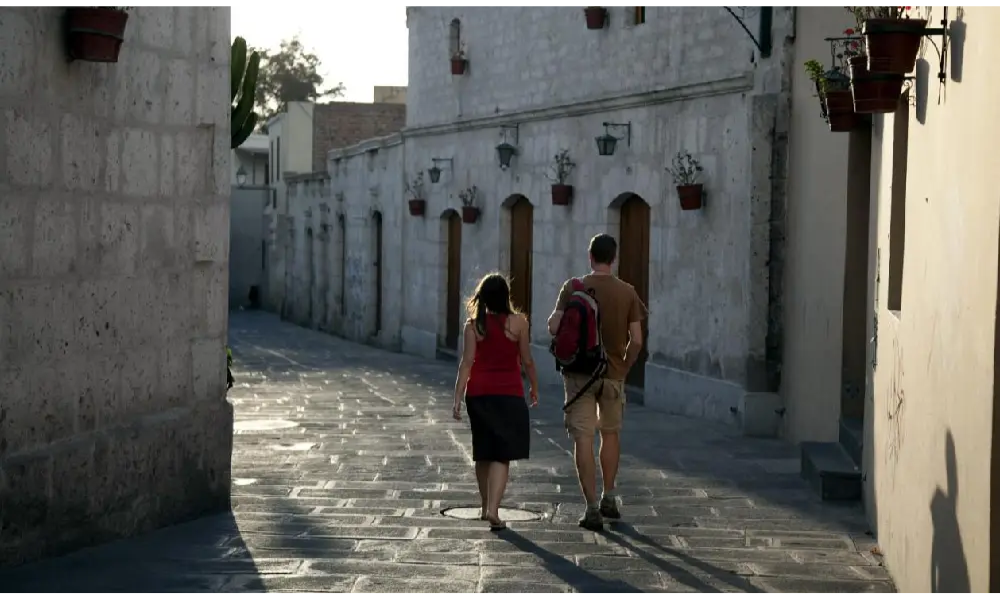
The San Lázaro neighborhood in Arequipa is considered the birthplace of the city and one of its oldest districts. Located very close to Arequipa’s Historic Center, it is characterized by its white sillar stone houses, narrow alleyways, cobblestone passages, and small plazas. These elements preserve the original colonial layout and give the neighborhood its intimate and picturesque charm.
History
Pre-Hispanic and Colonial Origins
The origins of San Lázaro date back to pre-Hispanic times, when the Chili Valley was inhabited by cultures such as the Collaguas and Cabanas. Later, after the Spanish founded Arequipa in 1540, San Lázaro became one of the city’s first Hispanic settlements. Artisans, humble residents, and religious communities settled here, organizing the neighborhood with a network of narrow streets and plazas that still remain today.
Development in the 17th and 18th Centuries
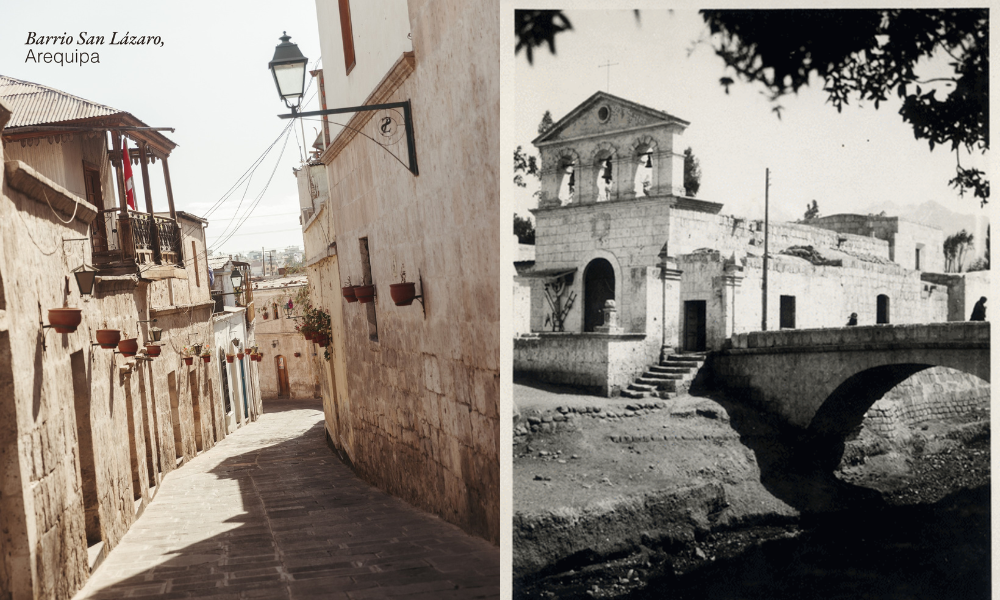
During the 17th and 18th centuries, San Lázaro became more structured with the construction of the Church of San Lázaro, which served as the social and spiritual center. Moreover, its sillar buildings withstood multiple earthquakes, reinforcing the neighborhood’s reputation as a solid, well-built community. The population consisted mainly of artisans, stonemasons, and small merchants—trades that deeply influenced Arequipa’s architectural development.
Republican Era and Modern Restoration
In the 19th century, San Lázaro gradually integrated into the growing city thanks to urban improvements and better connectivity, especially through the Grau Bridge. However, during the 20th century, the neighborhood experienced deterioration. Eventually, between the 1990s and 2000s, it underwent a major restoration and was officially recognized as a historical landmark, recovering its beauty and cultural importance.
San Lázaro Today
Today, San Lázaro is a vibrant heritage neighborhood where traditional houses, boutique hotels, cafés, and cultural spaces coexist. Its white walls, narrow streets, and bright natural light give it an atmosphere reminiscent of a small Mediterranean village. Additionally, it is a frequent stop on walking tours because it connects easily to the Historic Center, the Grau Bridge, and the Yanahuara Viewpoint. The neighborhood’s strong identity blends history, tradition, architecture, and serenity, making it one of the best places to understand the origins of Arequipa.
What to See in San Lázaro?
 1. San Lázaro Plaza
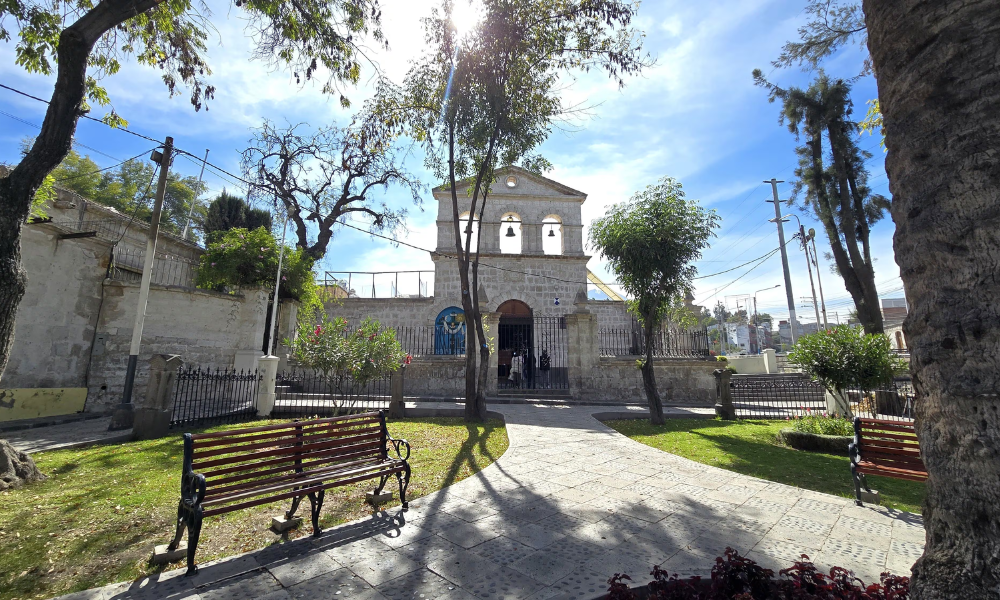
This plaza is the heart of the neighborhood. It is ideal for taking photos, relaxing, or beginning a walking tour, and it is surrounded by charming colonial houses.
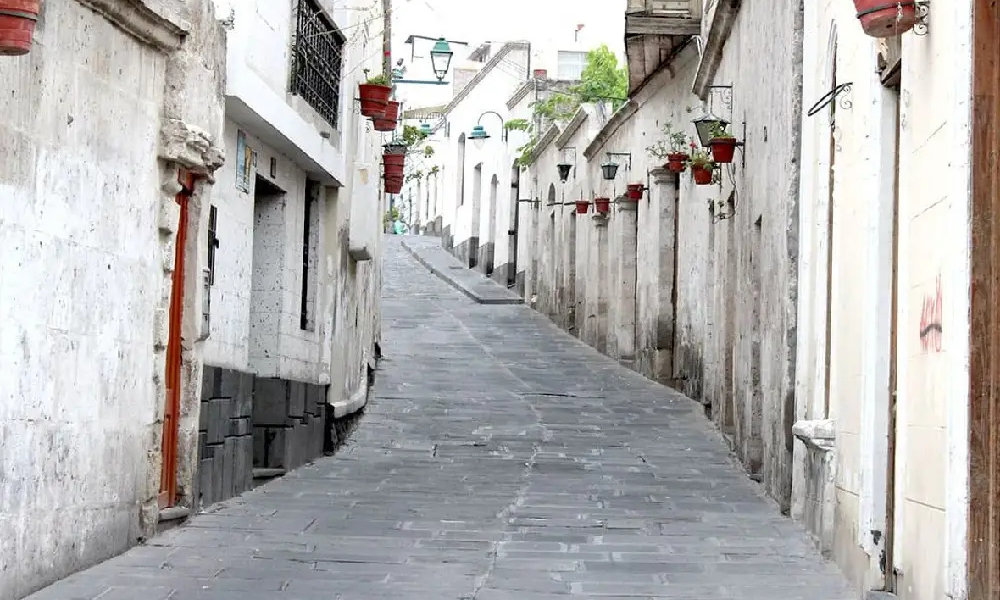
 2. Picturesque alleyways
Some of the most well-known alleyways include:
-
Bayonet Alley
-
Violin Alley
-
Ladies Alley
-
Crystal Alley
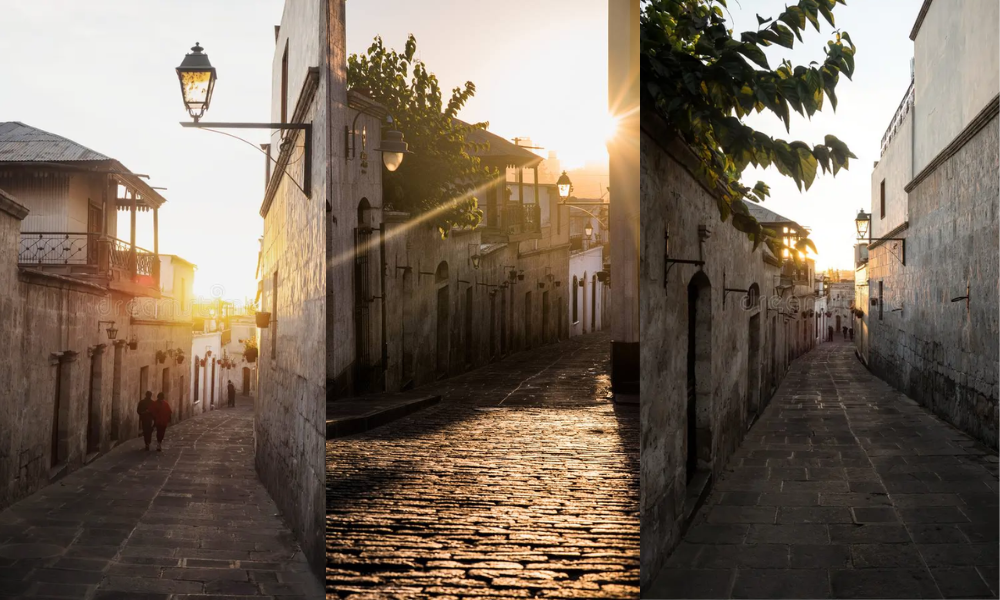
These narrow passages are peaceful, visually appealing, and perfect for photography.
 3. Church of San Lázaro
The Church of San Lázaro is one of the oldest churches in Arequipa and was likely built between the 16th and 17th centuries by early residents such as artisans and laborers. Dedicated to Saint Lazarus—patron of the sick and needy—it reflects the humble origins of the neighborhood. Its simple colonial architecture and sillar construction have allowed it to endure several earthquakes over the centuries.
📌 Practical Tips
-
Visit in the morning or afternoon: the sunlight enhances the beauty of the sillar stone.
-
Safe area: especially during daylight hours.
-
Great for guided tours: many free walking tours include this neighborhood.
📜 Interesting Facts
-
The first urban layout of Arequipa is believed to have begun here.
-
The style of the neighborhood resembles Mediterranean villages due to its white stone and narrow lanes.
-
San Lázaro has been restored multiple times to preserve its colonial appearance.
